








Swiss AI mouse aims to reduce live animal testing
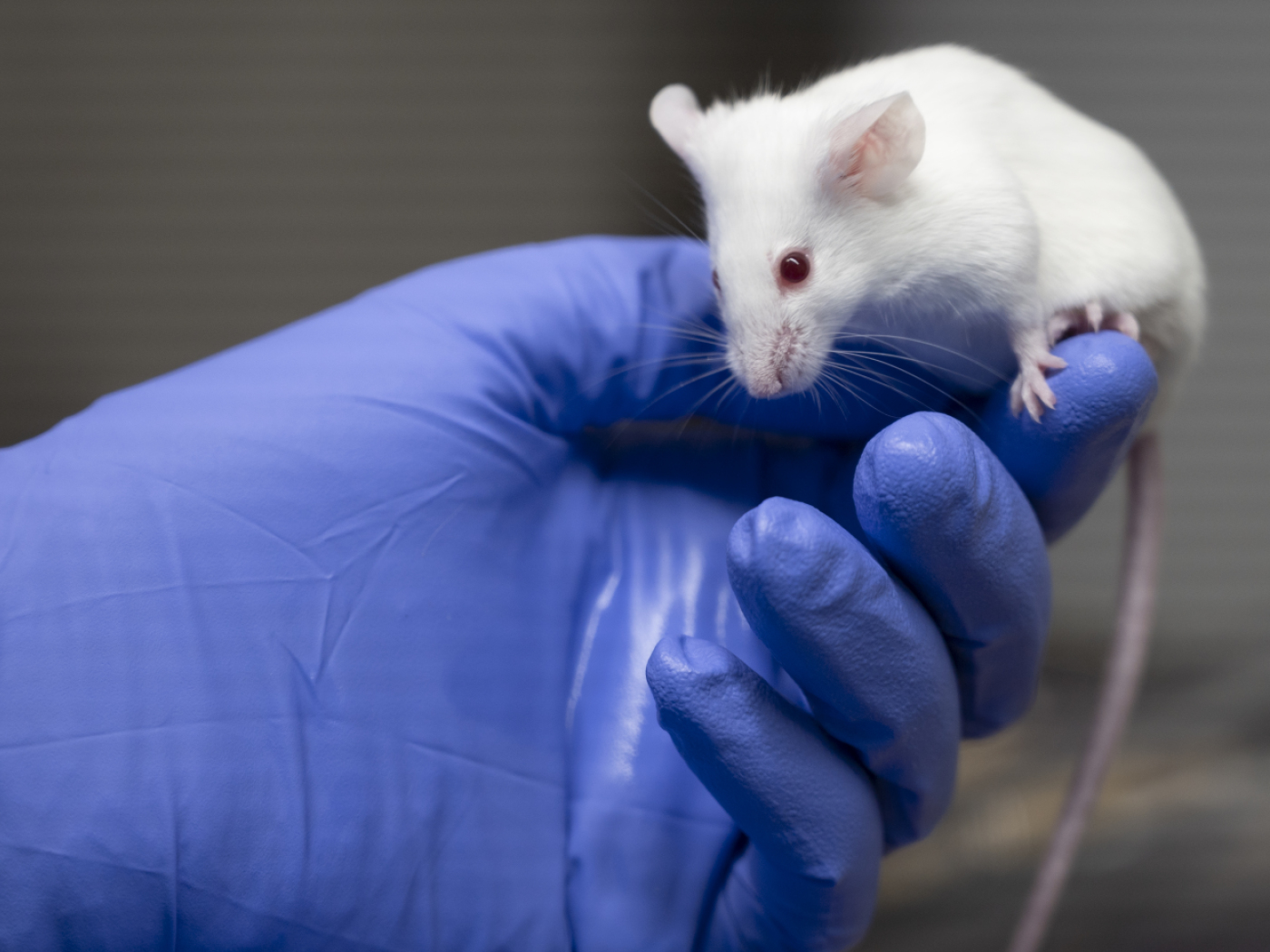
Swiss researchers have created a virtual version of a mouse that could help to reduce live animal testing.
Select your language
Generated with artificial intelligence.
Listening:
Swiss AI mouse aims to reduce live animal testing
+Get the most important news from Switzerland in your inbox
The Swiss Federal Laboratories for Materials Science and Technology (Empa) said the model could be used as a decision-making aid in drug development.
It calculates how nanoparticles with certain properties are distributed in the organism. This is particularly relevant for the development of therapies against brain tumours, as nanoparticles can cross the blood-brain barrier.
Join the debate:
External Content
Researcher Jimeng Wu developed the so-called physiologically based pharmacokinetic model. She used 18 previous studies with mice as a data basis. With the help of machine learning, the model can adapt its parameters to the properties of the respective nanoparticle.
The AI tool makes it possible to virtually test which particles are suitable for a task even before they are manufactured, Wu was quoted as saying in the press release. According to the researchers, the model contributes to the “Safe and Sustainable by Design” concept, as it increases the safety of new therapies at an early stage.
AI human in pipeline
Researcher Peter Wick admits that the model’s database of 18 studies is still small. It is now necessary to train the virtual mouse with further data in order to increase its reliability. In the long term, the process from development to application in humans should be shortened and animal testing dispensed with altogether.
The next step is to transfer the principle to human research. A corresponding model for humans could then also enable the examination of sensitive target organs.

More
Swiss government rejects initiative against animal testing
Adapted from German by AI/mga
We select the most relevant news for an international audience and use automatic translation tools to translate them into English. A journalist then reviews the translation for clarity and accuracy before publication.
Providing you with automatically translated news gives us the time to write more in-depth articles. The news stories we select have been written and carefully fact-checked by an external editorial team from news agencies such as Bloomberg or Keystone.
If you have any questions about how we work, write to us at english@swissinfo.ch
External Content

In compliance with the JTI standards
More: SWI swissinfo.ch certified by the Journalism Trust Initiative

You can find an overview of ongoing debates with our journalists here . Please join us!
If you want to start a conversation about a topic raised in this article or want to report factual errors, email us at english@swissinfo.ch.