








Cash for mouse tails: a dying Swiss tradition?

Got a rodent problem in your field? While paying pipers fell out of fashion a while ago, paying hunters – usually children – a small amount per tail remains an official strategy in some regions of Switzerland.
Select your language
Generated with artificial intelligence.
Listening:
Cash for mouse tails: a dying Swiss tradition?

“Catching mice pays off!” declared a recent campaign in the local newsletter for Tübach, a municipality on Lake Contance, northeastern Switzerland. “Anyone who catches a mouse in Tübach can bring the mouse tail as proof to the municipal depot – you’ll receive CHF1 [$1.25] per tail.”
But there’s another reason for the campaign, the mayor, Michael Götte, told the St Galler TagblattExternal link at the beginning of January. “We’ve been offering bounties for ages, but in autumn we noticed that not a single franc had been paid out this year. We wanted to remind people about the mouse bounty.”
Not keeping the number of mice or voles under control can cause serious problems for farmers. Voles have one of the highest reproduction rates among mammals, with a pair able to produce more than 100 offspring over a summer. Every few years there’s a “mouse plague”, the paper said.
‘Alternative would be poison’
“Hunting mice is a tradition here. It’s been going on for ages and has proved its worth,” Peter Kindler, then mayor of Sennwald, a municipality on the Swiss border with Liechtenstein, told 20MinutenExternal link in 2017. The previous year 10,000 tails were handed in, he said, with a Mausschwanzprämie (mouse tail bounty) of CHF1.50 per tail.
“The alternative would be poison, but that would also be harmful to birds and other animals,” he said. “That’s why hunting is the most natural way to get rid of mice.”
Mice aren’t the only animals for which the Swiss authorities have paid out a few coins. Moles also have a bounty on their tails. In this videoExternal link (in French) from 2022 on Swiss public television RTS, one of western Switzerland’s last taupiers (molehunters) explains how he’s been trapping moles for the past 50 years.
Then there’s the nasty fate facing cockchafers or June beetles (hanneton in French): “The hanneton was considered harmful to agriculture and forestry,” the Geneva authorities explainExternal link. “This is why, until the 1950s, collection campaigns were organised in rural municipalities such as Meyrin. These ‘hunts’ were mainly carried out by children, who were paid a few centimes for each kilo of beetles they collected. They [the beetles] were then burnt or poured into a pit and covered with lime by municipal employees.”
Fredy Schöb, the former mayor of neighbouring Gams, agreed. “This method is not only ecological, but also relatively humane.” In 2016 Gams had a budget of CHF4,000 a year for mouse tails, but that wasn’t enough.
Ten years later the budget has increased to CHF6,000 – “but everyone will be paid even if the budget is exceeded”, the current mayor, Manuel Schöb, told Swissinfo. The bounty remains CHF1.50 per tail, 6,499 of which were handed in last year.
“We once wanted to abolish it, but there was too much resistance from the population,” Fredy Schöb told 20Minuten. It’s simply a tradition and a way for children to supplement their pocket money, he said.
‘Keeps you fit’
And not only children. Pensioner Andreas Schären, 67, made headlines in 2021 when, in his words, he “blew the municipality’s budget” by being too good at collecting mouse tails – up to 500 a month. As a result, the municipality – Remetschwil in canton Aargau, northern Switzerland – stopped paying CHF1 a tail at the end of 2021.
“The number of tails handed in has suddenly exploded,” municipal clerk Roland Mürset told BlickExternal link. In the past, around 200 tails were handed in per year, he said; today, the figure is sometimes more than double that – per month. The result is that the tradition, which is more than 100 years old, has come to an end – at least in Remetschwil.
“I think it’s a great pity,” Schären said. “Hunting mice is a good outdoor activity that keeps you fit.” He explained how he hunted mice on his family’s farm as a boy, being paid CHF0.50 a tail. When he retired, he started doing it again. “My record in one day is 128. In total, I’ve caught more than 6,000 mice in two years.”

Perverse incentive?
At this point, any economists reading might be shouting out “perverse incentive” or “cobra effect”.
Back when the British ruled in India, they had a cobra problem in Delhi. The British government decided to pay a bounty for every dead snake. The locals soon realised it was a lot easier – and safer – to breed cobras and kill them than to scramble around in bushes, hunting them. When the Brits worked out what was going on, they refused to pay – and the Indians released all their snakes, resulting in the cobra population exploding.
Whether this is completely true is debated, but the Great Hanoi Rat Massacre of 1902 definitely happened – and is more relevant to the Swiss case (Vietnamese rat catchers would capture rats, sever their tails, claim the reward from the French government, and release the tailless rats back into the sewers so they could multiply).
While perverse incentives, as incentives with unintended and undesirable consequences are known, are interesting, there’s no suggestion that Andreas Schären – or anyone else in Switzerland – bred mice: he worked hard, setting 72 traps in the fields every morning and checking on them several times a day.
Variable rates
Back in Tübach, several marker sticks are visible in the fields on Thomas Fuchs’s farm. “My brother and I used to accompany our grandfather on his mouse-catching expeditions and learnt everything from him,” he told the St Galler Tagblatt.
Fuchs uses a metal cylinder with a tensioned spring which is placed directly in the mouse tunnel. A mouse running through it is killed in a matter of seconds. These traps are very reliable but relatively expensive, he says. “If a fox drags one away because it wants to eat the mouse caught in it, the money’s usually lost.” As a result, he only sets the traps during the day.
Fuchs walks across the meadow and checks the traps. In the first two the mechanism was triggered, but the mouse escaped. In the third he finds what he’s looking for, pulling a dead vole out of the tunnel. He takes it to the edge of the forest, where a fox will dispose of it – “if I had loads, I’d take them to the carcass collection point”. He removes the tails and takes them to the municipal depot to claim his money.
Natural predators
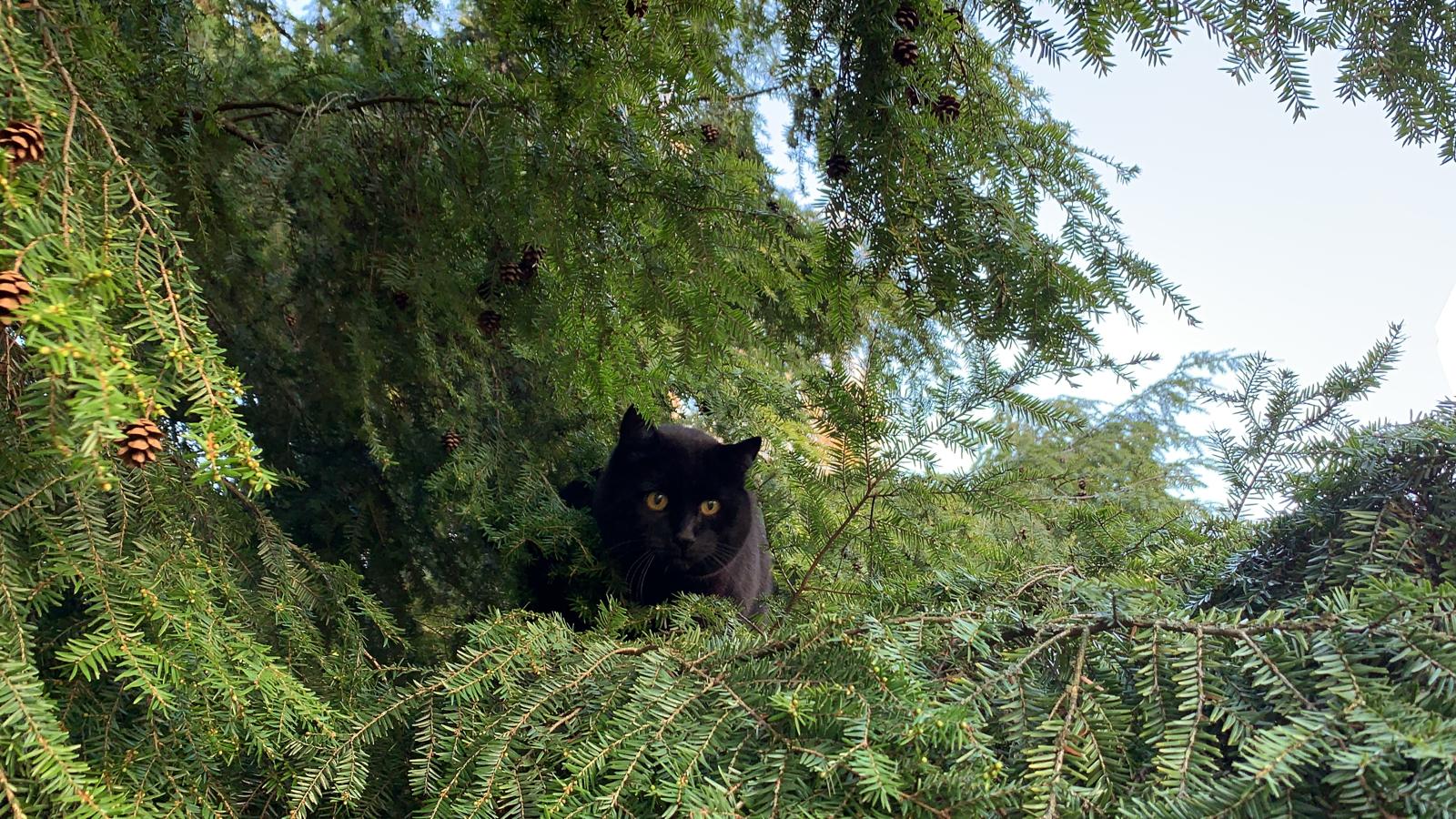
Another way to control mouse populations is to encourage natural predators. Birds of prey, cats, foxes, kestrels, barn owls and weasels are happy to prey on rodents. In open fields where there are no trees, perches can be installed for birds of prey. These make hunting easier for them, especially in winter.
Hedges, piles of branches and stones, strips of old grass or upgraded forest edges provide weasels with cover, breeding sites and safe routes between hunting grounds.
The construction of suitable nesting aids, for example for kestrels or barn owls, can also increase their populations.
(Source: St Galler TagblattExternal link)
While you’re never going to get rich hunting mice, some places pay better than others. The 2026 accounts for ZiefenExternal link, a municipality in canton Basel Country, show that CHF0.50 is paid per tail. As mentioned above, Gams pays CHF1.50 per tail.
A few years ago Lauenen, an idyllic municipality near Gstaad in the Bernese Oberland, doubled its rate from CHF0.50 to CHF1. This was partly because the neighbouring village of Saanen had announced it was increasing its rate. Had Lauenen not acted, “there might have been Mäuseschwanztourismus [mouse tail tourism] to Saanen”, municipal secretary Andreas Kappeler told German magazine SpiegelExternal link. “And we had to pre-empt that.”
Since then the rate in Lauenen has increased again and now stands at CHF1.50, the municipality confirmed to Swissinfo.
Mouse tail tourism
Mouse tail tourism is a new one on me, but Franz Firla, in a column for the Mülheimer WocheExternal link in northwestern Germany, had read about the situation in Saanen and wrote to the local authorities: “My wife and I are planning a holiday in Saanen and would like to enquire whether tourists can also benefit from the mouse catching bounty, and if so, which would be the most favourable months for it.”
He received a response within the hour. “Dear Mr Firla, In principle now [May] would be a good time to catch mice, when the snow is gone at low and medium altitudes and the grass has not yet grown. The compensation is generally intended for local residents, but we could make an exception under the following conditions: the mice must be trapped here, and the farmer and landowner must agree and go with you to the drop-off point for payment of the bounty. Then this is possible, otherwise not.”
Not my idea of a romantic holiday, but it gives another meaning to tourist trap.
Edited by Samuel Jaberg/gw
More
Feline felons: what to do with Switzerland’s killer cats?
More


In compliance with the JTI standards
More: SWI swissinfo.ch certified by the Journalism Trust Initiative

You can find an overview of ongoing debates with our journalists here . Please join us!
If you want to start a conversation about a topic raised in this article or want to report factual errors, email us at english@swissinfo.ch.