








The Swiss medical breakthrough that cured the ‘cretins of the Alps’
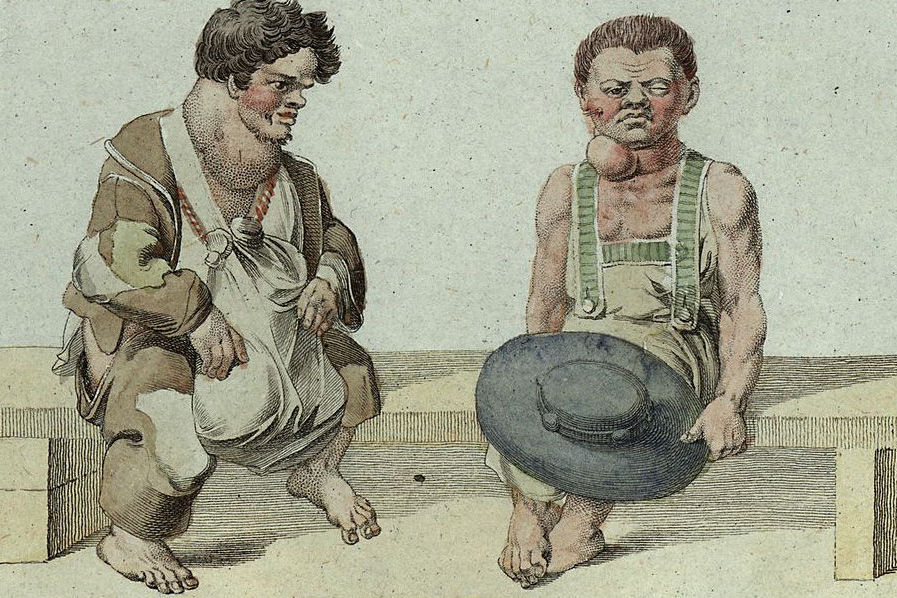
Switzerland was the laboratory that turned a chemical intuition into a global public health victory. Thanks to three visionary doctors, the country was the first to introduce the iodination of table salt, a practice that helped defeat the scourge of cretinism in the Alps.

Switzerland is a global icon of precision, innovation, luxury and prosperity. In the not-so-distant past, however, it was known for representing an emblematic case of human suffering.
In the 19th century, when tourism was just beginning to blossom in the idyllic Alpine valleys, the geographer Elisée Reclus, in 1875-76, described the people who lived there as follows: “Alongside these valiant mountaineers – broad of chest and keen of gaze – who ascend the rocky heights with unwavering stride, there heave themselves forward wretched masses of living flesh, the cretins burdened with their pendulous goitres.”
The quotation, which the French historian Antoine de Baecque gives in his book Histoire du crétinisme des Alpes (history of cretinism in the Alps), is just one of countless accounts, above all Diderot and D’Alembert’s encyclopaedia (see box), of the scourge of cretinism that struck these regions.
“This name is bestowed upon a certain race of people born in great numbers in the Valais, and most particularly in Sion, its capital. They are deaf, mute, benumbed of mind, scarcely sensitive even to blows, and bear goitres that hang down to their very belts; yet, for all this, they are of the gentlest disposition. Incapable of forming ideas, driven only by a fierce pull towards their most immediate needs, they abandon themselves to pleasures of the senses of every kind, their simplicity of mind preventing them from discerning any crime therein.
The ingenuous inhabitants of the Valais look upon these ‘cretins’ as guardian angels of their households, and those who possess none fear that Heaven does not look kindly upon them. The causes and consequences of this ‘Cretinism’ are difficult to unravel. Poor hygiene, upbringing, the excessive heat of these valleys, the waters, even the goitres themselves – these are shared by all the children of these lands. And yet not all are born cretins.
One such individual died in Sion during the stay of the Count de Maugiron of the Royal Society of Lyon; they refused him permission to open the body. He contented himself with examining (so it seems, the living) specimens of both sexes. Externally he observed nothing remarkable except the skin, which bore a most livid yellow hue. This detail comes from a memoir by the Count de Maugiron, an extract of which was communicated to us and read before the Royal Society of Lyon.”
People with cretinism are often affected by dwarfism, are deaf and do not speak. In many cases, a swelling of the neck, called goitre, is present. The most serious consequences are cerebral, with mental development tending to remain that of a small child.
Already in Roman times it was known that this disease was particularly present in Alpine regions. Before its eradication at the beginning of the 20th century, it was estimated that in the highest valleys up to 90% of the population had goitre and up to 2% suffered from cretinism. Many people were placed in institutions, but most stayed with their families.
In 1810, a census ordered by Napoleon in canton Valais found that out of 70,000 inhabitants, about 4,000 were so-called cretins. According to the most accepted hypothesis, this term, now considered derogatory, comes from the word crestin, which in turn originates from the Latin christianus (Christian). It was probably used to euphemistically designate people suffering from the mysterious disease, implying that, despite it, they were fully Christian, moreover innocent and therefore beloved by God.

The Alps, beautiful but lacking a certain something…
Cretins became a tourist attraction in the Alpine valleys, but also an interesting case study for medicine. Many hypotheses were put forward to explain it: poor hygiene, inbreeding, humidity, poor water quality…
But the real reason was not the presence of an external agent, but its absence. What causes cretinism is in fact a diet deficient in iodine.
This element, present in large quantities in the oceans, was deposited in the land after the retreat of the primordial seas, but the immense layer of ice that covered the Alpine region during the last ice age shattered hundreds of metres of subsoil and gradually “washed away” the iodine. It was not until 1965 that Basel surgeon Franz Merke demonstrated that the geographical extent of the ancient ice sheet coincided perfectly with the areas endemically affected by goitre.
Iodine is an indispensable element for the proper functioning of the thyroid gland, a thin, butterfly-shaped gland located at the base of the neck and crucial for metabolism, growth and development. With insufficient iodine intake, it swells in an attempt to absorb as much iodine as possible, leading to hyperthyroidism, i.e. goitre. A pregnant woman’s lack of iodine intake risks causing cretinism in her unborn child.
Crucial insight
As a detailed article in the Tages-Anzeiger recalls, the first person to effectively debunk the erroneous assumptions and reticence of the time was Heinrich Hunziker, a doctor from Adliswil, canton Zurich. In May 1914, in a paper of only 24 pages, he explained that the thyroid gland swelled simply because it was “starved” of a missing nutrient, iodine.
Others had had the same insight, such as Geneva-born Jean-François Coindet almost a century earlier, but Hunziker realised that iodine was not a drug to be administered in massive doses – a mistake that had cost Coindet and especially many of his patients dearly – but an essential component of the diet, to be supplemented in tiny doses.
While the Tages-Anzeiger calls Hunziker a “visionary”, it is the Valais doctor Otto Bayard who is instead given the label of “scientist”. In 1918, on his own initiative, he set off for the village of Grächen with a mule loaded with bags of salt that he had mixed with small quantities of sodium iodide. He introduced it into the diet of five families in this remote village, hard hit by the “Scourge of the Alps”, for five months in winter.
By spring, the goitres were gone and no signs of iodine poisoning were detected. The encouraging result secured Bayard federal funding to extend the experiment to the village of Törbel. The success was resounding: thanks to Bayard more than 1,000 people with symptoms of hyperthyroidism were cured in a short time.
In January 1922 the Swiss Goitre Commission, comprising academics, members of the army and health authorities, met in Bern to discuss Hunziker and Bayard’s findings. In June, after heated debates between those who realised that they had a solution on their hands and those who feared mass poisoning, the Commission issued an official recommendation to all cantons (which had and still have a monopoly on the marketing of salt) to introduce the sale and promote the consumption of iodised salt.
Marketing campaign
This pioneering achievement by Switzerland would not have been possible without a third doctor. After the “visionary” and the “scientist”, the “activist” also had great merit: Hans Eggenberger, a surgeon from Herisau in canton Appenzell Outer Rhoden.
As a member of the Commission, he was convinced of the solution proposed by Hunziker and Bayard, but he knew that it would be a feat to convince the mistrustful Swiss population to follow a food directive imposed from above – in food to boot!
He therefore plunged into a full-fledged propaganda campaign in his home canton. After spending his days in the operating theatre, he organised educational lectures in cinemas in the evenings. With projectors and slides, he visually demonstrated the effects of the disease and the beneficial effects of the cure. A gifted communicator, he coined the term Vollsalz (full salt) to refer to iodised salt, making it sound like a natural product to the ears of the population.
Without waiting for a federal decision, he launched a collection of signatures in favour of the introduction of iodised salt through the local branch of the Red Cross, which he had co-founded. By February 12, he had collected no fewer than 3,480 signatures. A week later, the canton authorised its sale, months ahead of the federal recommendation.
By the time the latter arrived, Eggenberger’s work had already paved the way. The Swiss Rhine Salt Works began distributing the first supplies of iodised salt in November 1922 and, after only one year, the product was already available in 17 cantons.
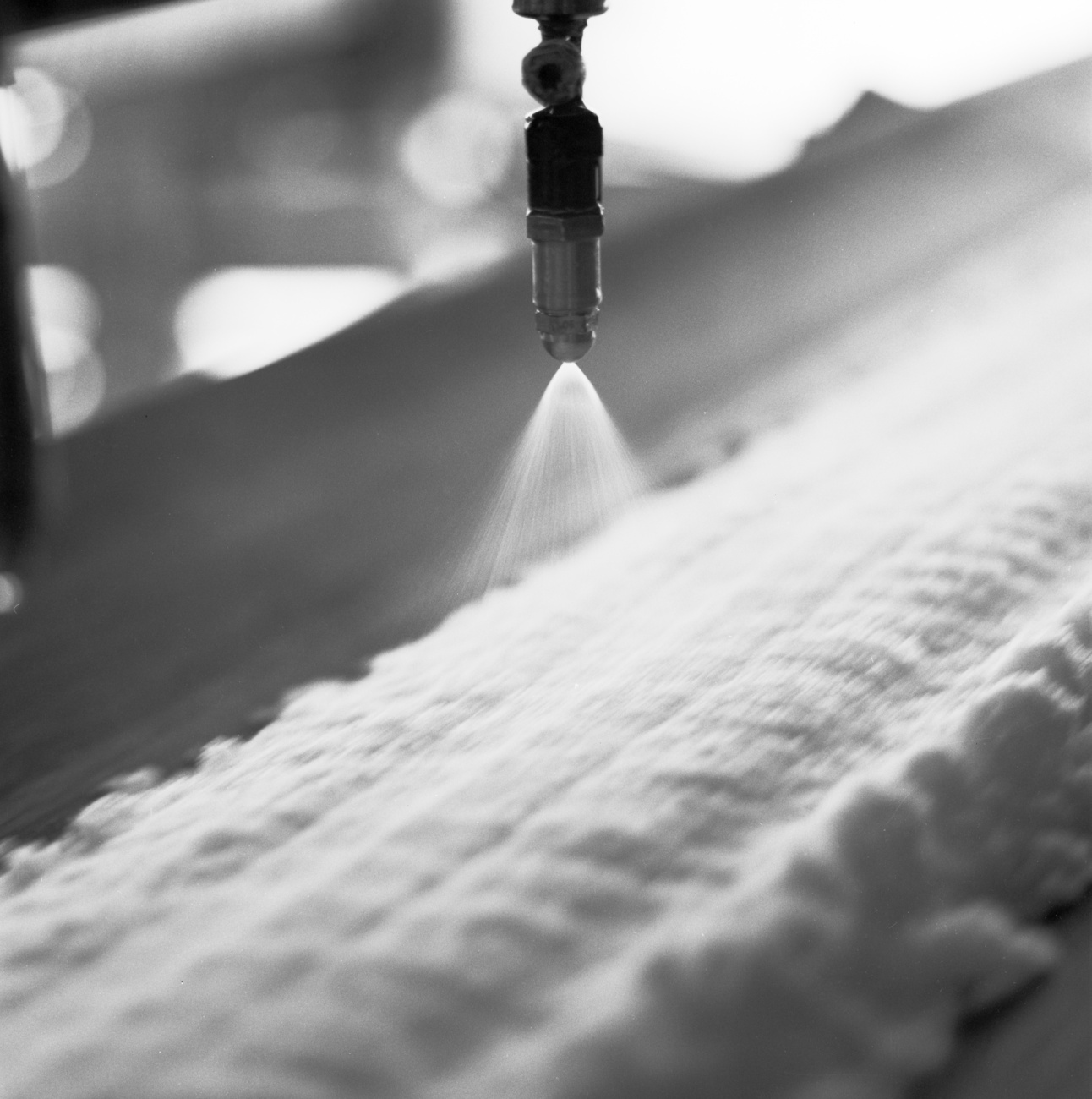
By the end of the 1920s, the prophylaxis had been extended to the whole country, the frequency of deaf babies and the incidence of goitre decreased dramatically and, from the 1930s onwards, no more “cretins” were born in Switzerland.
The Swiss Goitre Commission, now known as the Fluoride and Iodine CommissionExternal link, continues to play its role in monitoring and preventing the return of diseases caused by iodine deficiency.
The Swiss case became a model. The United States was the first to follow the Swiss example in 1924, followed over the decades by many other countries, in some of which it is compulsory by law, notes Le Temps, while in Switzerland it remains voluntary.
Antoine de Baecque, Histoire des crétins des Alpes, La librairie Vuibert, 2018 (French)
Who were the cretins of the Alps really?External link – National Geographic interview with Antoine de Baecque (French)
How three heroic doctors saved Switzerland from goitreExternal link – Tages-Anzeiger (German)
Swissinfo article: Salt in SwitzerlandExternal link
The entry for “cretinism”External link in the Swiss Historical Dictionary (German, French, Italian)
The experiments of Jean-François CoindetExternal link described in the Revue médicale suisse (French)
Iodised saltExternal link – Federal Office of Public Health (German, French, Italian)
Iodine, cretinism and the Alps –External linkLe Temps (French)
Edited by Daniele Mariani. Translated from Italian by AI/ts
More

How we translate with AI
We use automatic translation tools, such as DeepL and Google Translate, for some content.
Each translated article is carefully reviewed by a journalist for accuracy. Using translation tools gives us the time for more in-depth articles.
Learn more here about how we work with AI.

In compliance with the JTI standards
More: SWI swissinfo.ch certified by the Journalism Trust Initiative

You can find an overview of ongoing debates with our journalists here . Please join us!
If you want to start a conversation about a topic raised in this article or want to report factual errors, email us at english@swissinfo.ch.