This content was published on
The commune is the smallest political unit in Switzerland. There were 2,760 in 2005 but their number is shrinking because some are merging. Some communes have autonomy concerning taxes and planning, for example, but the scope of their autonomy varies depending on the canton in which they are located. Around one-fifth have their own parliament;…
This content was published on
The principle of collective responsibility is enshrined in law. The seven members of the government are obliged to take decisions collectively and then undertake to support the cabinet’s policies, even if they do not personally agree with them. In recent years, due partly to a greater polarisation of Swiss politics, the principle of collective responsibility…
This content was published on
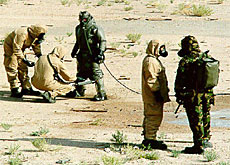
The range of tasks of civil defence includes protection, assistance and support of the civilian population. Its members’ tasks are to protect not only people but also cultural property. Civil defence members also reinforce management support and repair infrastructure, particularly after natural catastrophes. The obligation to serve mainly concerns those Swiss men who are declared…
This content was published on
Switzerland is made up of 26 cantons, or states. They all have their own governments and parliaments. Although their powers were reduced after the creation of modern-day Switzerland in 1848, cantons still have a large degree of autonomy, notably in tax and education matters.
Campaign for an Independent and Neutral Switzerland
This content was published on
The group was founded in 1986, after the Swiss people had said “no” to joining the United Nations. Its objective – as the name indicates – is to ensure Switzerland’s continuing independence and neutrality. In particular, it opposes any move towards closer relations with the European Union and is against activism in foreign policy. The…
This content was published on
The rightwing Swiss People’s Party was formed in 1971 from a fusion of farmers’ and artisans’ parties. Since the beginning of the 1990s it has gained in strength, becoming the foremost party in parliament. Policies include less state intervention, limited cooperation with the European Union and an anti-foreigner stance. In 2003 it gained a second…
This content was published on
Founded in the first half of the 19th century, the Liberals took up a position to the right of the Radical Party, with a greater emphasis on economic matters. At the end of the 19th century, Liberals and Radicals united in most cantons, but not in French-speaking Switzerland or in Basel City. Nowadays the Liberal…
This content was published on
Founded in 1971 under the name of National Action for People and Country, this party was most prominent in the late 1970s, when the initiative promoted by its parliamentarian James Schwarzenbach against the influx of foreigners was rejected by a small majority of voters. Since the early 1990s, when the Swiss People’s Party adopted some…
Swiss Agency for Development and Cooperation (SDC)
This content was published on
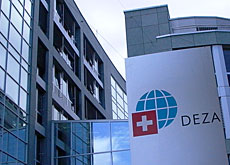
The Swiss Agency for Development and Cooperation (SDC) is the foreign ministry office in charge of Switzerland’s international cooperation. Alongside other federal offices, SDC is responsible for overall coordination of development activities and cooperation with Eastern Europe, as well as humanitarian aid.
This content was published on
There are more than 700,000 Swiss citizens living outside Switzerland, with the majority in European Union countries. The second-largest expatriate community is in the United States. Their interests are defended by the Bern-based Organisation of the Swiss Abroad.