








Domino effects of natural disasters are underestimated, says study

Flooding in Valais curbs Porsche production in Germany and light snowfall disrupts the electricity market: natural disasters often trigger invisible domino effects that can affect entire industries and remote regions.
+Get the most important news from Switzerland in your inbox
However, the complex effects of natural disasters are often poorly understood and not reflected in risk models, write researchers Manuela Brunner from federal technology institute ETH Zurich and the Institute for Snow and Avalanche Research (SLF) and Laurie Huning from California State University in an article published on Thursday in the journal Science. This hinders accurate damage estimates and effective prevention strategies, they say.
“Every natural event has the potential to trigger a chain reaction – be it a flood, a forest fire or a drought,” explained Brunner in an interview with the Swiss News Agency Keystone-SDA. “These chain reactions can cover long distances and long periods of time.”
More
Switzerland ‘highly exposed’ to natural hazards
Deaths in Europe due to forest fires in Canada
In their article in Science, the researchers cited the forest fires in Canada in 2023 as an example of such chain reactions. The clouds of smoke from this fire not only worsened the air quality in major US cities such as New York and Chicago, but also travelled across the Atlantic to Europe. According to the researchers, they are estimated to have contributed to more than 20,000 deaths there.
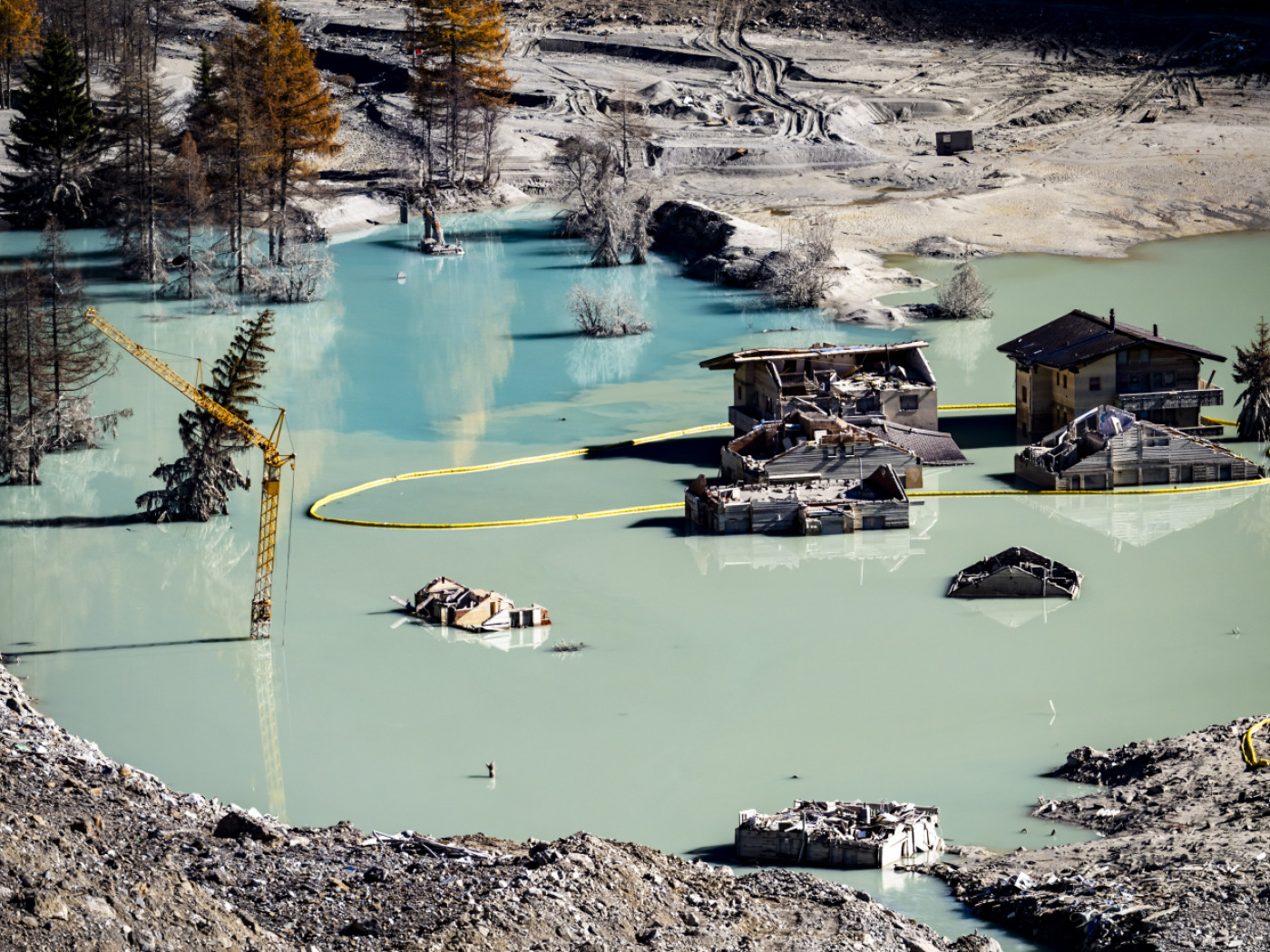
However, such domino effects have also been triggered in Switzerland, explained Brunner. For example, the flood in Valais in 2024 not only caused localised damage, but also affected Porsche’s production in Germany.
A factory in Valais produces aluminium parts for Porsche. It was damaged by the floods and was unable to produce for several months. Porsche was unable to obtain the parts it needed and was therefore able to produce significantly fewer cars.
Disrupted electricity market due to low snowfall
Another example, according to Brunner, is the winter of 2024/2025 with little snow: the lack of meltwater caused the River Aare to warm up so much that the Beznau nuclear power plant, which relies on cold cooling water, had to reduce its output. This also had an impact on the European electricity market.
“We need to develop a better understanding of the complexity of these events,” says Brunner. “If we want to better understand natural disasters in the future, we need to adapt our models so that they can depict these chain reactions and their far-reaching consequences.”
Adapted from German by AI/ts
We select the most relevant news for an international audience and use automatic translation tools to translate them into English. A journalist then reviews the translation for clarity and accuracy before publication.
Providing you with automatically translated news gives us the time to write more in-depth articles. The news stories we select have been written and carefully fact-checked by an external editorial team from news agencies such as Bloomberg or Keystone.
If you have any questions about how we work, write to us at english@swissinfo.ch
External Content

In compliance with the JTI standards
More: SWI swissinfo.ch certified by the Journalism Trust Initiative

You can find an overview of ongoing debates with our journalists here . Please join us!
If you want to start a conversation about a topic raised in this article or want to report factual errors, email us at english@swissinfo.ch.