








Forests store up to 30% of winter snowfall, Swiss study finds

Forests hold on to around 20-30% of winter snowfall, playing a key role in how much water is available later on. Researchers at the WSL Institute for Snow and Avalanche Research (SLF) have been looking into how this process works.
Select your language
Generated with artificial intelligence.
Listening:
Forests store up to 30% of winter snowfall, Swiss study finds
+ Get the most important news from Switzerland in your inbox
The study, published on Wednesday, finds that forests do more than just hold on to snow: they also affect how it melts. Both the structure of the forest and the shape of the land play an important role.
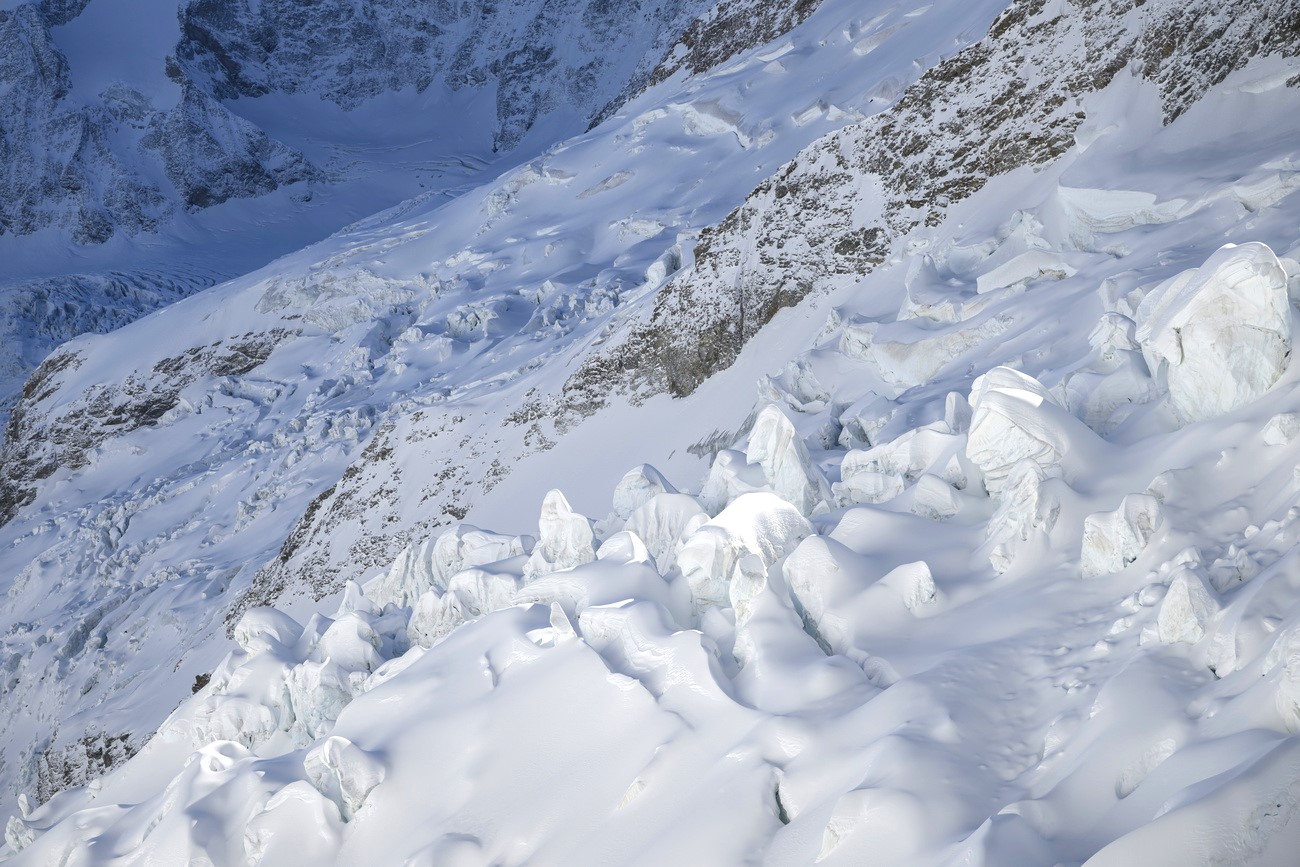
More
The beneficial effect of avalanches on Alpine glaciers
The research concludes that snow melts faster on north-facing slopes than on forested south-facing ones. This effect is especially noticeable in winters with low snowfall. In open terrain, however, the pattern is reversed.
+ Why the Swiss are leading efforts to track melting glaciersExternal link
One reason snow melts more quickly on north-facing slopes is simply that there is less of it to begin with, the report says. On south-facing slopes, by contrast, the shade from trees slows the thaw, meaning snow in forested areas there tends to linger for longer.
Translated from German by AI/sp
We select the most relevant news for an international audience and use automatic translation tools to translate them into English. A journalist then reviews the translation for clarity and accuracy before publication.
Providing you with automatically translated news gives us the time to write more in-depth articles. The news stories we select have been written and carefully fact-checked by an external editorial team from news agencies such as Bloomberg or Keystone.
If you have any questions about how we work, write to us at english@swissinfo.ch
External Content

In compliance with the JTI standards
More: SWI swissinfo.ch certified by the Journalism Trust Initiative

You can find an overview of ongoing debates with our journalists here . Please join us!
If you want to start a conversation about a topic raised in this article or want to report factual errors, email us at english@swissinfo.ch.