

The Swiss voice in the world since 1935

Are you concerned about how social media is affecting democracy?

Hosted by:

As a reporter I cover developments in democracy where the Swiss perspective becomes relevant. I am Swiss and have long been fascinated by the way public discussions shape society.

Fifteen years ago, many people hoped social media platforms would foster freer, more democratic debate online.

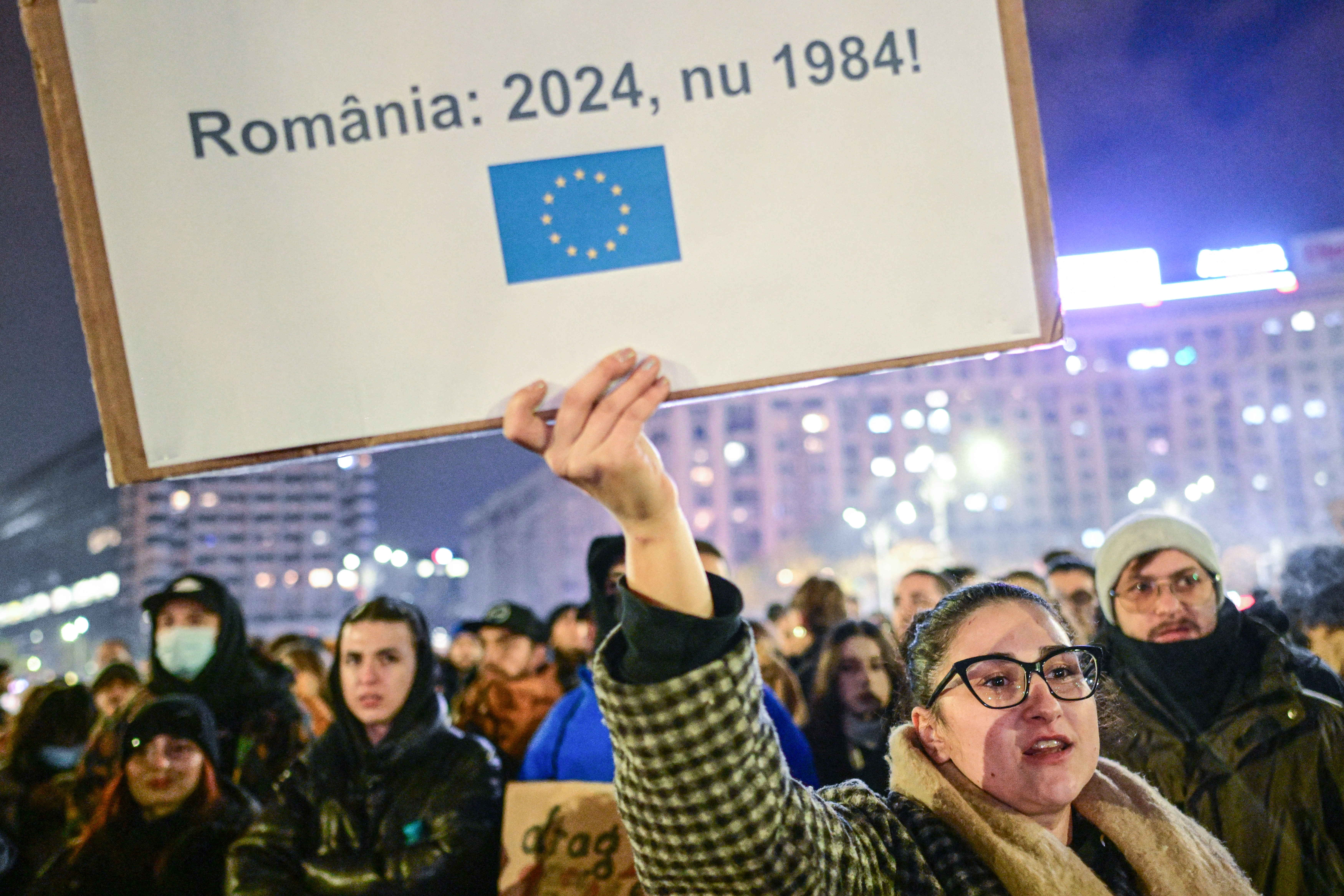
Today, however, troubling trends dominate – from TikTok activity during Romania’s presidential elections to the surge of online hate, particularly targeting female politicians.

What’s your view? How do social media platforms influence public debate, elections and referendums? Share your thoughts with us.
More

Join the conversation!

Contributions must adhere to our guidelines. If you have questions or wish to suggest other ideas for debates, please, get in touch!
A
AMunoz
The following contribution has been automatically translated from ES.

Social media acts as an amplifier of its users’ socio-political maturity: if society is educated and well-prepared, social media amplifies democracy and constructive debate; conversely, if society is vulnerable, poorly educated and manipulated by demagogic politicians, social media amplifies manipulation, polarisation and hatred. Therefore, before we continue to pin all our hopes on these platforms as a democratic solution, the absolute priority must be to defend and advance the political education of the public. Without the critical tools to discern the truth and understand the context, social media will never lead us to a more direct democracy, but rather to more efficient demagoguery. In Switzerland, given its extensive experience with direct democracy, there is hope in the use of social media, but if we look at the situation in the US, for example, what is happening is worrying. I cannot imagine what politicians are doing with the cognitive manipulation of social media in emerging countries with very low levels of education. A hundred years ago, the Nazis, using only radio and print media, managed to create the conditions for the Second World War. Today, with a smartphone in every pocket and the power of algorithms, we are faced with a great opportunity and perhaps a very great threat to the world. As always, everything depends on how we use these means of communication and to whom we give the power to exploit them.

Las redes sociales son un amplificador de la madurez sociopolitica de sus utilizadores: si la sociedad está educada y preparada, las reden amplifican la democracia y el debate constructivo; de locontrario si la sociedad es vulnerable, poco educada y es manejada con demagogía por sus politicos, las redes amplifican la manipulación, la polarización y el odio. Por tanto, antes de seguir depositando todas nuestras esperanzas en estas plataformas como solución democrática, la prioridad absoluta debe ser defender y hacer progresar la educación política de la ciudadanía. Sin herramientas críticas para discernir la verdad y entender el contexto, las redes nunca nos llevarán a una democracia más directa, sino a una demagogia más eficiente. En Suiza por su extensa experiencia con la democracia directa hay esperanza en el uso de las redes pero si vemos la situación de US por ejemplo es preocupante lo que sucede. No imagino lo que hacen los politicos con la manipulacion cognitiva de las redes en paises emergentes y de muy bajo nivel de formación. Hace 100 año el NS solo com radio y con medios impresos logro armar las condiciones para le segunda guerra mundial. Hoy con el telefono inteligente en cada bolsillo y el poder de los algoritmos se presenta ante nosotros una gran oportunidad y quizas una muy grande amenaza para el mundo. Como siempre, todo depende de como utilicemos estos medios de comunicación y a quien le demos el poder de su explotación.

Benjamin von Wyl
Benjamin von Wyl SWI SWISSINFO.CH
The following contribution has been automatically translated from DE.
@AMunoz

Thank you very much for sharing your concerns and a glimmer of hope; combining the two in the same post is a challenge, but it is also likely to be more constructive. Indeed, improving media literacy is a cause that is gaining momentum in many quarters – not only in relation to political education in schools, but also for people of all ages.

Vielen Dank für das Schildern Ihrer Sorge und einer Prise Hoffnung, die Kombination von beidem im selben Beitrag ist eine Herausforderung, aber wohl auch konstruktiver. Tatsächlich ist die Stärkung der Medienkompetenz ein Anliegen, das vielerorts Aufwind hat - nicht nur im Bezug auf die politische Bildung an Schulen, sondern auch für Menschen allen Lebensalters.

A
Alecs*
The following contribution has been automatically translated from ES.

Personally, I believe that the internet is a medium with great potential for informing people and fostering critical thinking, enabling them to make informed and conscious decisions; however, I must admit that in my country, Mexico, I have observed a particular tendency for the media and social networks to be used to promote the ruling party. I am not concerned that people have a greater ability to communicate and share their ideas by creating communities or support groups for a party or a cause, but I am concerned that in my country, given its context, this has facilitated the creation of this type of social structure of political thought/support/backing based on nothing more than propaganda, and this happens in many countries, but in Mexico it has a particular impact; the majority of the population came from a context of poverty characterised by poor education and a culture that is relatively anti-intellectual and more populist. This culture has adapted to the digital age and, in one way or another, we have been affected by it. Unfortunately, some parties, media figures and programmes have seen the potential to make money by creating ‘analysis’ ‘information’ and ‘news’ which, in the end, does nothing more than repeat the party’s propaganda, and people do not question it at the most basic level. The result is that today most people already perceive the country’s ills as acceptable or normalise them, partly so as not to confront the uncomfortable thoughts that arise from accepting that a leader can do ‘good’ such as providing social welfare programmes to a large part of the population whilst simultaneously perpetuating the dire situation by collaborating with and implementing policies that facilitate the drug trade, ignoring the impact on society. in Mexico nobody talks about the disappeared, and when someone does, the majority of people who support the party simply say that this has always happened, that it is an exaggeration by the opposition, or even seek to justify it with the government’s typical argument: ‘they were surely up to no good’. This worries me; I see a great deal of insensitivity and a lack of critical thinking in people; few people want to acknowledge the problem we face, This is very serious. We have figures that border on civil war levels. However, the misuse of the internet over the years to spread propaganda, misinform and distort the truth in favour of the government’s narrative has had a negative impact on my country, especially on those who, due to the conditions of the system, have been deprived of the opportunity to develop the essential skills needed to engage effectively and meaningfully, rather than merely through patronage as is customary. I am worried.

Personalmente creo que el internet es un medio con mucho potencial para informar y reforzar el pensamiento crítico en las personas para que tomen decisiones informas y conscientes, sin embargo debo admitir que en mi país, México, he visto un especial uso de los medios y las redes para hacer propaganda a favor del partido de mayoría absoluta. No me preocupa que la gente tenga más capacidad de comunicarse y compartir sus ideas creando comunidades o bloques de apoyo hacia un partido o una causa, pero me preocupa que en mi país, con su contexto esto ha facilitado la creación de este tipo de estructuras sociales de pensamiento/apoyo/respaldo político sustentado especialmente en nada más que propaganda, y esto pasa en muchos países, pero en México tiene un impacto especial, la mayoria de la población venía de un contexto de pobreza caracterizado por educación deficiente y una cultura relativamente Anti intelectual y más de populismo, está cultura que se ha adaptado a la era digital y de una u otra forma nos hemos visto impactados por ella lamentablemente algunos partidos, comunicadores y programas han visto el potencial para ganar dinero creando contenido de "análisis" "información" "noticias" que al final no hace más que repetir la propaganda del partido y la gente no lo cuestiona en lo más básico, el resultado es que hoy en día la mayoria de la gente ya percibe los males del país como aceptables o los normaliza en parte para no confrontar los pensamientos de incomodidad que produce aceptar que un lider puede hacer cosas "buenas" por ti como dar programas de ayuda social a gran parte de la población y a la vez perpetuar la mala situación colaborando e impememtando políticas que facilitan la operación del narco, omitiendo el impacto en la sociedad, en México nadie habla de desaparecidos y cuando alguien lo hace la gente en su mayoría a favor del partido se limitan a decir que eso siempre ha pasado, que es una exageración de la oposición, o incluso buscan justificar con el típico argumento del gobierno "es que de seguro andaban en la maña" esto me preocupa, veo mucha insensibilidad y falta de pensamiento critico en las personas, pocas personas quieren reconocer la problemática que afrontamos, esto es muy grave, tenemos cifras que rozan la guerra civil, sin embargo el mal uso del internet por años para hacer propaganda, desinformar y tergiversar a favor de la narrativa oficialista ha tenido un impacto negativo en mi país, especialmente en esos que por las condiciones del sistema se han visto privados de desarrollar capacidades escenciales para involucrarse de forma eficiente y real y no solo por clientelismo como se acostumbra. Estoy preocupado.

Benjamin von Wyl
Benjamin von Wyl SWI SWISSINFO.CH
The following contribution has been automatically translated from DE.
@Alecs*

Thank you very much for this nuanced and compelling account!

Vielen Dank für diese differenzierte und eindrückliche Schilderung!

I
iwama
The following contribution has been automatically translated from JA.

One possible reason for the landslide victory of the Liberal Democratic Party, led by Ms Takaichi, in the House of Representatives election held in Japan in February is the use of social media to encourage young people to vote. As an elderly person who rarely uses social media, I am unable to judge whether the content posted there is good or bad; however, given that its influence on elections is so significant, I believe measures such as banning election-related social media posts during the campaign period are necessary.

日本で2月に行われた衆議院選挙で高市氏の率いる自民党が大勝した理由として、SNSによる若者への投票勧誘が考えられます。SNSをほとんど使わない老人としては、SNSで発信された内容の良い悪いの判断は出来ないですが、選挙への影響がここまで大きいとなると、選挙期間中は選挙関係のSNS投稿を禁止するなどの措置が必要になると思います。

Benjamin von Wyl
Benjamin von Wyl SWI SWISSINFO.CH
The following contribution has been automatically translated from DE.
@iwama

Hello, thank you very much for your opinion. I assume, therefore, that you are critical of Ms Takaichi

Guten Tag, vielen Dank für Ihre Meinung. Ich nehme entsprechend an, dass Sie Frau Takaichi kritisch gegenüberstehen

J
Jorg Hiker

What is the alternative? Is it to return to the past century, when a few politically motivated media tycoons controlled all the information reaching voters? Back to the time when all major media outlets repeated false claims like 'there were WMD in Iraq'? While social media certainly have biases, they represent an important addition to democracy.

Benjamin von Wyl
Benjamin von Wyl SWI SWISSINFO.CH
The following contribution has been automatically translated from DE.
@Jorg Hiker

Thank you very much for your comment. You are, of course, right that there is no going back when it comes to technology and social infrastructure. However, anyone who is concerned and dissatisfied with the current situation can, for example, advocate for or speak out in favour of alternative, differently structured social media platforms.

Vielen Dank für Ihren Kommentar. Sie haben natürlich recht, dass es kein Zurück im Bezug auf die Technologie und die gesellschaftliche Infrastruktur gibt. Doch, wer sich Sorgen macht und mit der Ist-Situation unzufrieden ist, kann sich bspw. für andere, anders strukturierte Soziale Medien einsetzen oder aussprechen

J
Jorg Hiker
@Benjamin von Wyl

I think educating the public about social media is important. Also, different and alternative social media platforms are a good idea. There is no need why the whole world should be a subject of Facebook algorithm of prioritizing messages on top.

K
knive
The following contribution has been automatically translated from ES.

No. Times have changed; everything is different now. We have lived through different eras and periods; today we are in the age of social media and AI. Why do we accept some things but not others? Isn’t social media used today to sell, buy, inform and so on? There isn’t a single news outlet in the world that doesn’t have at least one social media account. We want to live in a democracy, but democracy only applies when it suits them; the rest is controlled by them. And has the expert on Expert Forum, Septimus, provided any evidence of Russian interference? If he is so certain, where is that information? If we live in a democracy, let’s have open books and transparency, please. “For Parvu, the events that unfolded throughout the 2024 election campaign are a symptom of institutional failure. According to its own motto, Expert Forum advocates for a ‘democratic, modern and normal’ Romania. In a normal country, those in charge in the administration, the courts or politics would have had to investigate the events in detail and take responsibility, the analyst points out.” Would the expert Parvu Septimius be so kind as to clarify what “a normal country and normal people” means to him, according to his writings?__And as for the bots, we’d like to see all that evidence, to clear up any doubts or at least to understand why we should believe the experts. If anyone can provide me with tools and arguments to change my mind, please do so; I’d be delighted to consider them. But if you’re only telling me about your personal views, please answer me honestly: why should I believe you? So, having said that, I ask you: are you concerned about interference on social media? Governments, publishers, industries, businesses and others across the globe use them for their own gain and to favour certain interests. What is the difference between using them and not using them? Who is supposed to decide this? Without further ado, best regards to all.

No. Los tiempos han evolucionado, todo, ya no es igual que antes. Hemos vivido diferentes eras y épocas, en la actualidad estamos en la era de las redes sociales y la IA. ¿Por qué aceptamos unas y otras no? ¿Acaso no se utilizan las redes sociales hoy para vender, comprar informar y de más? No hay ni un solo periódico de información del mundo que no tenga redes sociales, al menos una. Queremos vivir en democracia, pero solo para lo que les conviene es democracia, el resto lo dirigen. Y el experto en Expert Forum, Septimus, ¿ha aportado pruebas de interferencias rusas? ¿Si tan claro lo tiene, donde esta esa información? Si vivimos en democracia los libros abiertos y transparencia por favor. “Para Parvu, los acontecimientos que se sucedieron a lo largo de la campaña electoral de 2024 son el síntoma de un fracaso institucional. Según su propio lema, Expert Forum intercede a favor de una Rumanía «democrática, moderna y normal». En un país normal, las personas responsables en la administración, los tribunales o la política hubieran tenido que averiguar de forma pormenorizada los acontecimientos y asumir sus responsabilidades, señala el analista” Seria tan amable el experto Parvu Septimius de aclararnos que significa para el “Un país normal y gente normal” según sus escritos?.__Y los bots, nos gustaría ver todas esas pruebas, para aclarar dudas o por lo menos por que deberíamos creer a los expertos, si alguien me da herramientas y argumentos para cambiar de opinión, por favor ofrézcanlas, las sopesare encantada, pero si solamente me habla de sus ideas personales que me contesten sinceramente ¿por qué debería creerlos? Así que dicho esto les pregunto a ustedes ¿Les preocupan las interferencias en las redes sociales? Las utilizan gobiernos, editoriales, industrias, comercio y demás en el planeta entero para sus bienes y favoritismos ¿Cuál es la diferencia, usarlas o no usarlas, quien se supone que decide esto? Sin más, un saludo a todos.

Benjamin von Wyl
Benjamin von Wyl SWI SWISSINFO.CH
The following contribution has been automatically translated from DE.
@knive

Good afternoon, ____You make a number of claims regarding this article: https://www.swissinfo.ch/eng/information-wars/what-romanias-election-turmoil-reveals-about-tiktoks-political-influence/91200280____Wie As you can see in the article, there are specific laws under the rule of law that were broken during the Romanian elections. Reliability under the rule of law is an essential part of democracy. ____The evidence is – as the article sets out in detail – available and broken down. ____Regarding your general rhetorical question as to whether bots even exist: they are really hard to miss, and not just in political matters. There are reports that the activities of bots already exceed those of humans. https://www.independent.co.uk/tech/bots-ai-artificial-intelligence-web-dead-internet-b2733822.html

Guten Tag, ____Sie stellen eine Reihe Behauptungen zu diesem Artikel auf: https://www.swissinfo.ch/eng/information-wars/what-romanias-election-turmoil-reveals-about-tiktoks-political-influence/91200280____Wie Sie im Artikel sehen, gibt es konkrete rechtstaatliche Gesetze, die bei den rumänischen Wahlen gebrochen worden sind. Zu einer Demokratie gehört rechtstaatliche Verlässlichkeit. ____Die Beweise sind - das legt der Artikel ja differenziert vor - vorhanden und aufgegliedert. ____Zu Ihrer allgemeinen rhetorischen Frage, ob es überhaupt Bots gibt: Diese sind wirklich kaum zu übersehen, nicht nur in politischen Fragen. Es gibt Reports, dass die Aktivitäten von Bots bereits jene von Menschen übersteigen. https://www.independent.co.uk/tech/bots-ai-artificial-intelligence-web-dead-internet-b2733822.html

R
Rafiq Tschannen

Yes, we can see in social media that some actors seem to be 'investing' millions in promoting their own agenda. Look at the 'pro Israel lobby', most of it just paid actors. We really need to be very careful and fact check everything many times.

Benjamin von Wyl
Benjamin von Wyl SWI SWISSINFO.CH
The following contribution has been automatically translated from DE.
@Rafiq Tschannen

Dear Mr Tschannen, ____Thank you very much for sharing your perspective – a critical awareness is certainly crucial and highly recommended. However, as you are no doubt aware, it is not pro-Israeli actors who control the algorithms. ____Kind regards,____Benjamin von Wyl

Sehr geehrter Herr Tschannen, ____Vielen Dank für das Schildern Ihrer Perspektive - kritisches Bewusstsein ist auf jeden Fall entscheidend und empfehlenswert. Wie Sie allerdings sicherlich wissen, sind es allerdings nicht proisraelische Akteure, die die Kontrolle über Algorithmen haben. ____Herzlich____Benjamin von Wyl

J
Jorg Hiker
@Rafiq Tschannen

The problem is not just individual accounts, but a social media platforms use algorithms which promote and hide messages. What reaches you is essentially what Facebook wants you to see, not what people of the world write or think. Some accounts and topics are made prominent, others hidden.

S
Smiss

The biased reporting from propagandist "reporters" os much more worrying. Social media is needed to see beyond the lies and exclusions of traditional media. If left to tje people at swissinfo we'd never hear word one as to Israeli atrocities and US war crimes. Happily social media is there to present all sides to the voting public

Benjamin von Wyl
Benjamin von Wyl SWI SWISSINFO.CH
The following contribution has been automatically translated from DE.
@Smiss

Hello Smiss,____Thank you very much for your message. Many of our readers are concerned about events in the Middle East. However, they also have very different views on which perspectives are biased and which are not. ____Here at Swissinfo, we make every effort on a daily basis to report in a balanced manner and to give voice to different perspectives. ____However, as we primarily report on topics relating to Switzerland, these conflicts are covered on Swissinfo with a specific focus on Swiss foreign policy, International Geneva and humanitarian aid. ____You can get an idea of what this looks like in the following articles, for example: ____https://stories.swissinfo.ch/israel-s-war-on-gaza____https://www.swissinfo.ch/eng/humanitarian-aid/why-is-so-little-aid-getting-into-gaza/90701245____https://www.swissinfo.ch/eng/international-geneva/iran-us-the-stakes-of-disruption-at-hormuz-for-switzerland/91189907

Guten Tag Smiss,____Vielen Dank für Ihre Nachricht. Viele unserer Leserinnen und Leser beschäftigen die Ereignisse im Nahen Osten. Dabei blicken sie aber auch sehr verschieden darauf, welche Perspektive denn biased ist und welche nicht. ____Wir sind bei Swissinfo tagtäglich stark darum bemüht, ausgewogen zu berichten und verschiedene Perspektiven vorkommen zu lassen. ____Da wir aber primär über Themen mit Bezug zur Schweiz berichten, kommen diese Konflikte mit einem spezifischen Fokus auf die Schweizer Aussenpolitik, das Internationale Genf und Humanitäre Hilfe bei Swissinfo vor. ____Einen Eindruck, wie dies aussieht, finden Sie beispielsweise in den folgenden Beiträgen: ____https://stories.swissinfo.ch/israel-s-war-on-gaza____https://www.swissinfo.ch/eng/humanitarian-aid/why-is-so-little-aid-getting-into-gaza/90701245____https://www.swissinfo.ch/eng/international-geneva/iran-us-the-stakes-of-disruption-at-hormuz-for-switzerland/91189907

P
Peter1

Social media can be an influence with younger people who have little experience of life and the outcome of legislation in the longer term. The influence of the "Green" politics has been an outcome not understood by the majority of citizens. Optional voting can sway outcomes from propaganda. __Australia has compulsory secret voting. This should give a better democratic result but the media both the general (press, TV, online) as well as social media still have a big influence because Australia does not have citizen initiated referenda or recall. Politicians lie and are not accountable. Wasting money on so-called renewable energy has affected all western counties while China has cheap energy and industrial production.

Benjamin von Wyl
Benjamin von Wyl SWI SWISSINFO.CH
The following contribution has been automatically translated from DE.
@Peter1

Dear Peter1, ____Social media does indeed have a particular influence on the psychological development of younger people. Politically and socially, however, this influence also affects all other age groups. ____Unfortunately, I cannot see how you are incorporating ‘green’ politics into this. ____As a citizen, I experience this every day: even in a country with direct democratic rights, the media and online platforms continue to exert a major influence – just as much as representative politics. Incidentally, it is not possible to vote politicians out of office in Switzerland either – such a right exists, for example, in California at state level.

Lieber Peter1, ____Tatsächlich haben die Sozialen Medien auf die psychische Entwicklung von jüngeren Menschen einen besonderen Einfluss. Politisch und gesellschaftlich betrifft der Einfluss aber auch alle anderen Altersgruppen. ____Wie Sie "grüne" Politik dahinein bringen, kann ich leider nicht nachvollziehen. ____Medien und Online-Plattformen haben, das erlebe ich als Bürger tagtäglich, auch in einem Land mit den direkt demokratischen Rechten weiterhin einen grossen Einfluss - ebenso wie die repräsentative Politik. Politikerinnen und Politiker kann man in der Schweiz übrigens ebenfalls nicht abwählen - ein solches Recht gibt es beispielsweise in Kalifornien auf Bundesstaatsebene.

C
Cyril615
The following contribution has been automatically translated from DE.
@Peter1

To be honest, I find it somewhat contradictory that you accuse younger people in particular of being easily influenced. After all, the influence of the media and public opinion affects not just young people, but everyone – including you and me.__In particular, your very one-sided portrayal of ‘the Greens’ strikes me as heavily biased and lacking in nuance. This rather suggests that your own view is also shaped by certain influences, just from a different direction.__On the other points, too, your arguments are rather sweeping. To claim that politicians fundamentally lie and are not accountable, or that renewable energies are simply a waste of money, is, in my opinion, an oversimplification. Such issues are far more complex and are publicly debated and decided in democracies such as Australia or Switzerland.__When discussing influence and democracy, I believe one should not only look at others, but also critically examine one’s own perspective.

Ich finde es ehrlich gesagt etwas widersprüchlich, dass du vor allem jüngeren Menschen vorwirfst, leicht beeinflussbar zu sein. Einfluss durch Medien und Meinungen betrifft nämlich nicht nur Junge, sondern jeden, auch dich und mich.__Gerade deine sehr einseitige Darstellung von „den Grünen“ wirkt auf mich selbst stark geprägt und wenig differenziert. Das lässt eher vermuten, dass auch deine Sicht von bestimmten Einflüssen kommt, nur eben aus einer anderen Richtung.__Auch bei den anderen Punkten argumentierst du ziemlich pauschal. Dass Politiker grundsätzlich lügen und nicht rechenschaftspflichtig sind, oder dass erneuerbare Energien einfach nur Verschwendung seien, greift meiner Meinung nach zu kurz. Solche Themen sind deutlich komplexer und werden in Demokratien wie in Australien oder auch der Schweiz öffentlich diskutiert und entschieden.__Wenn man schon über Beeinflussung und Demokratie spricht, sollte man das meiner Meinung nach nicht nur bei anderen sehen, sondern auch die eigene Perspektive kritisch hinterfragen.

J
Jorg Hiker
@Peter1

The answer is educating young people about media - both traditional and social.

J
Jorg Hiker
@Cyril615

Good point that 'young people' are more media savvy than so called 'experienced old people'.

Walter Brand
Erika & Walter Brand
The following contribution has been automatically translated from DE.

No, we are not concerned about the influence of social media on society. Mature, sensible citizens are capable of judging for themselves what is right and what is wrong, and of forming their own opinions. This does not harm democracy. No government of a democratic state has the right to impose censorship of opinion on its citizens. In any true democracy, the citizens are the boss, the sovereign, who control their own government, elect it or even vote it out of office.

Nein, über den Einfluss der Social Medias auf die Gesellschaft machen wir uns keine Sorgen. Mündige, vernünftige Staatsbürger sind in der Lage, selbst zu beurteilen, was falsch und was richtig ist und sich daraus eine eigene Meinung zu bilden. Der Demokratie schadet das nicht. Keine Regierung eines demokratischen Staates hat das Recht, seinen Bürgern eine Meinungszensur aufzuerlegen. In jeder echten Demokratie sind die Staatsbürger der Chef, der Souverän, der die eigene Regierung kontrolliert, diese wählt oder auch abwählt.

Benjamin von Wyl
Benjamin von Wyl SWI SWISSINFO.CH
The following contribution has been automatically translated from DE.
@Erika & Walter Brand

Thank you very much for sharing your perspective. If I understand you correctly, you believe that social media provides greater access to independent information

Vielen Dank für Ihre Perspektive. Wenn ich Sie richtig verstehe, sind Sie also der Meinung, dass die Sozialen Medien mehr Zugang zu unabhängigen Informationen ermöglichen

SWI swissinfo.ch - a branch of Swiss Broadcasting Corporation SRG SSR

SWI swissinfo.ch - a branch of Swiss Broadcasting Corporation SRG SSR