








Swiss families doing well in international comparison

By international standards, Swiss families are well-off, satisfied and socially mobile. The poverty rate among households with children is around 6%, which is very low across Europe. These are the findings of the Institute for Swiss Economic Policy.
Select your language
Generated with artificial intelligence.
Listening:
Swiss families doing well in international comparison
+Get the most important news from Switzerland in your inbox
The influence of origin on later income has also been stable for 40 years and is low in international comparison, according to a press release from Monday on the study “Evidence-based family policy in Switzerland: What works how?” by the Institute for Swiss Economic Policy (IWP) at the University of Lucerne. The study also revealed a high level of life satisfaction among families in Switzerland.
The results therefore contradicts the widespread opinion that countries with more extensive state support are generally better off, it said.
+ Are most Swiss residents rich?
It is remarkable that Switzerland achieves these goals with significantly lower government spending than many neighbouring countries. While Germany, France, Austria and the Netherlands spend around 3% to 5% of their public expenditure on family policy, Switzerland has been at 1% to 2% for decades.
According to the study, family structures and realities of life have changed fundamentally over the last three decades. Parents today have similarly high educational qualifications, the majority of mothers are employed with increasing workloads and families have fewer children on average. Role models have shifted accordingly: the classic one-parent model no longer characterises the majority of families.
More
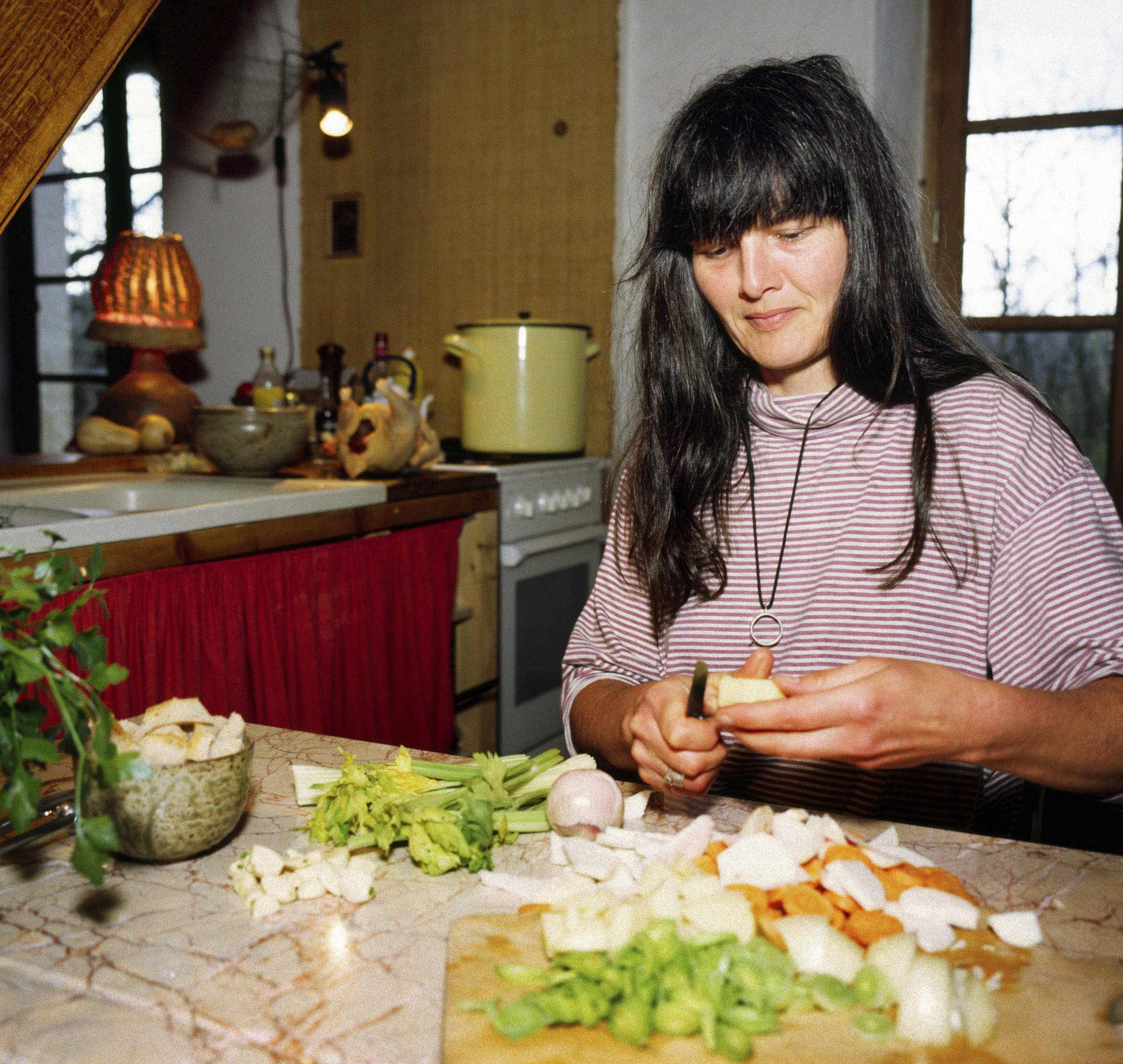
Social change stirs emotions in the kitchen
This social change has also changed expectations of family policy. While family policy measures before the turn of the millennium primarily served to provide financial security, today the framework conditions for a better work-life balance are becoming increasingly important.
Targeted adjustments
According to the study, this development is also reflected in public budgets. The proportion of family-related expenditure in the total expenditure of cantons and municipalities has more than doubled since 2000.
However, the authors of the study warn that a blanket expansion of family policy benefits is not advisable. It makes sense to make targeted adjustments in favour of disadvantaged children, single parents and low-income households, “without overstretching the existing, functioning framework”.
Join the debate:
External Content
Adapted from German by AI/ts
We select the most relevant news for an international audience and use automatic translation tools to translate them into English. A journalist then reviews the translation for clarity and accuracy before publication.
Providing you with automatically translated news gives us the time to write more in-depth articles. The news stories we select have been written and carefully fact-checked by an external editorial team from news agencies such as Bloomberg or Keystone.
If you have any questions about how we work, write to us at english@swissinfo.ch
External Content

In compliance with the JTI standards
More: SWI swissinfo.ch certified by the Journalism Trust Initiative

You can find an overview of ongoing debates with our journalists here . Please join us!
If you want to start a conversation about a topic raised in this article or want to report factual errors, email us at english@swissinfo.ch.