








Pentagon ‘blocked’ critical F-35 fighter jet report
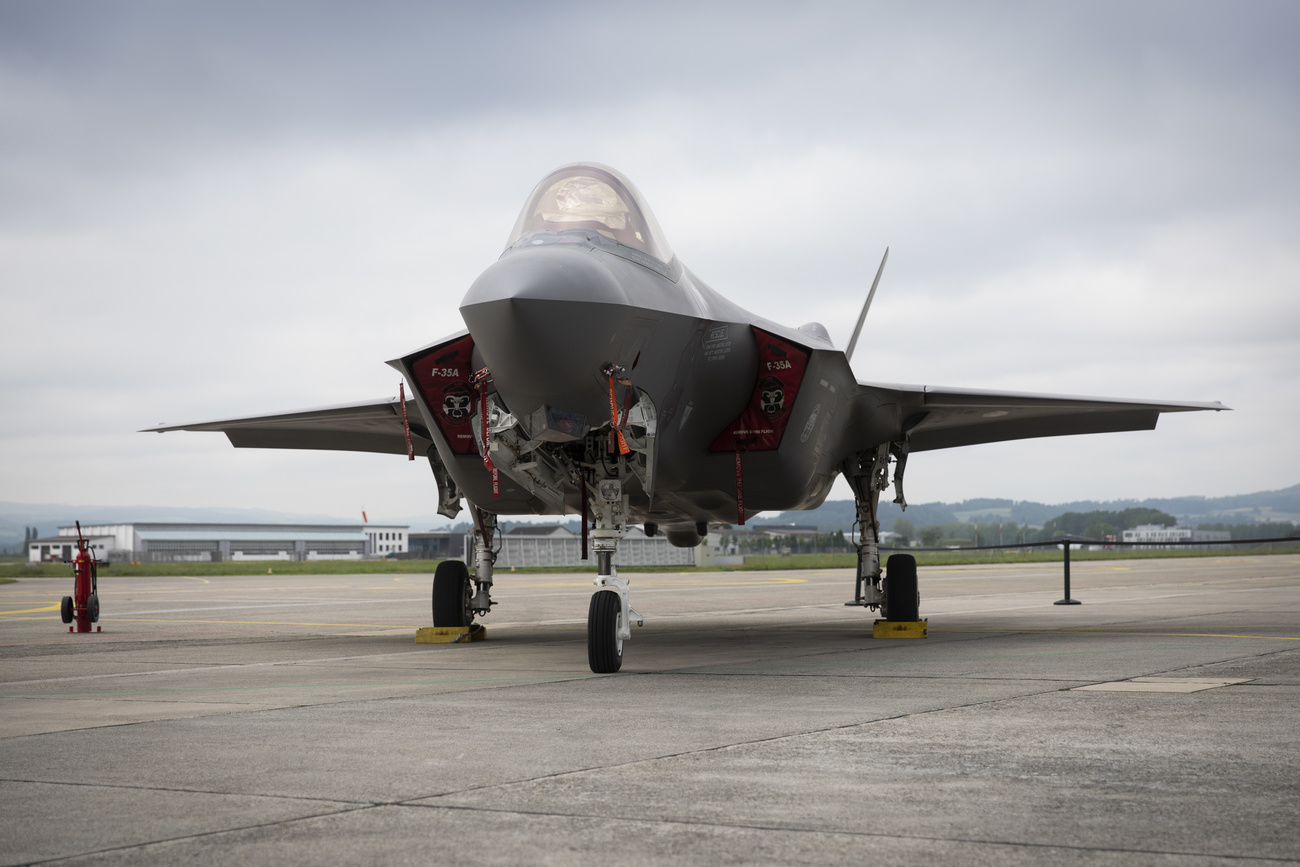
A critical report on the production of F-35 fighter jets has been banned by the Pentagon from publication in the United States, a source within the US Government Accountability Office (GAO) told Swiss public broadcaster RTS.
Select your language
Generated with artificial intelligence.
Listening:
Pentagon ‘blocked’ critical F-35 fighter jet report
An expert interviewed by RTS believes this is a cover-up of problems in modernizing the aircraft ordered by Switzerland.
This is the first time a GAO report on the F-35 has been banned from publication in the US, aviation expert Bill Sweetman told RTS. The document outlines the main production and modernisation challenges for the stealth aircraft for fiscal year 2025.
+ Renewed controversy in Switzerland over US fighter jets – explained
“It was determined that it could not be made public,” a source at the GAO confirmed to the RTS investigative unit. According to another GAO source, the Pentagon categorised the document as “unclassified information subject to control.” The US Department of Defense justified this action to RTS through the communications department of its dedicated program, the F-35 Lightning II Joint Program Office.
“During the security review conducted as part of the annual evaluation of the F-35 program, department officials determined that the compilation of technical performance indicators, operational readiness data, and proprietary information from subcontractors met the criteria defining ‘controlled unclassified information (CUI)’. Aggregating this data presents risks to operational security.”
Schedules put back
Sweetman, a former executive at US defence company Northrop Grumman that was a partner in the F-35 program, believes this is a cover-up. “I think if this report were published, we would actually see that all the schedules have been pushed back. The completion dates for many F-35 production projects have been changed and postponed. This clearly shows that the program is experiencing very serious difficulties,” he said.

More
Seven weaknesses in ‘Fortress Switzerland’
The F-35 faces modernisation challenges primarily related to its onboard computer hardware. Furthermore, its propulsion and cooling systems also present numerous logistical challenges, as the aircraft has a tendency to overheat.
The combination of these various factors and the chronic shortage of spare parts has prevented the aircraft from carrying out most of its missions. In 2021, when the Swiss government decided to choose the F-35A as Switzerland’s new fighter jet, the US promised to deliver an aircraft capable of operating 67% of the time. This threshold has now been lowered to 44%, according to the US Federal Audit Office.
US refutes problems
“For years, the idea, and the very foundation of the program, was that over time, performance would improve, problems would be solved, breakdowns would be less frequent, or repairs would be faster. However, this does not seem to be the case. The latest GAO report demonstrates that it will be necessary to buy more spare parts, accept lower availability, and, in general, invest more in aircraft support,” analyzes aviation expert Bill Sweetman.
Crédric Aufranc, the operational head of the F-35s in the Swiss Air Force, did not share this concern. “We have no concerns because we size the spare parts for routine operations accordingly, to ensure we can carry out the operations we require,” he told RTS.
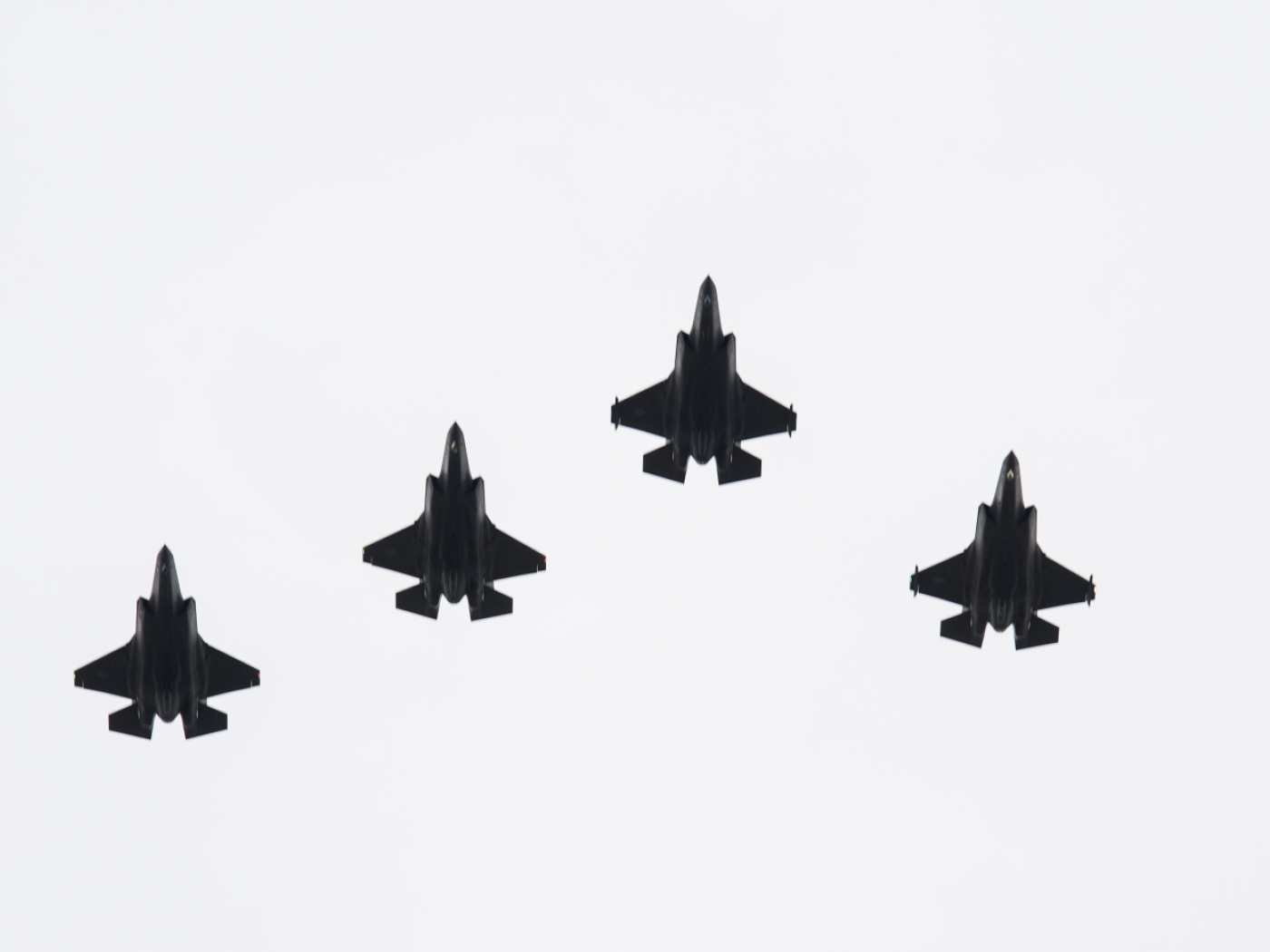
“And in addition, we have ordered an extra package of spare parts specifically to be able to operate the aircraft even if we no longer have support from the manufacturer.” F-35s destined for Switzerland began assembly in the US this spring. According to the announced program, the first models are expected in Switzerland in 2028.
More
Switzerland’s first F-35 jet being assembled
+ How we produce English news
Translated from German, reviewed by an English Department journalist.
External Content

In compliance with the JTI standards
More: SWI swissinfo.ch certified by the Journalism Trust Initiative

You can find an overview of ongoing debates with our journalists here . Please join us!
If you want to start a conversation about a topic raised in this article or want to report factual errors, email us at english@swissinfo.ch.