








Swiss households absorb fuel inflation better than other countries

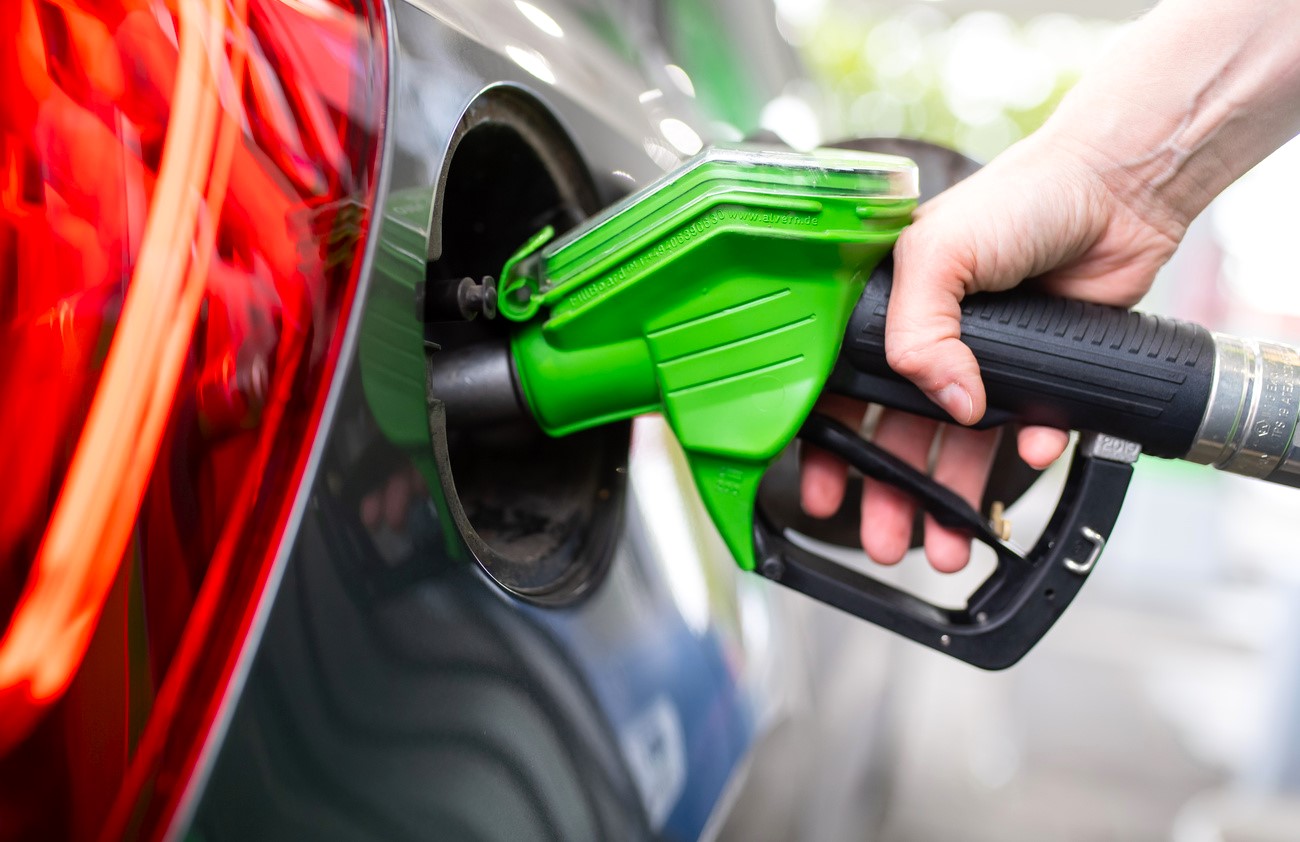
At many Swiss petrol stations, a litre of petrol currently costs CHF2 ($2.44). But it is relatively cheap to fill up in Switzerland compared with many other countries.
Select your language
Generated with artificial intelligence.
Listening:
Swiss households absorb fuel inflation better than other countries
The price of petrol is a hotly debated topic, especially when it recently crossed the symbolic threshold of CHF2 per litre.
Philippe Thalmann, a professor of economics at the Swiss Federal Institute of Technology Lausanne (EPFL), sees the true cost of fuel in a different way. “If you calculate the price in relation to average incomes, Switzerland has one of the cheapest prices,” he said.
When petrol prices are measured against average incomes, Switzerland is among the countries with the cheapest fuel. In most countries, petrol places a much heavier burden on household budgets than it does in Switzerland.

More
Switzerland braces for winter as gas risks mount
This is the case when compared with neighbouring countries, and even more so when compared with poorer regions of the world.
“A litre of petrol costs half as much as in Vietnam as in Switzerland in absolute terms,” said Thalmann. “But petrol consumes eight times as much disposable household income as it does in Switzerland,” he said.
Given the same conditions in Switzerland, a litre of petrol would cost CHF16 in the Alpine state.
Vietnam is by no means an extreme example. Relative to Ghanaian incomes, petrol is equivalent to about CHF33 per litre in Switzerland, and compared with Nepal, the price would be CHF65 per litre.
+ Switzerland’s fossil fuel dependence explained
Efficiency boost
A look back at history also shows that fuel is currently not so expensive. “Petrol is considerably cheaper today than it was in the 1980s,” said Thalmann.
Following the oil crisis in the late 1970s and early 1980s, crude oil reached unprecedented heights and the cost of petrol climbed to CHF1.25 per litre.
Adjusted for inflation, that equates to almost CHF2.37 today. And taking purchasing power into account, it would be as much as CHF3.50.
More
US oil buoys Swiss fossil fuel needs amid Middle East conflict
Efficiency gains also play a major role. A modern combustion engine vehicle now uses only about half as much petrol per 100km as it did 40 or 50 years ago.
The cost of a 100-kilometre journey has more than halved.
Consequently, today’s cars use less petrol, even though they are heavier and have even more horsepower.
“From that perspective, petrol is even cheaper now because our cars have become much more efficient,” said Thalmann.
A full tank of petrol takes drivers twice as far in a modern car as it used to.
More
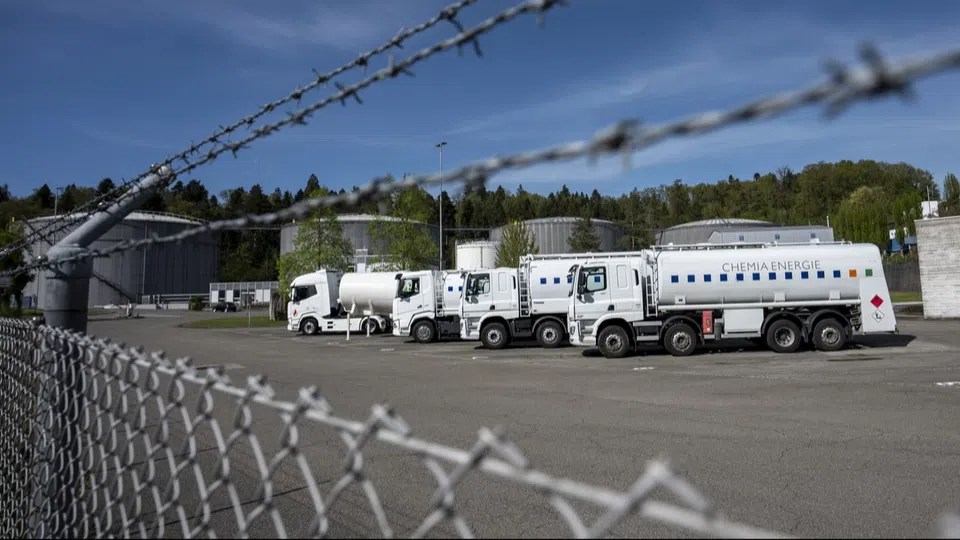
Why Switzerland’s fuel stockpiles are for Swiss use only
No change in behaviour
Ultimately, the pain of the CHF2-per-litre petrol price is a matter of individual perception. “If this is really perceived as a high petrol price, then people try to save money or switch to alternatives,” said Thalmann.
But there is no evidence of a dramatic change in behaviour. The latest traffic data from the Federal Roads Office suggests that traffic volumes in 2026 are higher than last year. And there has been no sign of a rapid escalation of registrations of electric cars.
Translated from German, sub-edited by Matthew Allen/ts

In compliance with the JTI standards
More: SWI swissinfo.ch certified by the Journalism Trust Initiative

You can find an overview of ongoing debates with our journalists here . Please join us!
If you want to start a conversation about a topic raised in this article or want to report factual errors, email us at english@swissinfo.ch.