








Why Switzerland’s fuel stockpiles are for Swiss use only
Series Switzerland and fossil fuels, Episode 11:
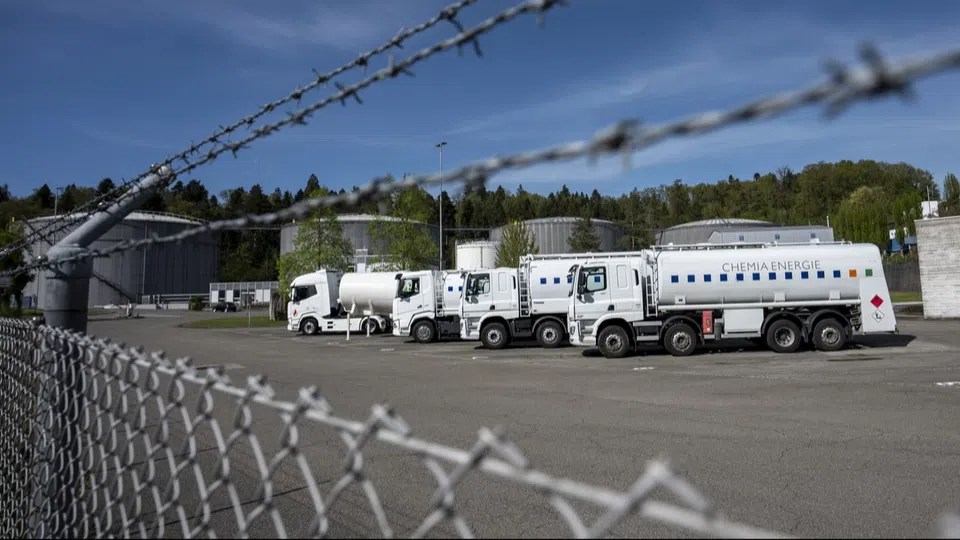
In the event of fuel and heating oil shortages, Switzerland can draw on compulsory stockpiles. It does not have to share these with other countries.
Select your language
Generated with artificial intelligence.
Listening:
Why Switzerland’s fuel stockpiles are for Swiss use only
Despite the ongoing war in Iran and the closure of the Strait of Hormuz, petrol and diesel continue to flow at Swiss petrol stations and planes are still taking off. The situation for kerosene, however, is tighter.
According to the Federal Office for National Economic Supply (FONES), supplies to Swiss airports are secure until the end of May 2026. If bottlenecks occur, the federal government can release fuel and heating oil from compulsory stockpiles (see infobox).
If serious shortages emerge, the government can draw on mandatory stockpilesExternal link managed by the private sector under federal supervision: national reserves of petrol, diesel and heating oil are designed to last four-and-a-half months, while kerosene stocks typically cover three months.
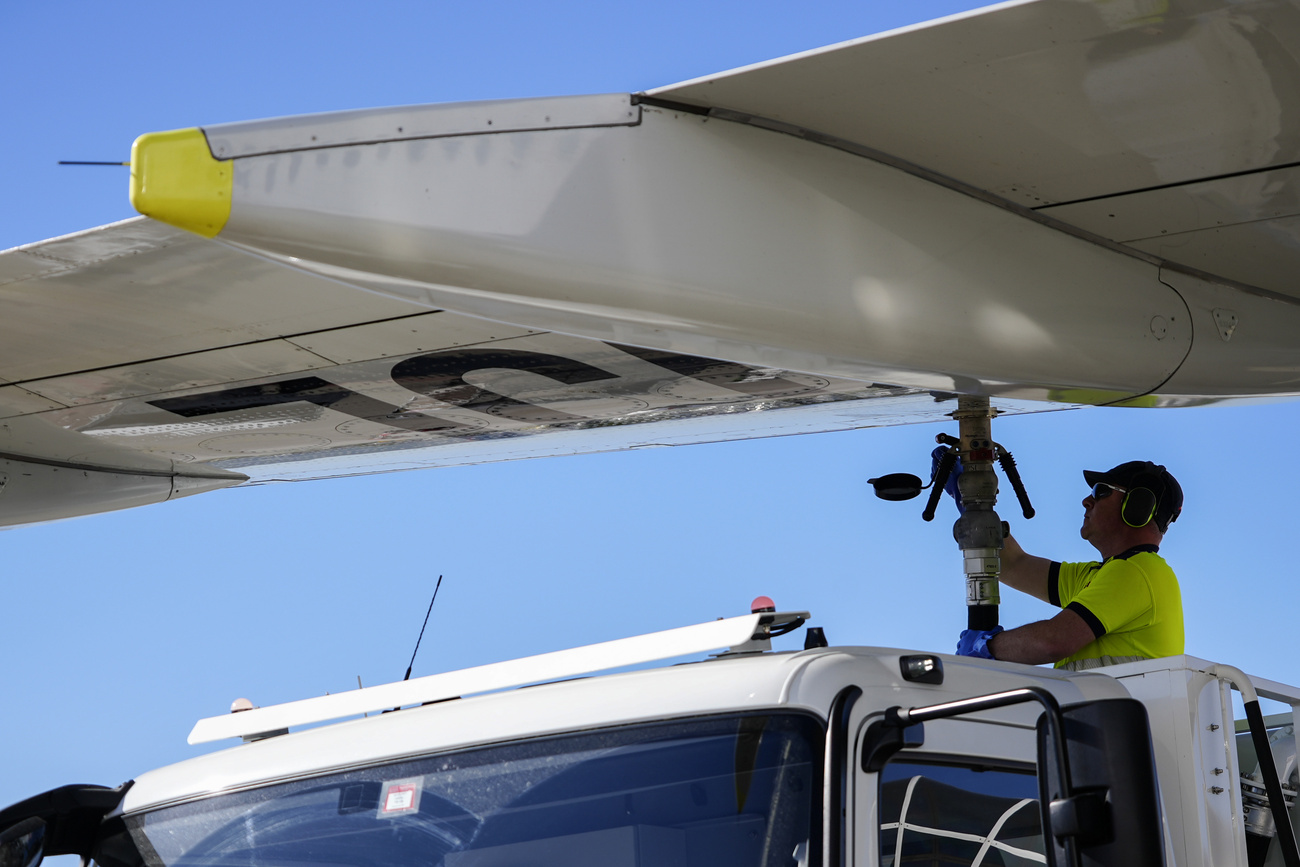
Owing to the ongoing war in Iran, kerosene is becoming scarce in Europe. A spokesperson for the Federal Office for National Economic Supply (FONES) has confirmed that kerosene reserves are currently below the prescribed level. The requirement for the range of the compulsory aviation fuel stockpiles is three months or 90 days of the average sales of the last three years at Swiss airports (i.e. excluding Basel).
According to FONES, the current range is 71 days “or around two and a half months”. The reason is a sharp rise in aviation fuel demand since the Covid-19 pandemic. As consumption increases, larger volumes must be added to compulsory stockpiles, often with a delay.
The required stockpile volumes are calculated based on average consumption over 2022, 2023 and 2024. Demand rose sharply in 2024, ahead of the outbreak of war, meaning reserves now must be built up in addition to regular supply.
According to FONES, this process can be slowed by looming supply bottlenecks, strong price fluctuations and shifts among importers. New importers typically have three years to fulfil their compulsory stockpile obligations. (Source: Keystone-SDA)
Unlike in European Union countries, however, what is stored in Switzerland is reserved exclusively for domestic use.
EU member states are bound by “energy solidarity” rules. If, for example, an EU country runs short of aviation fuel, others – such as Germany – are legally obliged to help.
No energy solidarity with EU countries
Switzerland is not bound by these rules. “Switzerland is not a member of the EU and is therefore not bound by energy solidarity,” says Nicole Mathys, head of the energy unit at FONES.

More
Switzerland’s fossil fuel dependence explained
There is, however, one exception: a gas supply agreement between Switzerland, Italy and Germany. In the event of a gas shortage, mutual solidarity can be invoked.
“The focus there is on supplying protected customers with gas – these include households, hospitals or emergency services, for example,” says Mathys.
>>A look at the economic consequences of the war in Iran on Swiss households:
More
How the war in Iran is affecting Swiss consumers
There is no comparable prioritisation regime for liquid fuels. This means that, while Switzerland does not recognise energy solidarity in fuels, it would not be insulated from the effects of a wider shortage.
If compulsory stockpiles are released in the event of bottlenecks, fuels such as kerosene, diesel and petrol would enter the market through normal commercial channels. Foreign traders could therefore buy fuel in Switzerland and resell it abroad. “In theory, someone can buy it and sell it again on the other side of the border,” Mathys says. The market therefore remains open.
Join the debate:
External Content
Priority for emergency flights
The Swiss government can nonetheless order special exceptions. “If aviation fuel were to become extremely scarce, then the Federal Council can demand that rescue, firefighting or search-and-rescue flights receive the aviation fuel deliveries they need,” says Mathys. “But we are still far from such a situation.”
Switzerland’s army is exempt from these rules. It maintains its own aviation fuel reserves, separate from the compulsory stockpiles held by the federal government in cooperation with the domestic oil industry.

More
Swiss fuel shortage ‘very likely’, warns trading expert
Translated from German using AI/sb/ts

In compliance with the JTI standards
More: SWI swissinfo.ch certified by the Journalism Trust Initiative

You can find an overview of ongoing debates with our journalists here . Please join us!
If you want to start a conversation about a topic raised in this article or want to report factual errors, email us at english@swissinfo.ch.