








How a Swiss lab is finding new cures in old drugs
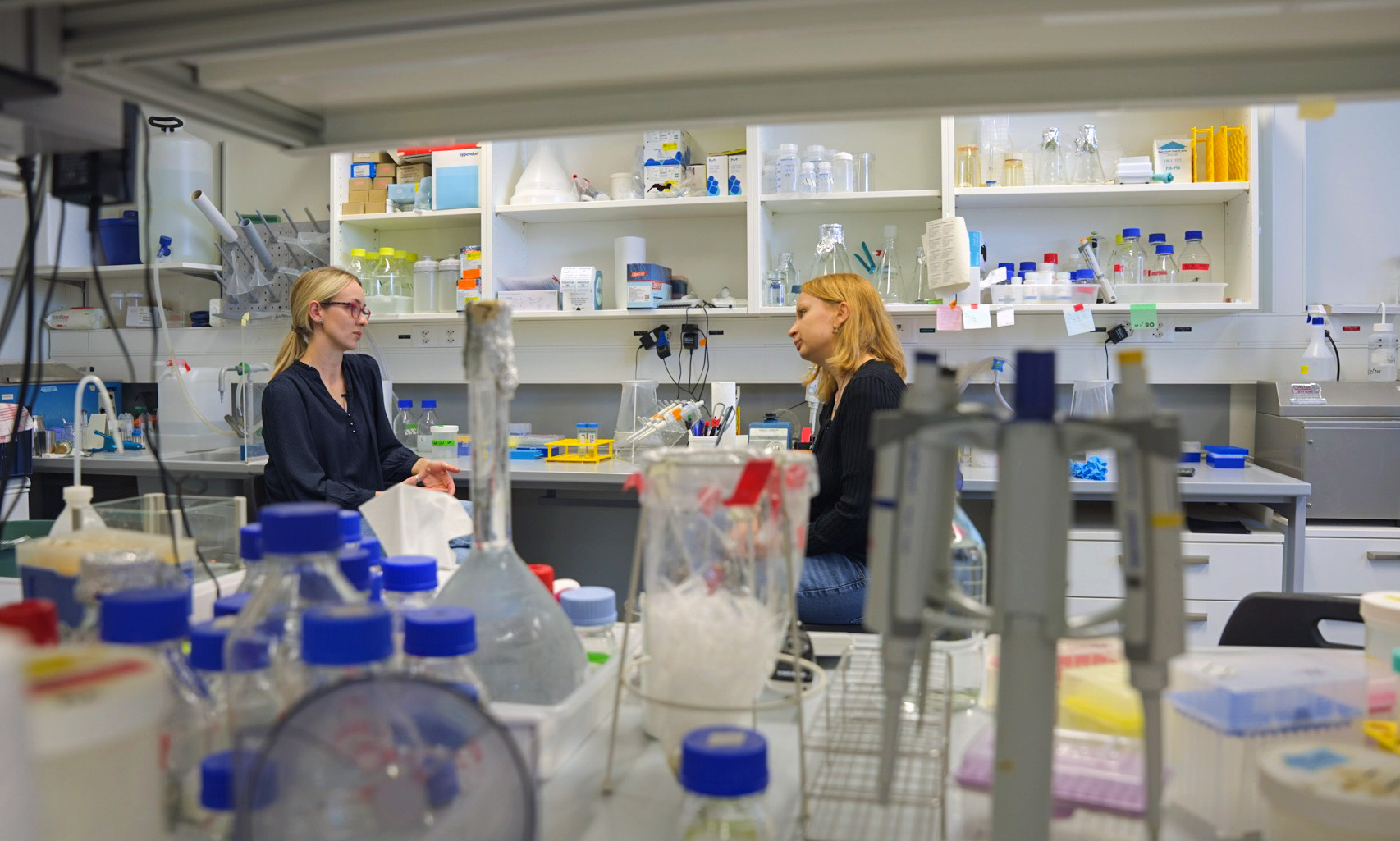
Researchers at the University of Geneva are scouring libraries of approved drugs in search of new treatments for rare diseases – with some success. The approach is now gaining traction globally as pharmaceutical companies’ interest in rare disease drug development wanes.
Select your language
Generated with artificial intelligence.
Listening:
How a Swiss lab is finding new cures in old drugs

Five years ago Vladimir Katanaev’s lab at the University of Geneva made a startling discovery. They found that widely available zinc salts – which were approved in the US in 1997 to treat a metabolic disorder called Wilson Disease – could also treat a rare, life-threatening disorder caused by a mutation in the GNAO1 gene.
The GNAO1 gene encodes the G protein called Gαo, which is one of the brain’s main signal regulators. It acts like a molecular switch, turning on and off to prevent neurons from becoming either too active or too quiet. Mutations in the GNAO1 gene, which affect about 400 people in the world, lead to seizures, developmental delays and movement problems.
The first GNAO1 mutations were identified only in 2013, but Katanaev, who is a professor of cell physiology and metabolism, had been studying the Gαo protein for nearly 20 years. So, when parents with children diagnosed with GNAO1 disorders, which have no approved treatment, started to look for experts, they naturally came across Katanaev’s research.
With some CHF175,000 ($215,000) in funding from foundations and patient associations, Katanaev and his team were able to figure out how the mutations disrupt the Gαo protein and cause disease. Specifically, the team learnt that the pathogenic mutations knock a single amino acid called glutamine 205 out of position, disrupting GTPase activity, which is the off-switch mechanism.

More
A mother’s quest to find a cure for her son
Armed with this new information about the protein, Katanaev’s team wondered if there was a way to restore the dysfunctional protein. As academic researchers, the idea of developing a new drug was daunting. It is estimated to take some $1-2 billion (CHF810 million-1.6 billion) and a decade or more to develop and bring a drug to market. The lab didn’t have the funding to discover or create an entirely new molecule and lead all the steps to get it to patients.
“It would take too much investment given the very small patient population size,” Katanaev said. Instead, the team decided to see if they could find an already approved drug that might work.
Repurposing old drugs isn’t a totally new concept. Many of the most popular drugs such as GLP-1s for obesity or Viagra for erectile dysfunction were originally tested or approved for other purposes.
But the concept has started to attract more attention for rare diseases – a collection of some 7,000 rare diseases, only 6% of which have an approved treatment. While some 300 million people in the world have a rare disease, each individual disease affects only a small number of people.
“You can’t employ the regular drug discovery process for rare diseases because it’s too long and expensive,” said Katanaev. “It only makes sense if the market is large enough.”
Finding another way
Regulatory incentives such as fast-track approvals and longer exclusivity have helped encourage big pharmaceutical companies to invest in rare disease drug development, but there are signs investment is waning.
A reportExternal link by data intelligence firm Evaluate estimates that the share of rare disease drug candidates will fall from 30% in 2027 to 22% in 2032. The authors argue that this reflects Big Pharma’s growing interest in big diseases such as obesity.
“We need other approaches,” said Katanaev. “Drug repurposing is a shortcut that can yield a drug in a relatively short time with a relatively low investment.”
Huge advances in our understanding of genetics are making it easier for academic labs like Katanaev’s to investigate mutations and how they cause disease. Artificial intelligence (AI) is also helping some labs make sense of massive amounts of molecular data and create computer models to test drugs.
Many labs now have high-throughput screening facilities that are widely used by big pharmaceutical companies to identify and design a new molecule.

Katanaev’s team used the process to screen a library of some 3,000 drugs approved in the US and tested them to see if they showed any activity on the Gαo protein. This is when zinc popped up. The test showed zinc could partially restore function of the mutated protein. Katanaev’s team tested the hypothesis in fly and mouse models and found it was safe and efficient.
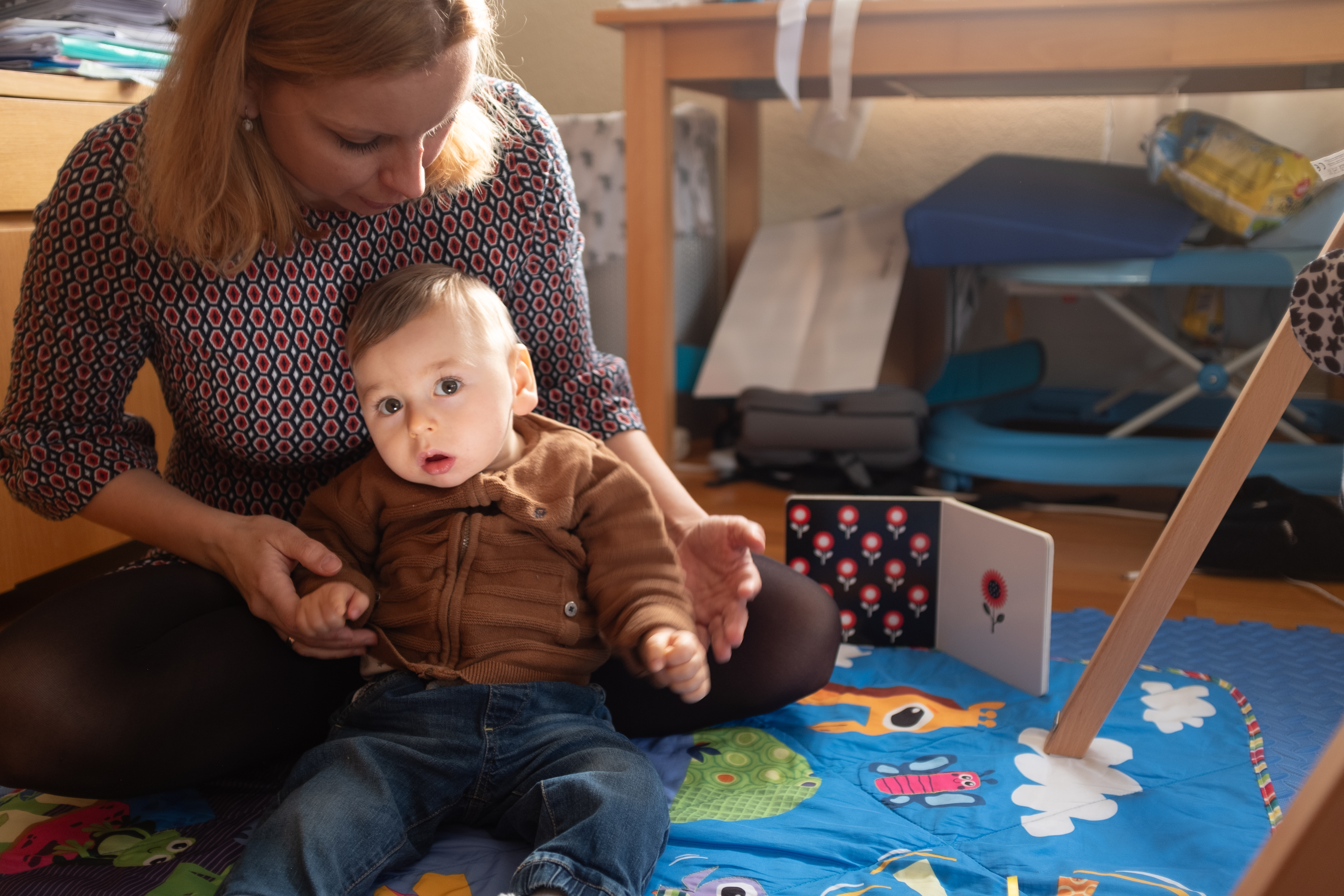
With these promising preclinical findings and given that zinc therapy is already approved for Wilson Disease, Katanaev and doctors from the University Hospital Cologne in Germany started the first human testing with a three-year-old boy with a GNAO1 mutation. Shortly after starting the treatment, the boy had fewer seizures and his sudden, jerky movements stopped almost entirely. A year after treatment, the boy’s condition is stable.
While it isn’t a cure, it has dramatically improved the patient and the family’s quality of life. The Cologne team is now testing zinc in 13 patients with GNAO1 disorders in a clinical trial thanks to a crowd-funding campaign by the German GNAO1 patient association.
Katanaev’s lab is now being approached by patient families around the world to see if they can apply the same approach to identify existing drugs that would work against other rare genetic disorders. The lab is now working on six genetic disorders with a team of postdoctoral researchers in Geneva.
Growing momentum
With health systems under strain, a growing number of initiatives and patient groups are working to advance repurposing, particularly in Europe. Some expertsExternal link believe 75% of existing drugs could be repurposed for another condition. Unlike some new drugs such as gene therapies that have had price tags of $2-3 million per dose, many repurposed drugs are already off-patent generics, which means they are more affordable for patients.
In 2022 Horizon Europe, the European Union’s flagship, seven-year research and innovation funding programme, invested €23 million (CHF22 million) over five years to build a European Platform for Medicines Repurposing called REMEDi4ALL. The initiative aims to accelerate the development and access to repurposed therapies by bringing together expertise and fostering collaboration among patients, researchers, clinicians, regulators and other stakeholders.
Huge challenges remain though. For an existing drug, even an old one, regulatory approval and reimbursement is far from straightforward. While repurposed medicines can often leverage existing safety data and, in some cases, avoid Phase I trials, they still have to undergo some clinical testing to demonstrate efficacy in the new disease and to determine the correct dosage. For example, zinc salts found in pharmacies as a nutritional supplement are at a far lower dosage than what is needed for Wilson disease and GNAO1 disorders.
“There still isn’t a dedicated regulatory pathway for repurposing drugs that would streamline and accelerate the process,” said Claudia Fuchs, senior project manager at EURORDIS Rare Diseases Europe, an alliance of more than 1,000 rare disease patient organisations.
Some studiesExternal link estimate repurposing a drug can still take around $300 million and 6-8 years from lab to patient, compared to 10-15 years for a new drug. Katanaev believes his lab’s workflow can repurpose drugs in 2-3 years for around $1 million, including clinical trials.
More
Desperate to save their children, parents become unexpected drug developers
Academic labs often lack the resources, regulatory know-how and clinical development expertise required to advance repurposed medicines through the lengthy and complex development process. Pharma companies could take this on, but they aren’t typically interested in testing and marketing old drugs.
“There’s a lot of investment going into novel approaches,” said Fuchs. “But when it comes to finding new uses for generics, companies don’t have an incentive.”
Without industry, it is mostly patient associations that have to pick up the tab and make difficult choices about how and where to spend their very limited funds.
Repurposing still isn’t a silver bullet. There is no guarantee that an approved drug will be a match for a disease. And if it is, how much each patient will benefit.
“If we are lucky, as we were with the case of zinc, repurposing can find a drug for a disorder which is otherwise not treatable and will remain untreatable for ever,” said Katanaev. “Right now, traditional drug development is not economically feasible.”
Edited by Virginie Mangin/ts

In compliance with the JTI standards
More: SWI swissinfo.ch certified by the Journalism Trust Initiative

You can find an overview of ongoing debates with our journalists here . Please join us!
If you want to start a conversation about a topic raised in this article or want to report factual errors, email us at english@swissinfo.ch.