








A skirmish at a Swiss swimming pool prompts debate on women’s versus trans rights

The case of a trans woman who was escorted out of the women’s section of a popular outdoor pool in Bern by police officers shows that Switzerland has not yet adapted to accommodate the queer community. A Swissinfo analysis.
Select your language
Generated with artificial intelligence.
Listening:
A skirmish at a Swiss swimming pool prompts debate on women’s versus trans rights

The incident occurred in the enclosed women’s section of the Marzili outdoor swimming pool. The popular summer bathing spot is located along the Aare River in Bern right at the foot of the Federal Palace and thus in the very heart of Switzerland’s political center.
Bernese women call this area the “Paradiesli” (Little Paradise). It is a zone reserved exclusively for them, where they can enjoy the sun and summer without swimwear without the risk of verbal harassment.
Last Sunday, a trans woman was expelled from this very paradise – led away by police officers in handcuffs. This was preceded by complaints from female visitors who were bothered by the trans woman’s male genitalia, which was clearly visible under a thong.
Tumultuous scenes and repentant authorities
The pool staff subsequently asked the trans woman to leave the premises. She insisted on her right to stay. Professional mediators employed by the city were unable to defuse the situation. The police were called, leading to tumultuous scenes. A female police officer was injured, and the trans woman was led away in handcuffs.
Bern authorities later admitted to making mistakes – a rarity in Switzerland. However, the facts of the case were overwhelming. The outdoor pool’s guidelines explicitly permit access for trans women, stating that in cases of doubt, the official legal gender is decisive. Therefore, the trans woman was entirely within her rights to insist on staying.
The authorities in the politically left-leaning city of Bern intend to communicate more clearly in the future regarding the rules of the “Paradiesli” and will provide training for their staff. They have thus drawn their conclusions from the incident.
Nevertheless, tensions remain in the aftermath. According to sources close to the trans woman, the police operation left her traumatised. The pool staff, mediators and police have all suffered reputational damage. Meanwhile, a fierce debate has ignited across Switzerland.
Women’s rights versus trans rights?
At its core, the debate revolves around which principle takes precedence: the right of cis women to a safe space, or the right of trans individuals to equal treatment.
One of the visitors at the Marzili who complained about the trans woman later testified that she had experienced sexual violence in her life. For her, the sight of male genitalia is a trigger, and the “Paradiesli” serves as a sanctuary. She likely belongs to a minority in this regard. For the majority of women in these designated zones, it is not the absence of penises that matters most, but rather peace, quiet and protection from male advances and male glances.
The competing perspectives
Still, there is a widespread belief that the inclusion of trans individuals in specific areas of life clashes with traditional women’s rights. This view has prominent advocates, such as the German feminist Alice Schwarzer. While she campaigns for trans rights and against the discrimination of trans individuals, she also emphasises that this must not come at the expense of the rights, safe spaces and political visibility of biological women.
When looking at the debate in Switzerland, a majority represents exactly this line of thought. In the comment sections of major Swiss newspapers, voices demanding the preservation of safe spaces for women clearly predominate. Accompanying this is the complaint that a minority is dictating the rules for the majority; even in the left-liberal Tages-Anzeiger, several commentators expressed this view.
Chris Brönimann, one of Switzerland’s most prominent trans individuals, expressed a similar sentiment on Instagram, writing:
“We are experiencing an imbalance where a minority dictates to the majority how it should function. We do not strengthen acceptance by trampling on the feelings, the sense of modesty, and the safe spaces of women.”
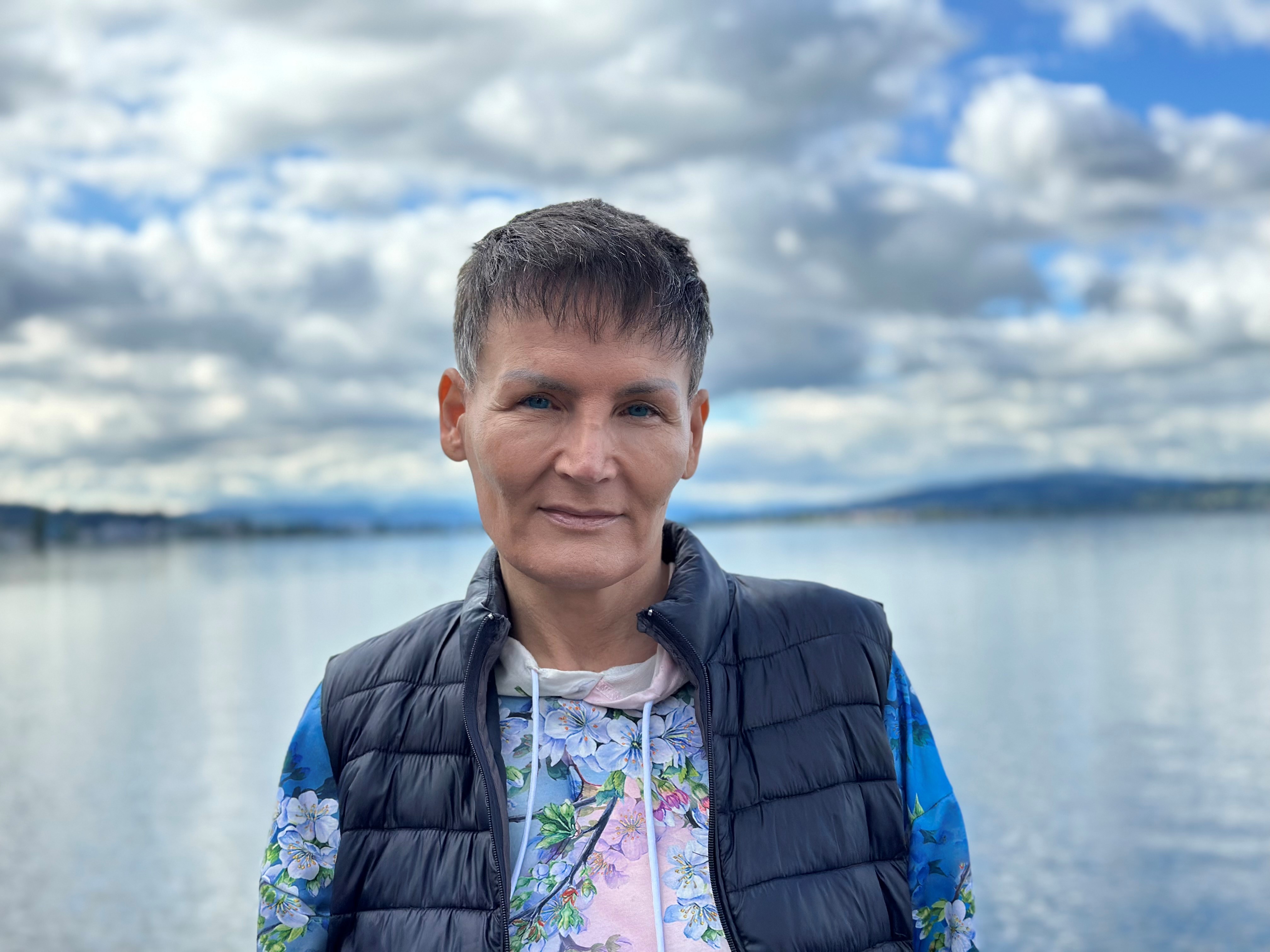
More
Switzerland’s most renowned trans person no longer wants to be a woman
Of course, there are other opinions, both within and outside the queer community. The Tages-Anzeiger identifies a clear demarcation line between political camps as well as generations.
How the conflict could be defused
Above all, the incident in Bern is proof that Swiss society has not yet found a unified approach to dealing with trans people. Thus, the question of whether the right to safe spaces for women or the inclusion of trans individuals takes precedence is simply framed incorrectly.
Such a balancing of competing interests is unnecessary because a city the size of Bern can easily accommodate the needs of different groups by creating an additional zone within the same facility or in one of its many other pools.
Looking around Switzerland, various access regulations regarding trans individuals already exist today. For instance, the Zürcher Frauenbadi (Zurich Women’s Bathhouse) only admits trans women who are perceived as women by the staff.
More
Seven graphics showing how LGBTIQ+ people are doing in Switzerland
The question that then arises is how much segregation both majorities and minorities are willing to accept to safeguard the needs of individual groups. This requires a practical, rather than an ideological, answer. The argument that a policy granting every group its own retreat acts as a dividing rather than a unifying force is not an insurmountable obstacle.
This is particularly evident in the case of outdoor pools: even if major cities create additional safe zones for different groups in the future to defuse the conflict, mixed-gender outdoor pools will still clearly predominate in Switzerland. In these areas, swimwear is mandatory, genitals are not visible and everyone swims together.
Edited Balz Rigendinger. Translated from German by Alexandra Andrist/ac

In compliance with the JTI standards
More: SWI swissinfo.ch certified by the Journalism Trust Initiative

You can find an overview of ongoing debates with our journalists here . Please join us!
If you want to start a conversation about a topic raised in this article or want to report factual errors, email us at english@swissinfo.ch.