








Dangerous delivery: how doctors in Geneva handled the hantavirus

Geneva University Hospital was the first to identify the hantavirus strain behind an outbreak on a cruise ship in May 2026. Here’s how it did it.
Select your language
Generated with artificial intelligence.
Listening:
Dangerous delivery: how doctors in Geneva handled the hantavirus

Swiss headlines were rife with news of the hantavirus last week, after an infected man who had been on a transatlantic cruise was hospitalised in Zurich. A total of 11 cases, including three deaths, have been reported among passengers of the MV Hondius ship since the World Health Organisation (WHO) was alerted on May 2.
Hantaviruses are a group of more than 20 viral species carried by rodents which can cause various illnesses. South Africa’s National Institute for Communicable Diseases (NICD) confirmed a case on May 2. The exact variant involved was identified as the Andes strain by a lab at Geneva University Hospital (HUG) on May 5.
The discovery by HUG meant that the World Health Organization (WHO) was better able to understand the mechanisms of the virus and take appropriate measures to deal with the outbreak.
“Identifying the viral species is important to understand transmission, severity and origin,” said Francisco-Javier Perez Rodriguez, the biologist in charge of emerging viruses at the lab.
The Andes strain is the only hantavirus known to be transmitted between humans but requires close contact to do so. It can cause the hantavirus pulmonary syndrome, a severe and potentially deadly disease that affects the lungs.
From a patient sample to the WHO, Swissinfo looks at how Geneva’s virology result shaped the response to a global outbreak.
How we reported the news about the Swiss hantavirus patient:

More
Man with hantavirus is being treated at Zurich University Hospital
From the patient to the lab
On May 4, the infected Swiss citizen was admitted to the University Hospital Zurich (USZ), which collected blood, urine, and respiratory samples using swabs similar to those used to test for Covid-19. The samples were then packed to be transported in three different layers of protection, as is customary for viruses.
That same day, the samples were delivered by car to the National Reference Center for Emerging Viral Infections (CRIVE) in Geneva, one of HUG’s multiple virology labs.
The centre was created in 2005 and is mandated and partially funded by the Federal Office of Public Health (FOPH) to diagnose emerging viruses like dengue, SARS or Zika.

CRIVE is one of four Swiss labs certified at the highest level of biological containment. It has pressure-resistant doors and waterproof walls, and its water and air supplies are separate from the rest of the hospital complex and decontaminated multiple times before and after use.
“There are various security levels to work with micro-organisms,” said Perez Rodriguez. “The maximum security is level 4, and we used a level 3, because we know hantaviruses aren’t as dangerous as the Ebola virus, which would require the highest level of security.” The lab’s certification is limited to its mandate of diagnostics and it can’t store or grow cell cultures of level 4 viruses.
The refrigerated samples containing the virus were opened in biosafety cabinets, workspaces built under hoods that protect from contaminated air particles.
From PCR testing to sequencing
“There are different techniques to diagnose a virus, and we used a Polymerase Chain Reaction (PCR), just like for Covid,” said Perez Rodriguez.
With this technique, experts extract the virus genome from the sample and mix it with reagents, a series of compounds that cause chemical reactions. If the virus is present, short DNA sequences of the virus, known as primers and probes, attach to the viral genome, and the target sequence is amplified and signalled by fluorescent molecules.
To avoid diagnostic errors, primers and probes need to be carefully designed and target parts that are unique to each virus.
Reagents for emerging viruses most likely to be brought back to Switzerland from other countries are stored in CRIVE’s freezers, so that they can be used for diagnosis when samples arrive. The HUG lab stores reagents for seven of the over 20 hantaviruses species.
The team tested both the Andes strain, endemic to South America from where the cruise departed, and the Sin Nombre species, to rule out a North American origin.
It took two days for to sequence the virus in collaboration with the hospital in Zurich and the results were posted on a public database, accessible to all. The decoded genome provides a comprehensive genetic blueprint and can be used to develop a better understanding of the virus.
From the archives – when another Swiss virologist went viral:
More
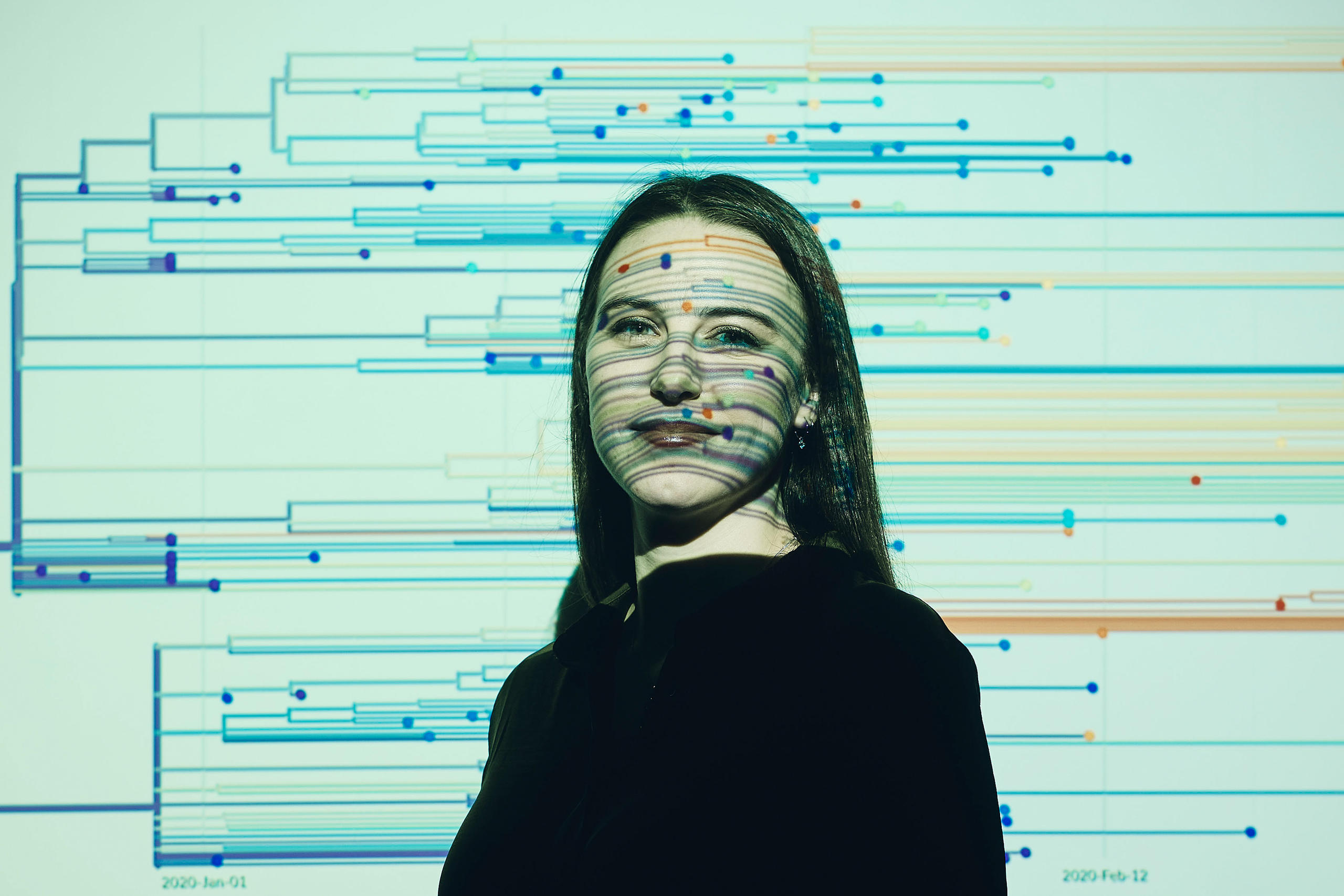
Emma Hodcroft: The ‘virus hunter’
From experts to the world
In Switzerland, doctors and labs are bound by law to communicate about the presence of over 50 pathologies including HIV, measles, and salmonella. Between the positive PCR test and the sequencing, CRIVE virologists told the FOPH, the cantonal medical authorities, and the WHO about their diagnostic of the Andes strain.
“The communication with the WHO was easily established, as the Geneva Center for Emerging Viral Diseases, which works closely with CRIVE, is a WHO Collaborating Centre,” said Perez Rodriguez. Since 2023, the HUG centre has been collaborating with the international organisation on testing and sharing expertise.
South Africa also confirmed the outbreak was caused by the Andes strain after partially sequencing the virus. The WHO confirmed nine of the 11 cases and said the other two were probable cases.
Then what?
CRIVE has thousands of virus samples in its freezers, and decides on a case-by-case basis about which to discard or keep, depending on scientific interest. Although it can hold onto inactivated genetic material, CRIVE’s mandate prevents it from storing the most dangerous viruses, like Ebola. In Switzerland, such viruses can only be stored in a laboratory in Spiez (canton Bern) which is specialised in chemical, biological, radiological, and nuclear risks.
“We don’t have the capacity to keep all our Covid samples but emerging or novel samples like this hantavirus one are very precious for us. It could allow us to control our diagnostic material in the future and we don’t currently have a date to discard it,” said Perez Rodriguez.
Edited by Virginie Mangin/dos

In compliance with the JTI standards
More: SWI swissinfo.ch certified by the Journalism Trust Initiative

You can find an overview of ongoing debates with our journalists here . Please join us!
If you want to start a conversation about a topic raised in this article or want to report factual errors, email us at english@swissinfo.ch.