








Five numbers show how the climate is changing in Switzerland
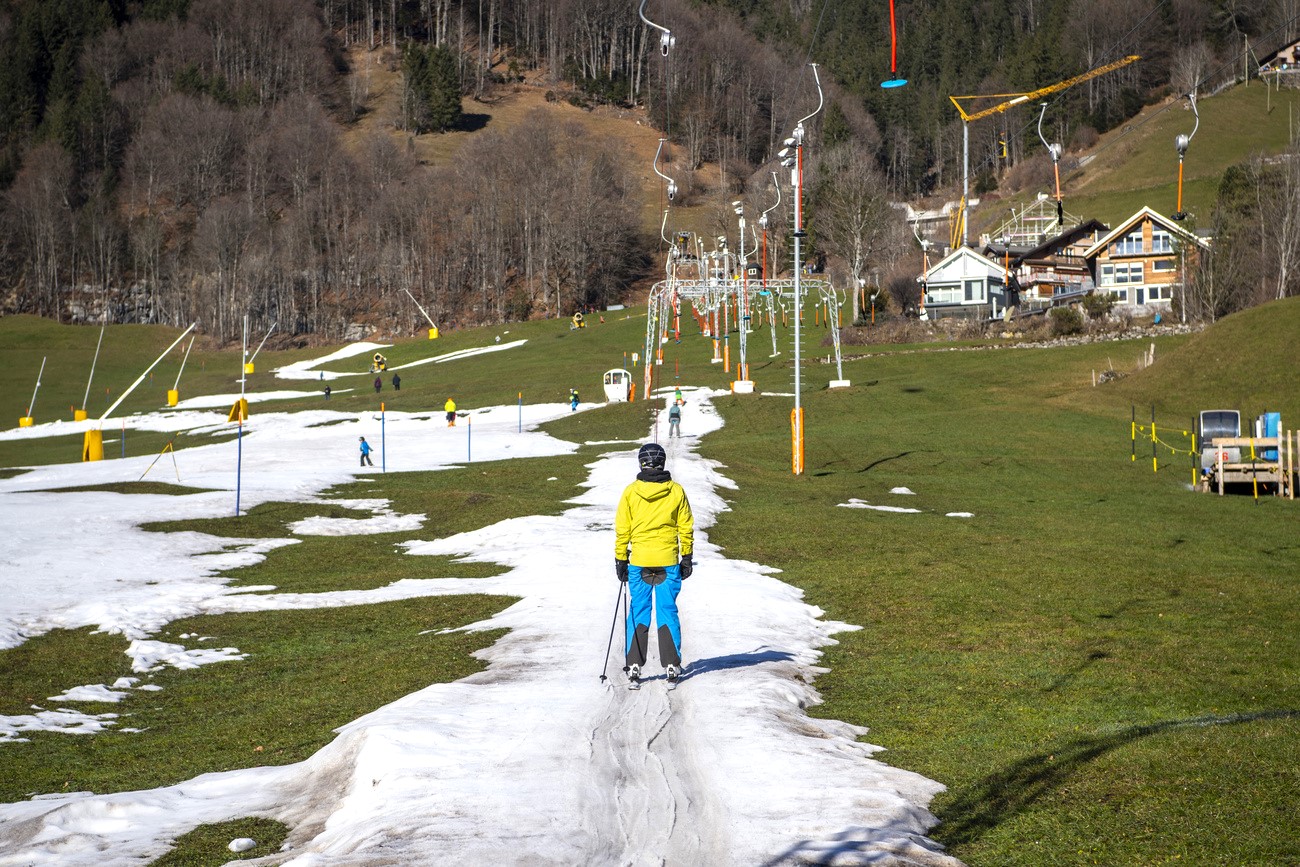
Switzerland is among the countries most affected by climate change. What impacts does this have on everyday life and on the landscape? We explain it with five key figures.
Select your language
Generated with artificial intelligence.
Listening:
Five numbers show how the climate is changing in Switzerland

Climate change is transforming Switzerland. Heatwaves, droughts and heavy rainfall are becoming increasingly frequent and intense. Summers tend to be drier, and winter snowfall less abundant than in the past. The melting of glaciers and permafrost is intensifying natural hazards, especially in Alpine regions.
According to a new reportExternal link from the Swiss Academy of Natural Sciences (SCNAT), Switzerland is warming at a rate about 2.2 times higher than the global average.
The report, published in April with contributions from around 60 experts, summarises the most up‑to‑date scientific knowledge on Switzerland’s climate.
>>Extreme heat and drought are Switzerland’s top climate change risks:
Five figures from the new SCNAT report help illustrate the scale of climate change in Switzerland.
2.8°C average temperature increase
The average global temperature between 2015 and 2024 increased by about 1.2°C compared with pre‑industrial levels. The increase was 2.2°C in Europe and 2.8°C in Switzerland, SCNAT reports. Global warming is mainly caused by rising concentrations of greenhouse gases linked to the consumption of fossil fuels.
Switzerland is among the ten countries warming the fastest in the world. There are two main reasons for this stronger‑than‑average warming: Switzerland’s geographical position on land (which warms faster than the oceans) and the reduction of snow and glacier cover. Exposed surfaces, such as soil and rock uncovered by retreating glaciers, tend to absorb more heat, accelerating overall warming across the country.
External Content
Other possible causes include changes in atmospheric circulation, drier soils in summer and reduced air pollution. Although the effect is limited, cleaner air allows more heat to reach the Earth’s surface.
Scientific research has long underestimated all these factors. This is why warming has progressed faster than was expected just ten years ago, said Sonia Seneviratne, a climatologist at the federal technology institute ETH Zurich, during the presentation of the SCNAT report.
>>Find out which countries are warming the fastest in our article:
More
Why Switzerland is among the ten fastest-warming countries in the world
65% of glacier volume lost
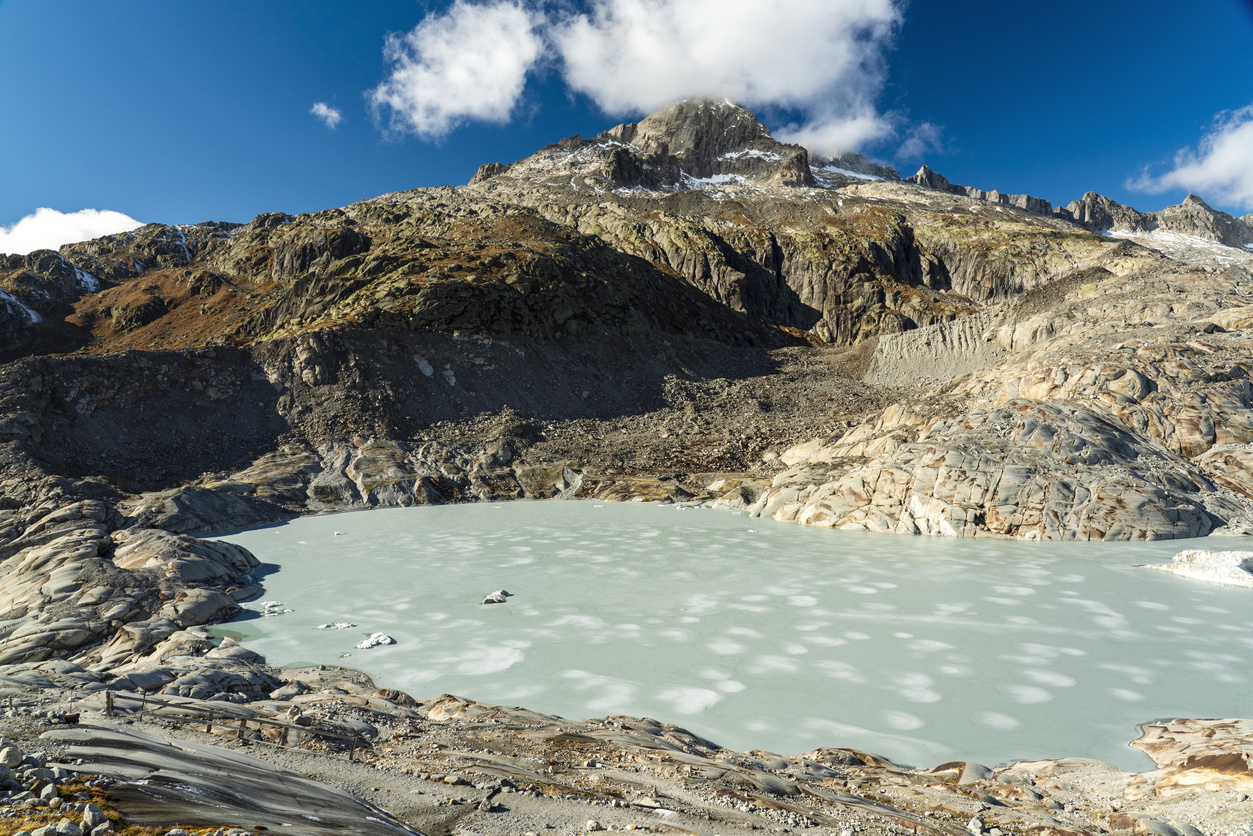
The melting of glaciers – iconic elements of the Alpine landscape and centrepieces of Switzerland’s cultural identity – is one of the most visible indicators of warming in the country. Glaciers’ tongues (the part that extends towards the valley) are shortening and the ice is thinning, a process accelerated by the increase in heat waves.
Since the end of the Little Ice Age around 1850, a period of cooler-than-average climate, Swiss glaciers have lost about 65% of their volume. Between 2016 and 2022 alone, around one hundred glaciers – out of a total of about 1,400 – disappeared completely. The most severe losses affect glaciers located below 3,000 metres in altitude, but even high‑altitude glaciers are no longer safe.
The dramatic retreat of glaciers is profoundly reshaping the Alpine landscape and has direct repercussions for water resources, hydropower production and mountain ecosystems. In Switzerland, the melting of Alpine glaciers also entails an increased risk of natural disasters such as floods, debris flows and landslides.
>>Glaciers are retreating worldwide, with consequences for tens of millions of people:

More
Glaciers of the world, local melting and global impacts
External link12 fewer days of snow
Swiss glaciers are retreating in part because snowfall in the mountains is less abundant. Snow is essential for glaciers, as it ensures their growth and a thick layer of snow can protect glaciers during warm periods.
When average temperatures rise, precipitation increasingly falls as rain rather than snow. The so‑called zero‑degree level – the altitude where rain turns into snow – has risen by several hundred metres since the beginning of the 20th century. Snow cover in Switzerland is thinnerExternal link, less widespread and less persistent – especially at low and medium elevations.
In some regions of Switzerland the duration of snow cover shortened by 12 days between the reference periods 1961–1990 and 1991–2020. This means that today the ground remains snow‑covered for almost two fewer weeks per year than in the past.
Across the country, since 1970, the number of days with snow has declined by 50% in places that are 800 metres above sea level, and by 20% at around 2,000 metres altitude.
The decline in snow primarily affects ski resorts, which are pillars of winter tourism in Switzerland. For many low‑ and mid‑altitude ski lift operators, survival is becoming increasingly uncertain.
>>Here is how ski resorts might cope with winters with less snow:

More
Climate change in the Alps: five ways Swiss ski resorts are fighting for survival
26% more frequent heavy rainfall
The fact that rain increasingly replaces snow in winter does not mean that it rains more in Switzerland. But rainfall patterns have changed, becoming more intense. Warmer air can hold more moisture, leading to heavier precipitation during extreme events.
One of the most violent episodes in recent years occurred in Lausanne in the summer of 2018: within just ten minutes, 41 millimetres of rain fell – a national record for such a short time span.
Overall, heavy daily precipitation events in Switzerland are now 12% more intense and 26% more frequent than at the beginning of the 20th century. These events represent a significant risk, as they can trigger floods, debris flows and landslides, causing major damage to infrastructure and agricultural land.

CHF665 million in productivity losses due to heat
Switzerland and western Europe are among the regions that have experienced the strongest increase in extreme heat since 1951, according to SCNAT. The highest daily maximum temperature of the year in the country’s main cities – Zurich, Geneva, Basel and Bern – has risen by 3.4°CExternal link over the past century.
Other indicators confirm this trend. In Switzerland, the number of tropical days – when maximum temperatures reach or exceed 30°C – has risen significantly. This development affects not only the environment, but also people’s ability to work and their physical and mental well‑being.
High temperatures and heatwaves reduce economic productivity: they increase absences and accidents and make machinery and infrastructure less efficient. Economic productivity losses in Switzerland due to excessive heat are estimated at around CHF665 million ($850 million) a year.
Daytime heat combined with a lack of night‑time cooling poses a serious health risk, especially for older people, those who are ill and young children. In recent years, summer heat has caused several hundred deaths, SCNAT notes. The estimate for the summer of 2024 is 326 deaths.
“We are observing an increase in heat‑related deaths,” explained Sonia Seneviratne. “A certain number of these would not have occurred without the impact of climate warming.”
More

Edited by Gabe Bullard/VdV

In compliance with the JTI standards
More: SWI swissinfo.ch certified by the Journalism Trust Initiative

You can find an overview of ongoing debates with our journalists here . Please join us!
If you want to start a conversation about a topic raised in this article or want to report factual errors, email us at english@swissinfo.ch.