








Euclid space telescope discovers oldest quasars known to date
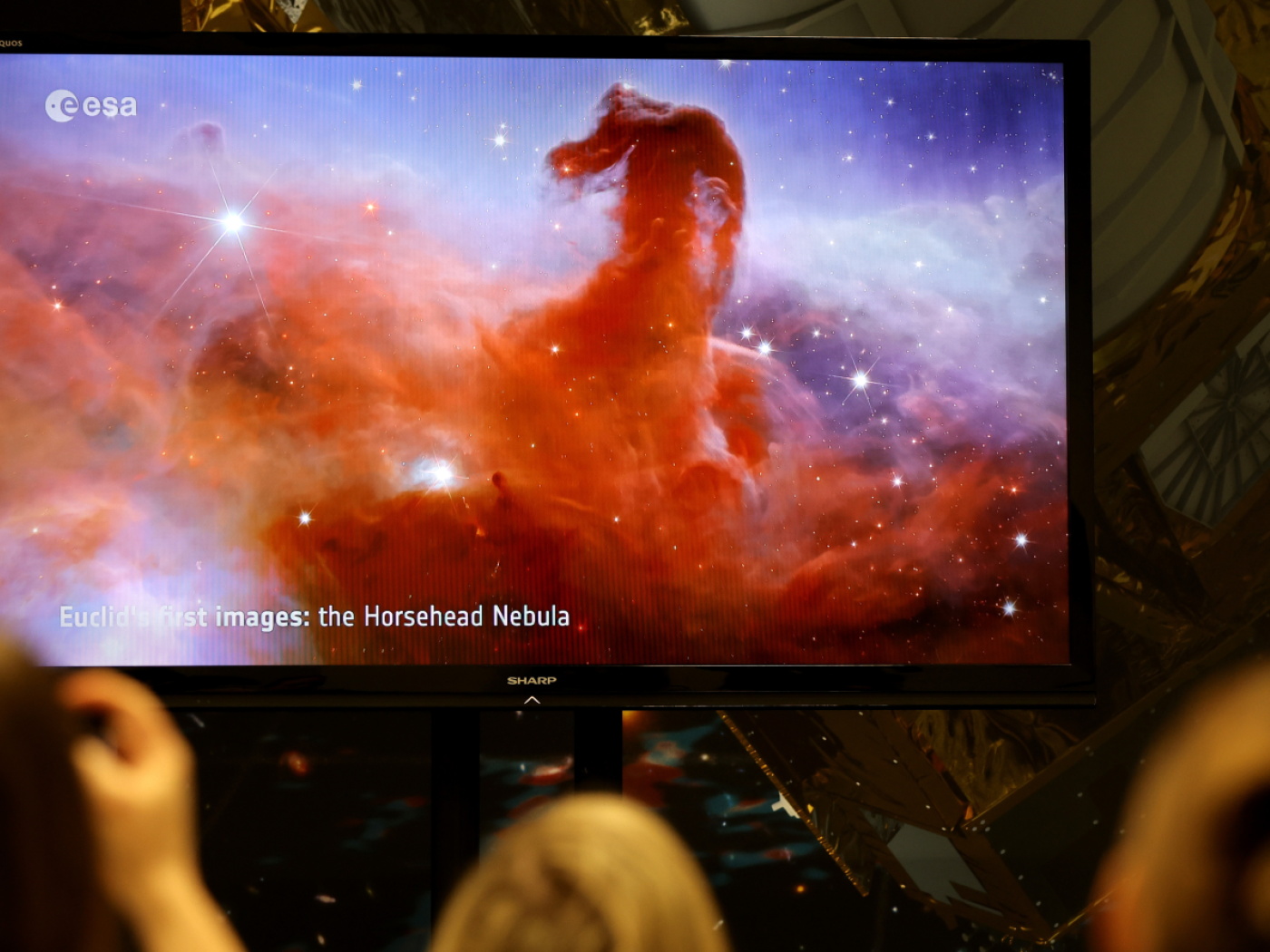
The Euclid space telescope mission, which is being led with Swiss participation, has discovered the two oldest quasars ever observed. They date back to a time when the universe was only around 670 million years old. The discovery provides valuable insights into the early history of the universe.
Launched in 2023, the space telescope has discovered a total of 31 new quasars from the early universe, the European Space Agency (ESA) announced on Monday.
Quasars are particularly bright centres of galaxies. They represent a brief phase in the life of a galaxy during which large quantities of matter plunge into the central black hole. This process releases an enormous amount of energy, which can outshine the rest of the galaxy by a factor of 100 to 1,000.
According to the ESA, the two oldest newly discovered quasars shone with the power of around one trillion suns. Their light travelled for more than 13 billion years before reaching the Euclid telescope. According to the ESA, they date from around 670 million years after the Big Bang. If the history of the universe from the Big Bang to the present day were compressed into one hour, not even three minutes would have passed when these quasars were shining.
More
Switzerland eyes mediation role amid rising risk of conflict in outer space
Important for research
Such discoveries are important for research. They reveal what happened in the early universe. Researchers hope to use this information to better understand how the first galaxies formed – and how black holes could have grown so large so early on.
Until now, only a few quasars from this early period were known. Euclid has now significantly increased this number. According to the ESA, the discovery doubles the number of known quasars from this era.
Swiss institutions involved in the Euclid mission include the University of Geneva, the University of Zurich, the Swiss Federal Institute of Technology Lausanne (EPFL) and the University of Applied Sciences and Arts of Northwestern Switzerland. Swiss researchers and engineers contributed to areas including instrumentation, data processing and simulations.
Translated from German/sub-editing gw

In compliance with the JTI standards
More: SWI swissinfo.ch certified by the Journalism Trust Initiative

You can find an overview of ongoing debates with our journalists here . Please join us!
If you want to start a conversation about a topic raised in this article or want to report factual errors, email us at english@swissinfo.ch.