








Swiss insect world has evolved over 90 years
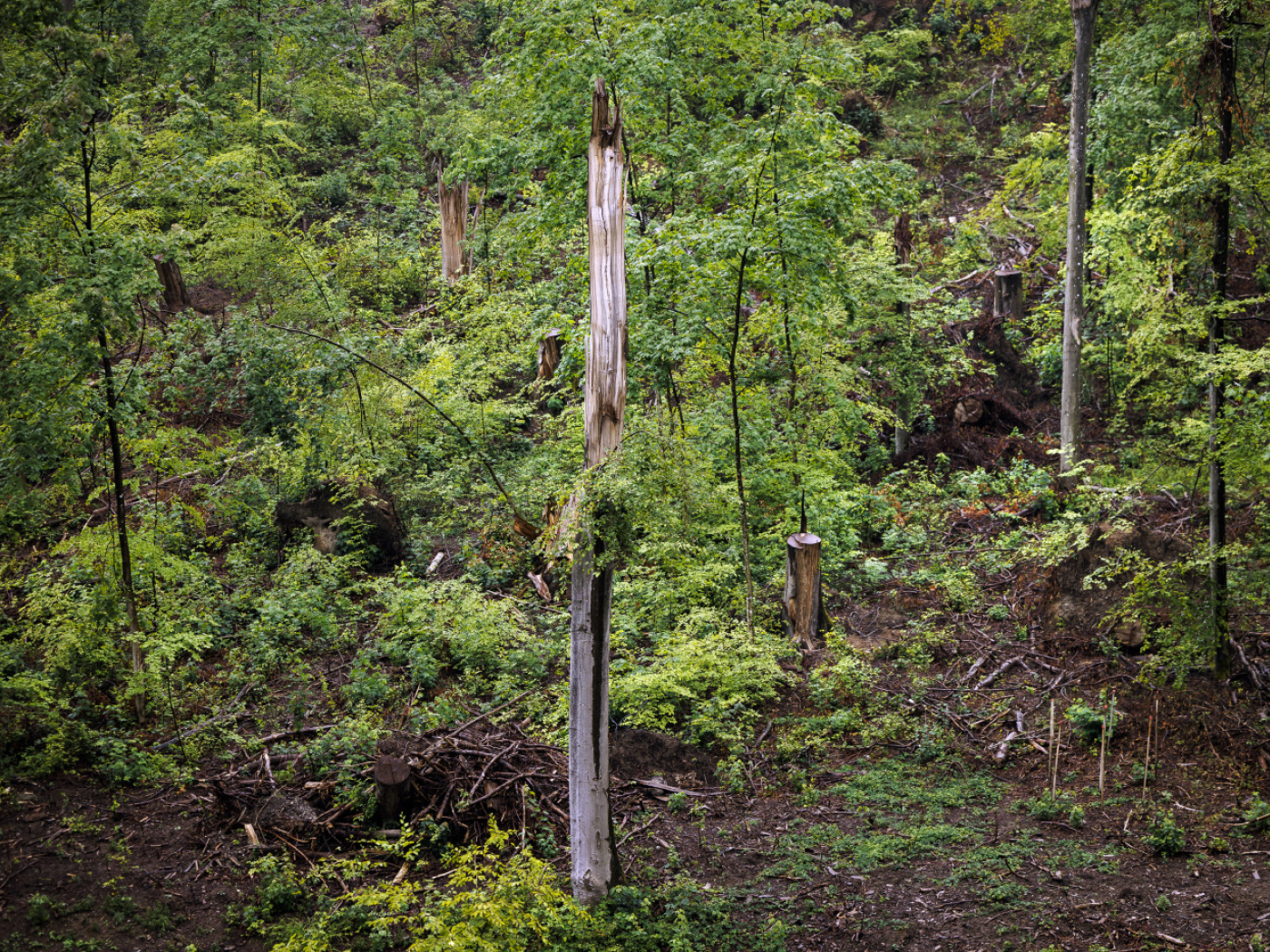
Deadwood beetles are celebrating a comeback, but things are looking bleak for many butterflies, according to a study of Swiss insects in the last 90 years.
Select your language
Generated with artificial intelligence.
Listening:
Swiss insect world has evolved over 90 years
+Get the most important news from Switzerland in your inbox
This is shown by a study published in the journal Nature Ecology and Evolution by several Swiss research institutions.
A research team led by Agroscope analysed records of 811 species from 1930 to 2021, said the Swiss Federal Institute for Forest, Snow and Landscape Research (WSL).
The result reveal that the number of deadwood beetle species declined until 1960, stabilised thereafter and has returned to the level of 1930 since the 2000s.
By contrast, the diversity of butterflies declined until the 1980s and has not recovered since then. There are now on average 12% fewer butterfly species nationwide than in 1930, with the decline being particularly pronounced on the Central Plateau (29%) and in the northern foothills of the Alps (13%).
Intensification of agriculture
The greatest declines occurred during the period of intensification and mechanisation of agriculture between 1950 and 1980. Fertilisers, pesticides and the structural standardisation of the landscape had a negative impact on habitats. The removal of dead wood to increase yields in forestry also deprived many beetle species of their livelihood.
Climate change had the opposite effect. According to the study, rising temperatures favoured many warmth-loving species that have been able to spread since the 1980s. Deadwood beetle species were the main beneficiaries of this.
They also benefited from major storms such as Vivian in 1990 and Lothar in 1999, which created large quantities of deadwood.
“More intensive efforts needed”
The researchers also attribute the trend reversal for some species to the increasing environmental protection efforts since the 1990s. These include more biodiversity-friendly forest management and various agri-environmental programmes.
The partial recovery shows that the measures are having an effect primarily in the forest, saidd study co-author Kurt Bollmann from the WSL. “However, for numerous specialised species, such as many butterfly species, even more intensive efforts are needed.”
In addition to Agroscope and WSL, the national data centre info fauna, the Swiss Ornithological Institute Sempach, the Research Institute of Organic Agriculture, ETH Zurich, the Universities of Basel and Zurich and the Spanish Estación Biológica de Doñana were also involved in the study.

More
Swiss initiative aims to better protect pollinating insects
Adapted from German by AI/mga
We select the most relevant news for an international audience and use automatic translation tools to translate them into English. A journalist then reviews the translation for clarity and accuracy before publication.
Providing you with automatically translated news gives us the time to write more in-depth articles. The news stories we select have been written and carefully fact-checked by an external editorial team from news agencies such as Bloomberg or Keystone.
If you have any questions about how we work, write to us at english@swissinfo.ch
External Content

In compliance with the JTI standards
More: SWI swissinfo.ch certified by the Journalism Trust Initiative

You can find an overview of ongoing debates with our journalists here . Please join us!
If you want to start a conversation about a topic raised in this article or want to report factual errors, email us at english@swissinfo.ch.