








Preventive culling controls Swiss wolf population

Preventive culling of wolves has helped to slow the growth of the wolf population in Switzerland. This is the federal government's conclusion after three phases of regulation since 2023.
Select your language
Generated with artificial intelligence.
Listening:
Preventive culling controls Swiss wolf population
+Get the most important news from Switzerland in your inbox
More than 220 wolves have been killed so far, without having caused any prior damage.
During the last regulatory period from September 2025 to the end of January 2026, 77 wolves were killed, according to the Federal Office for the Environment (FOEN). In the 2024/2025 period, the number was 92 wolves, and in the first, shortened period, 55 animals were killed. In each case, fewer animals were shot than the federal government had authorized.
+ How many wolves are good for Switzerland?
During the third regulatory period, 76 wolves were shot proactively and one reactively, after a certain level of damage to livestock had been exceeded, reported FOEN. The agency had authorized the culling of approximately 115 animals.
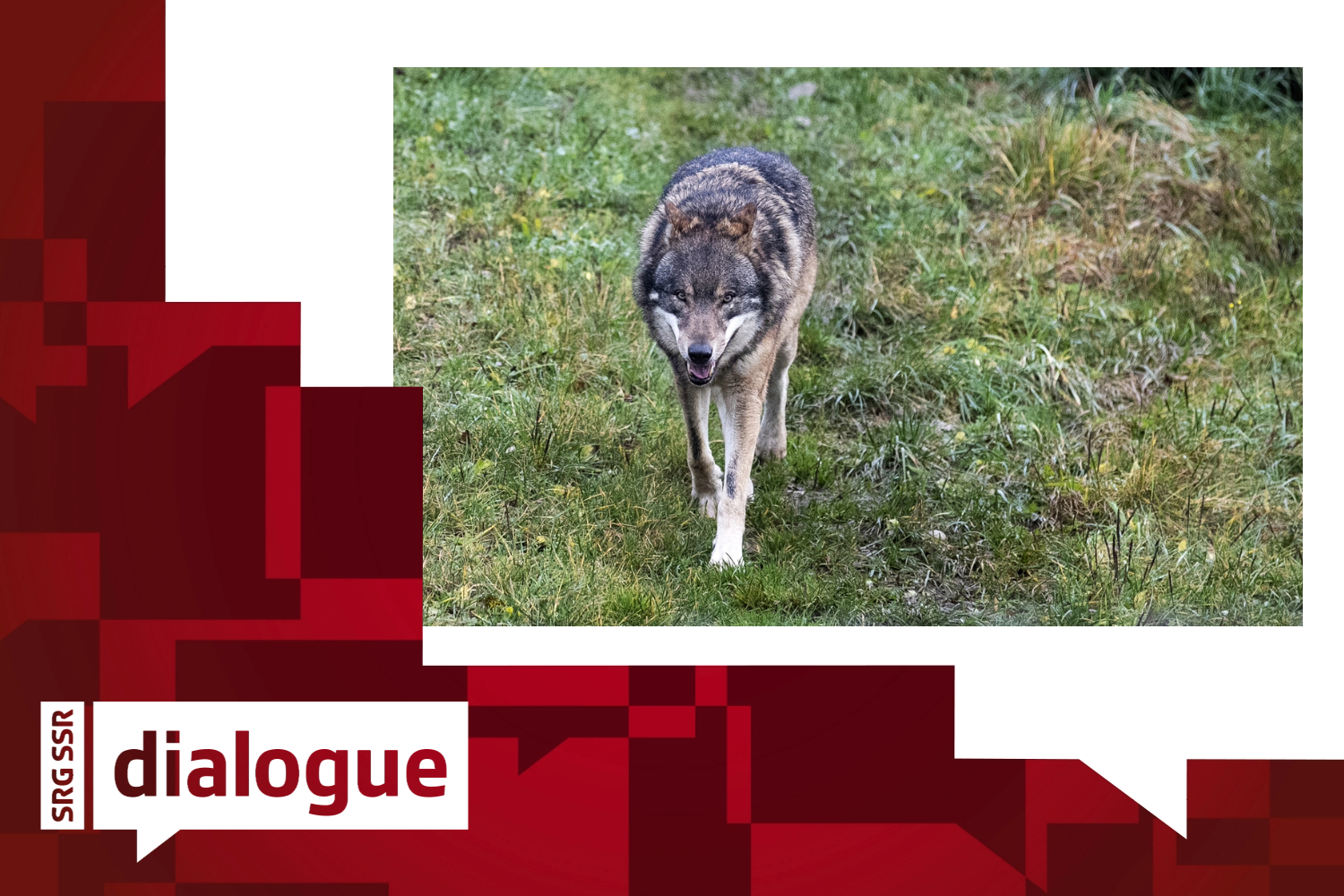
More
Wolves in Switzerland: cull or protect?
FOEN has concluded, after analyzing data from the cantons, that the rapid growth of the wolf population has been slowed by the culling. And the number of packs is growing more slowly than before the regulation.
Following the 2025/2026 regulatory period, 30 packs living entirely within Switzerland and ten cross-border packs were counted. By the end of January 2025, there were a total of 36 packs, and by the end of January 2024, 35. But the exponential growth of the wolf population still appears to be slowing down, despite more packs being observed.
Compensation increases
However, the environment ministry cautions that the trend can only be definitively confirmed after several more regulatory periods. The fact that wolf damage to livestock has decreased is attributed to regulation and to herd protection measures.
The total damage from wolf attacks peaked in 2022. Since then, the number of livestock kills has been declining. FOEN notes that the current level is roughly the same as in 2020/2021, when there were only between ten and 15 wolf packs in Switzerland.
However, the number of compensation payments for damages increased in 2025. According to the environment ministry, one reason for this is likely the increased predation of cattle by wolves. Higher compensation is paid for cattle than for sheep and goats.
In 2025, at least 155 wolf pups were born in Switzerland, slightly more than in the two preceding years. Thirteen new packs were added to the 30 already confirmed packs. Of these, three packs subsequently disbanded. A total of 350 wolves were documented between February 1, 2025, and January 31, 2026.
In December 2022, parliament decided to relax the hunting law and introduce preventative wolf population control. This allows for culling before wolves cause damage. The cantons are responsible for carrying out the culling; however, federal approval is required.

More
Switzerland assesses wolf pack culls
Adapted from German by AI/mga
We select the most relevant news for an international audience and use automatic translation tools to translate them into English. A journalist then reviews the translation for clarity and accuracy before publication.
Providing you with automatically translated news gives us the time to write more in-depth articles. The news stories we select have been written and carefully fact-checked by an external editorial team from news agencies such as Bloomberg or Keystone.
If you have any questions about how we work, write to us at english@swissinfo.ch

In compliance with the JTI standards
More: SWI swissinfo.ch certified by the Journalism Trust Initiative

You can find an overview of ongoing debates with our journalists here . Please join us!
If you want to start a conversation about a topic raised in this article or want to report factual errors, email us at english@swissinfo.ch.