








Is Zurich forcing Christian homes to tolerate assisted suicide?
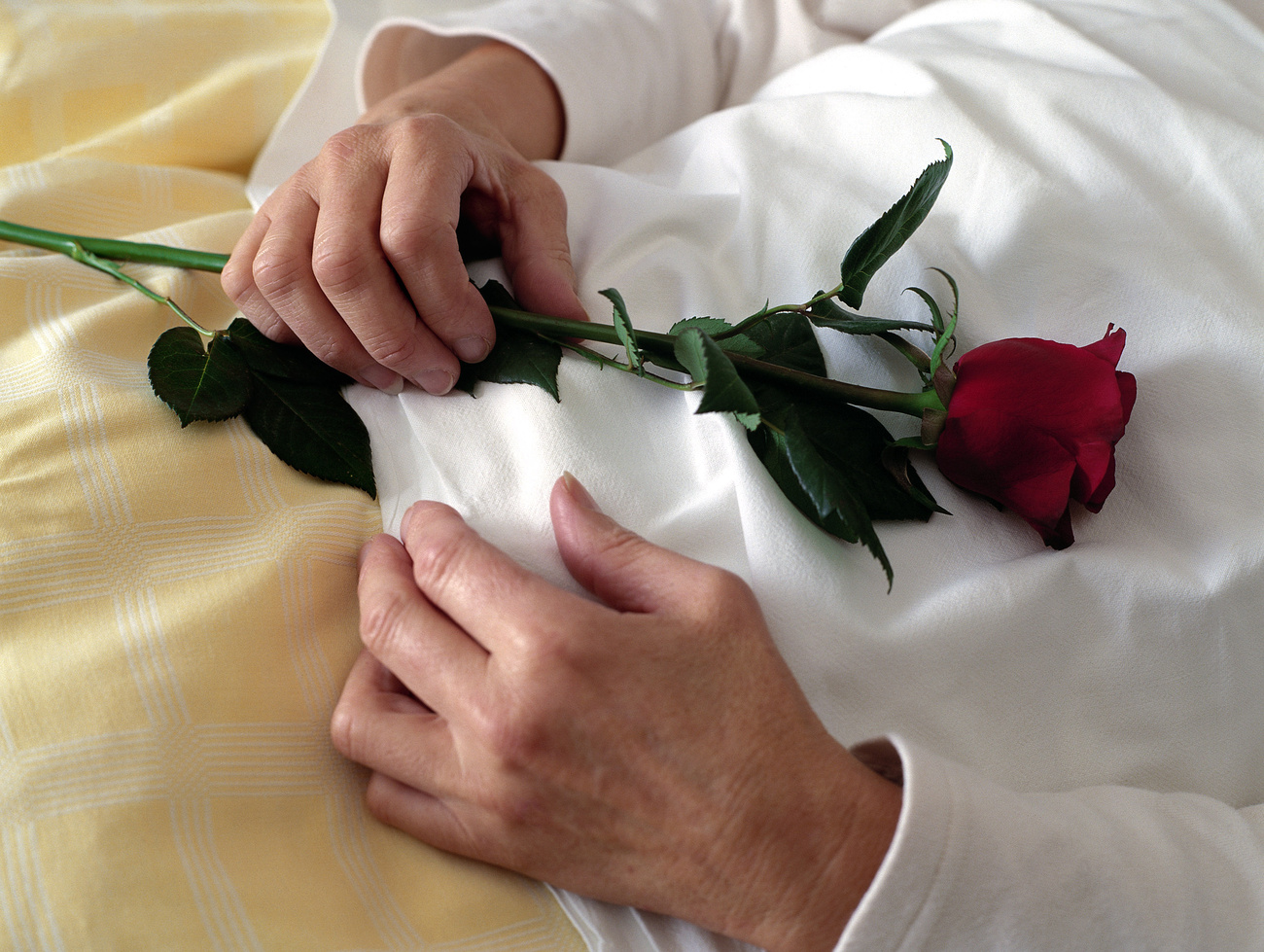
Swiss assisted suicide organisations want to legally compel nursing homes and hospitals to permit assisted suicide on their premises. Christian homes view this as a violation of their autonomy and freedom of religion.
Select your language
Generated with artificial intelligence.
Listening:
Is Zurich forcing Christian homes to tolerate assisted suicide?

Nothing less than Switzerland’s core values are at stake: On September 27, canton Zurich will vote on an amendment to the Patient and Healthcare Act. If the public votes yes, all retirement and nursing homes will be forced to tolerate assisted suicide. Even those that currently reject it on principle.
The decision was forced by the Swiss assisted-dying organisations Exit and Dignitas. They submitted an initiative in Switzerland’s most populous canton that originally sought to go much further, demanding that assisted suicide also be permitted in psychiatric facilities and prisons.
The cantonal parliament rejected this and drafted a counterproposal, whereupon the initiators withdrew their proposal. Because conservative parties launched a referendum, the reform is now going to a public vote.
Autonomy – but for whom?
As is globally known, assisted dying is liberally regulated in Switzerland. It is only punishable if pursued for selfish motives. For a long time, institutions could decide for themselves whether they wanted to accommodate this practice. This freedom of choice has been abolished by a number of cantons in recent years.
External Content
To a large extent, this is also true in canton Zurich. Since 2023, all retirement and nursing homes here are required to tolerate assisted suicide if they have a public mandate and thus receive public funding. This applies to the vast majority of institutions – around 200 out of 220 homes, as the Tages-Anzeiger reports. The remaining 20 or so homes are private, mostly Christian-oriented facilities. A yes at the ballot box would force them to change their practice.
Is this ethically justifiable? The debate in Switzerland follows typical party lines. The small Christian parties, the Protestant Party and the Federal Democratic Union, which struggle with assisted dying anyway, reject the proposal. The right-wing Swiss People’s Party is also opposed. Opponents take issue with the compulsion imposed on the few non-state-subsidised homes. The staff and residents there could be burdened by a situation that contradicts their value system.
Supporters – a broad coalition ranging from the political left to the centre – argue that the point is to avoid cases of hardship. Anyone who can no longer be transferred and decides on assisted suicide – perhaps contrary to earlier intentions – must have access to this act of self-determination.
The reference to hardship cases explicitly includes hospitals, which patients do not choose based on ideological alignment. However, hospitals generally already accept assisted suicide on their premises today if a transfer is no longer an option.
The Zurich cantonal government also points this out. It considers this practice sufficient and therefore rejects the proposal as well. The mandate of hospitals is to restore health. Where this is no longer possible, palliative care steps in. The cantonal government fears that this practice would be disrupted by a forced approach to assisted suicide.
Legal headwinds for opponents
Despite these concerns, the chances of the amendment being passed are good. Assisted suicide is widely accepted across broad sections of Swiss society; indeed, it represents that defiant self-determination that also shapes Swiss mythology.

More
Why assisted suicide is ‘normal’ in Switzerland
In the French-speaking cantons of Vaud, Neuchâtel and Valais, which have already voted on similar proposals, the result was a clear yes in each case. In Valais, where the most recent vote on the topic took place in 2022, 76.5% favoured a corresponding change in the law, even though the canton is distinctly Catholic.
Legally, too, nothing stands in the way of the proponents. The Federal Court already upheld a similar legal change ten years ago after the Salvation Army, a Christian organisation operating several homes, sued against Neuchâtel’s law, arguing that the cantonal regulation violated the right to freedom of religion.
Although the Federal Court acknowledged that tolerating assisted suicide interferes with the homes’ freedom of religion and conscience, it ruled that this interference was not severe; the right to self-determination outweighed it.
At the same time, the Federal Court pointed out to the Salvation Army that it remained free to forgo state subsidies. As a purely private institution, it could then ban assisted suicide within its premises.
This concluding remark is significant, as it shows that in Neuchâtel, only homes with a service agreement are subject to the regulation. The vote in Zurich clearly goes beyond this by pitting institutional and personal autonomy against each other.
Protestant Party cantonal parliamentarian Markus Schaaf, head of one such nursing home and a driving force behind the opposition, recently said in an interview that he does not reject every form of assisted suicide. Private homes, however, should have the right to engage in a dialogue with individuals in their care who wish to die, he said.
Supporters counter this by invoking the Federal Court: the rights of individuals take precedence over the rights of institutions.
More

Edited by Balz Rigendinger. Translated from German, sub-edited by ts


See more Swissinfo articles in your Google results. Learn more

In compliance with the JTI standards
More: SWI swissinfo.ch certified by the Journalism Trust Initiative

You can find an overview of ongoing debates with our journalists here . Please join us!
If you want to start a conversation about a topic raised in this article or want to report factual errors, email us at english@swissinfo.ch.