








Why family support policies fail to gain traction in Switzerland
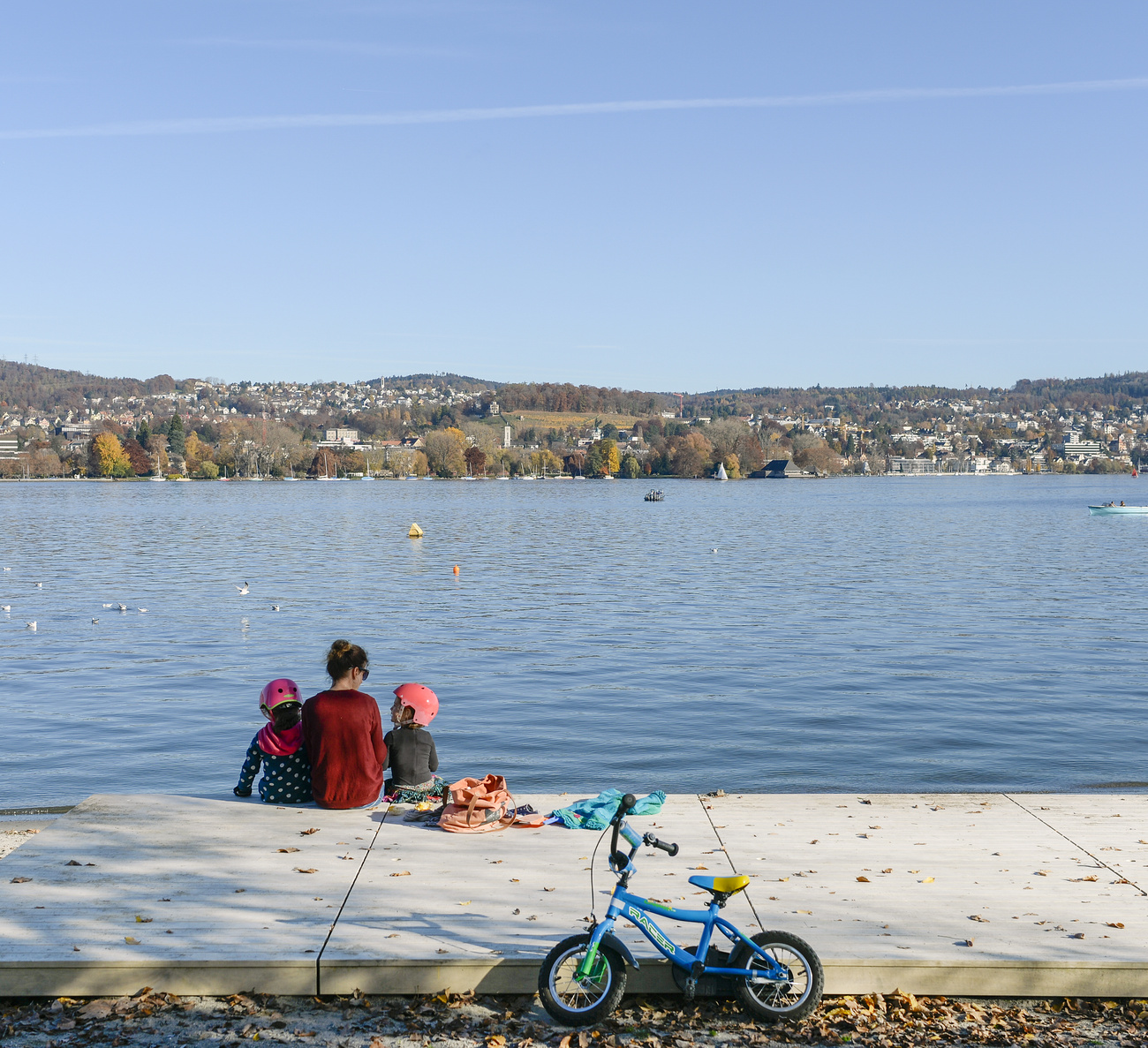
Children and young people, who make up 17% of Switzerland’s population, are not just vital for the long-term funding of the pension system. They are crucial to the country’s wider economic prospects and its ability to provide services like healthcare.
Select your language
Generated with artificial intelligence.
Listening:
Why family support policies fail to gain traction in Switzerland

Given the importance of younger generations for so many things, it may seem surprising that Switzerland struggles to provide greater support for families. Specialist organisations such as Pro Juventute and Pro Familia speak up for children and young people. But Silja Häusermann, a Swiss political scientist at the University of Zurich, says this constituency has limited political influence. “It is quite clear that the lobby is much weaker than that of other social groups, such as agriculture,” she says.
For Häusermann, the central problem is that children, young people, and families do not form a single, clearly defined interest group. “We can use research to establish what children’s and young people’s immediate needs are, but there is no consensus on what families need in order to provide for them,” she says. In federal politics, that debate pits conservatives against progressives and frequently blocks reform.

What distinguishes Switzerland from many EU countries
Debates over competing values take place everywhere, but compared to its European neighbours, Switzerland has done far less to support families. Häusermann attributes this to three causes. The first is political: parties on the “state-interventionist left” have traditionally been much weaker in Switzerland. The Social Democrats and Greens have never won more than 30% of the seats in the federal parliament, while comparable parties in Scandinavia, for example, often secure well over 40% of the vote.
External Content
The second factor is federalism. The decentralised system acts as a brake on nationwide reform. “In federal systems, family support tends to be weaker because responsibility and costs get shifted around, while the challenges are only felt at the local level,” says Häusermann. This means striking regional differences. “Some cities pursue an almost Scandinavian family policy, while others have one that is practically Italian.” For Häusermann, the unevenness is not a flaw but a part of the system. “The very purpose of federalism is to allow different communities to live according to different values,” she says.
The third factor is Switzerland’s comparatively conservative outlook on society and family life. “These three forces reinforce one another and leave Switzerland with a much less comprehensive system for supporting families.”
How Swiss prosperity holds back reform
Switzerland does not lag behind its European neighbours in every area. On tax deductions and family allowances, it is “fairly average”, says Häusermann. The real gap is in childcare. Nursery care is expensive, with parents covering all or much of the cost depending on their income and where they live. In some places, especially smaller municipalities, there is little or no access to childcare at all.
Often in Swiss households, one or both parents work part time, although the scarce supply of childcare only partially explains why. Full-time jobs in Switzerland involve longer hours than in most European countries. And what often goes unmentioned is that their income is higher. “Many Swiss families can get by on one-and-a-half incomes, which is not possible in much of Europe,” says Häusermann. This means many can afford the traditional division of roles. In practice, mothers are still the ones most likely to cut back their hours at work.
Looking for answers to falling birth rates
An increasing number of people in Switzerland are simply choosing not to have children in the first place. The country now has one of the lowest fertility ratesExternal link in the West, falling to its lowest in history, at 1.29.
Compared to France and Scandinavia, which for years recorded Europe’s highest fertility rates, Switzerland remains far behind. In France, pronatalist policy provides incentives for families across all income groups. In Scandinavia, support for pro-family policy grew out of the drive for greater gender equality.
The highest fertility rate in Europe is now found in Bulgaria. Women there tend to have their first child at a younger age, one of the most important factors influencing overall fertility rates. The figures are also skewed by the country’s high levels of emigration.
Alongside these demographic factors, Bulgaria also spends heavily on policies designed to raise the birth rate, from paid maternity leave to state subsidies for fertility treatment.
Join the debate:
External Content
Long hours and fixed lunch breaks in Switzerland’s rigid labour market
What lessons do these trends hold for Switzerland? Could adopting measures used elsewhere in Europe help lift the country’s birth rate?
Häusermann says family policy is only one of three forces shaping birth rates. Working conditions and social norms matter just as much. “As long as the three elements pull in different directions, adjusting just one will make little difference.”
The mismatch is evident in Japan and South Korea. Alarmed by low birth rates, both governments have expanded policies that support families. “Yet neither country has reformed its labour market or its social norms,” says Häusermann.
External Content
Häusermann sees the same incompatibility in Switzerland. “We are nowhere near a system in which both parents can work full time. Our working weeks are much longer than elsewhere, lunch breaks last an hour, and people leave work at 6pm. In countries where both parents work full time, it is different.”
This rigidity has also prevented a fundamental shift in gender roles. Even women with university-level qualifications cut their hours so they can reconcile work and family life, shouldering the double burden of paid work and childcare.
External Content
“A typical woman’s life in Switzerland is very different from the way it was 40 years ago,” says Häusermann. “A typical man’s life is not. Perhaps that is the key.”
Political reforms such as the introduction of two weeks of mandatory paternity leave in 2021 are important less for their direct effect than for the way they challenge established expectations and social norms.
“Changes to the law normalise different ways of living. Paternity leave means that it is normal and expected that a man stays at home when he has a child,” says Häusermann.
How immigration reduces urgency for reform
Häusermann does not expect a broader debate on support for families and children in Switzerland in the near future. What is missing from the debate on family policy, she argues, is the pronatalist aspect. Family policy can be used to encourage a higher birth rate.
For the left, family policy is chiefly about gender equality. Economic liberals and conservatives, meanwhile, are reluctant to disrupt established gender roles or the labour market. Because of Switzerland’s high net immigration, population decline is not widely seen as a problem, says Häusermann. “The goal of ‘more children’ is simply not on the agenda.”

More
Mum in the kitchen, dad in the shed: why roles are slow to change in Switzerland
Adapted from German by David Kelso Kaufher/ds


See more Swissinfo articles in your Google results. Learn more

In compliance with the JTI standards
More: SWI swissinfo.ch certified by the Journalism Trust Initiative

You can find an overview of ongoing debates with our journalists here . Please join us!
If you want to start a conversation about a topic raised in this article or want to report factual errors, email us at english@swissinfo.ch.