








Should Swiss neutrality be stricter? Voters will decide
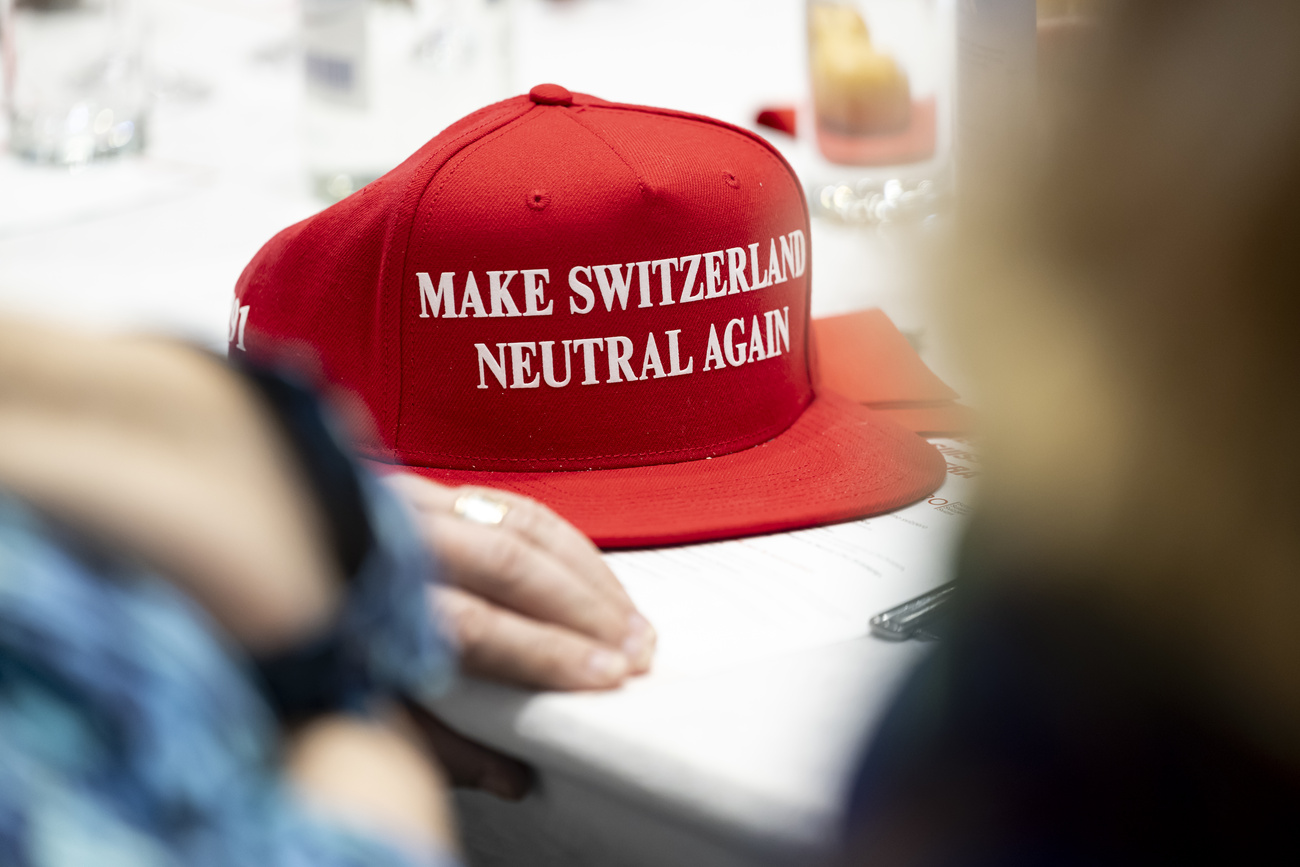
Swiss voters will decide on September 27 whether to write a stricter definition of neutrality into the Federal Constitution. Supporters say the change would safeguard Switzerland’s traditional neutrality, while opponents argue that it would limit the country’s ability to respond to geopolitical crises.
Select your language
Generated with artificial intelligence.
Listening:
Should Swiss neutrality be stricter? Voters will decide

Russia’s invasion of Ukraine has reignited the debate over Swiss neutrality, which has focused on the neutrality initiative. On September 27, voters will decide how this principle should be defined.
What does the initiative call for?
Theneutrality initiativeExternal link seeks to enshrine stricter rules on neutrality in the Swiss constitution. This includes writing in the principle of “permanent and armed neutrality”.
Neutrality has already been defined in the Constitution since the creation of the modern Swiss federal state in 1848. Responsibility for its implementation lies with the Swiss government (the Federal Council, Switzerland’s executive body) and Parliament. This flexibility has enabled Switzerland to adapt its neutrality policy to changes in the geopolitical context over the decades. The initiative would limit this room for manoeuvre.
The most radical change would be the ban on “non-military coercive measures”. Switzerland would no longer be able to impose sanctions independently against states at war, with the exception of sanctions decided by the UN Security Council.
The initiative also provides for an explicit ban on Switzerland joining a military alliance. However, this principle already follows from the law of neutrality. To join an organisation such as NATO, as Sweden and Finland have done, Switzerland would have to renounce its neutral status. Such a far-reaching decision would almost certainly be put to a referendum.
The initiative would nevertheless allow Switzerland to cooperate with such an organisation, but only in the event of war. It would also require Switzerland to scale back its cooperation with NATO, particularly within the framework of the Partnership for Peace, in which it has participated since 1996.
>> What do you think? Join our debate on this issue:
More

What does Swiss neutrality mean today?
Swiss neutrality is a political choice made by Switzerland, recognised under international law. Legally, it is based on the Hague Conventions, which came into force in Switzerland in 1910. These define the rights and duties of a neutral state in the event of an armed conflict: it may neither take part in hostilities nor provide military support to any of the belligerents.
However, the law of neutrality does not prohibit a neutral state from taking political positions or imposing economic sanctions. It is this point that is at the heart of much of the current debate in Switzerland.
Neutral states must also guarantee the inviolability of their territory and be able to defend their neutrality. They may therefore cooperate with other countries in the military sphere, for example in the procurement of equipment or training. However, they may not join a defence alliance that obliges them to intervene militarily in the event of a conflict, such as NATO.
Why was the initiative launched?
Christoph Blocher, the former Swiss government minister who shaped the modern Swiss People’s Party (right-wing), is the man behind the neutrality initiative. The Zurich-based billionaire conceived it in response to Switzerland’s stance following Russia’s invasion of Ukraine. In his view, Switzerland abandoned its neutrality by adopting the European Union’s (EU) sanctions against Moscow. He therefore launched this initiative with the sovereignist association Pro Suisse, which was created through the merger of several organisations opposed to closer institutional ties with the EU, including Campaign for an Independent and Neutral Switzerland (CINS).
Who supports it and who opposes it?
The Swiss People’s Party supports the initiative put forward by Pro Suisse. The other governing parties oppose it, as do the government and Parliament. However, the initiative has won support among pacifists and anti-globalisation groups on the left. Several organisations, including the Workers Party (the Swiss communist party), have formed the Pacifist and Internationalist Committee for Neutrality, which is campaigning in favour of the initiative.
Why do supporters back the initiative?
Supporters of the initiative advocate a return to absolute neutrality. They believe that it must be applied rigorously and that the authorities should not be able to interpret it according to the political circumstances of the moment.
According to the initiators, strict and credible neutrality is the best way to prevent the country from being drawn into an armed conflict and to preserve Switzerland’s role as a reliable international mediator. In particular, they believe that the initiative would protect Switzerland from a gradual move towards NATO.
Supporters of the initiative also consider that adopting sanctions against a belligerent state is incompatible with credible neutrality. In their view, Switzerland should not align itself with any side in international conflicts.
Pro Suisse is also strongly critical of the EU and opposes the new package of agreements between Bern and Brussels. According to the initiative’s arguments, European integration would undermine Switzerland’s guiding principle: staying out of conflicts, without ideology.
Left-wing supporters of the initiative, for their part, place greater emphasis on pacifism and non-alignment. They believe that neutrality promotes dialogue, diplomacy and the peaceful resolution of conflicts.
Why do opponents reject it?
The Federal Council statesExternal link that it remains committed to neutrality, which it regards as an important instrument of Switzerland’s foreign and security policy. It believes, however, that the initiative would lead to a major shift in the way this principle is applied.
According to the Federal Council, the current practice has proved its worth by enabling Switzerland to adapt its neutrality policy to changes in the international context, while respecting international law. Establishing a more rigid definition of neutrality in the Constitution would reduce this room for manoeuvre and could limit the authorities’ ability to defend the country’s interests. It believes this would be ill-advised, particularly in the current volatile international context.
The Federal Council also defends the possibility of adopting sanctions that are widely supported by the international community. In its view, these measures help to preserve a rules-based international order and do not prevent Switzerland from remaining neutral within the meaning of international law.
Opponents also fear that the initiative would further isolate Switzerland on the international stage, damage its reputation and complicate its security cooperation with other states.
Proofread and verified by Pauline Turuban. Translated by Patrick Huwyler/ds


See more Swissinfo articles in your Google results. Learn more

In compliance with the JTI standards
More: SWI swissinfo.ch certified by the Journalism Trust Initiative

You can find an overview of ongoing debates with our journalists here . Please join us!
If you want to start a conversation about a topic raised in this article or want to report factual errors, email us at english@swissinfo.ch.