








How Swiss schools abroad teach democracy in autocratic countries

From Beijing to Bogota, the 17 Swiss schools abroad strive to instil Swiss democratic values in their pupils. This can be a delicate challenge in countries where the political context differs greatly from that of Switzerland. This issue was the focus of the schools’ annual conference, held recently in Valais.
Select your language
Generated with artificial intelligence.
Listening:
How Swiss schools abroad teach democracy in autocratic countries

“Our schools are places where democracy is practiced every day,” says Heinz Rhyn, president of educationsuisse, the umbrella organisation for Swiss schools abroad, at the opening of the official day of the Conference of Swiss Schools Abroad on Wednesday in Visp, in the canton of Valais.
Critical thinking, sound judgement and respect for different points of view are not only taught, but also put into practice every day, he explains. He went on to emphasise that “this mission is of particular importance, especially in the face of growing polarisation in society.”

Civic education forms part of the curriculum at the 17 Swiss schools abroad, spread across three continents and ten countries. However, the Swiss direct democratic system, where citizens vote on issues four times a year, is sometimes very far removed from the political reality of the host countries.
This is particularly true of schools located in states considered to be autocratic, namely the Swiss schools in Singapore, Beijing, Bangkok and Mexico City. There too, teaching staff strive to instil democratic values in their pupils, even if this means approaching certain topics with greater caution.
In Beijing, the emphasis is on discussion
At the Swiss School in Beijing, pupils experience democracy from a very young age. “In nursery, they can have a say in which toys are available or vote on certain topics. They are asked, for example, what they would like to learn,” says Carla Frehner, a teacher at the school.
Civic education then develops as pupils progress through their schooling. “In primary school, we have a class council, which meets every week to discuss various topics, including school rules,” says the teacher.

Teaching democracy is, however, a particularly sensitive issue in China. “I wouldn’t walk the streets of Beijing proclaiming: ‘At our Swiss School in Beijing, we teach democracy’,” says Frehner. While the school is not subject to censorship by the Chinese government, certain topics are approached with caution so as not to put pupils’ families at risk.
The Swiss School of Beijing is partnered with a major international school, whose rules clearly stipulate that geopolitical and current affairs topics must not be discussed in class. “We don’t want to go that far: we do address these issues, but in as factual a manner as possible,” says the teacher.
Human rights is a particularly sensitive topics in China, a country regularly criticised by international organisations. “When our textbooks cover this subject, we do a great deal of preparation. We also consider the written materials we give to pupils and sometimes opt for oral discussions instead,” says Frehner.
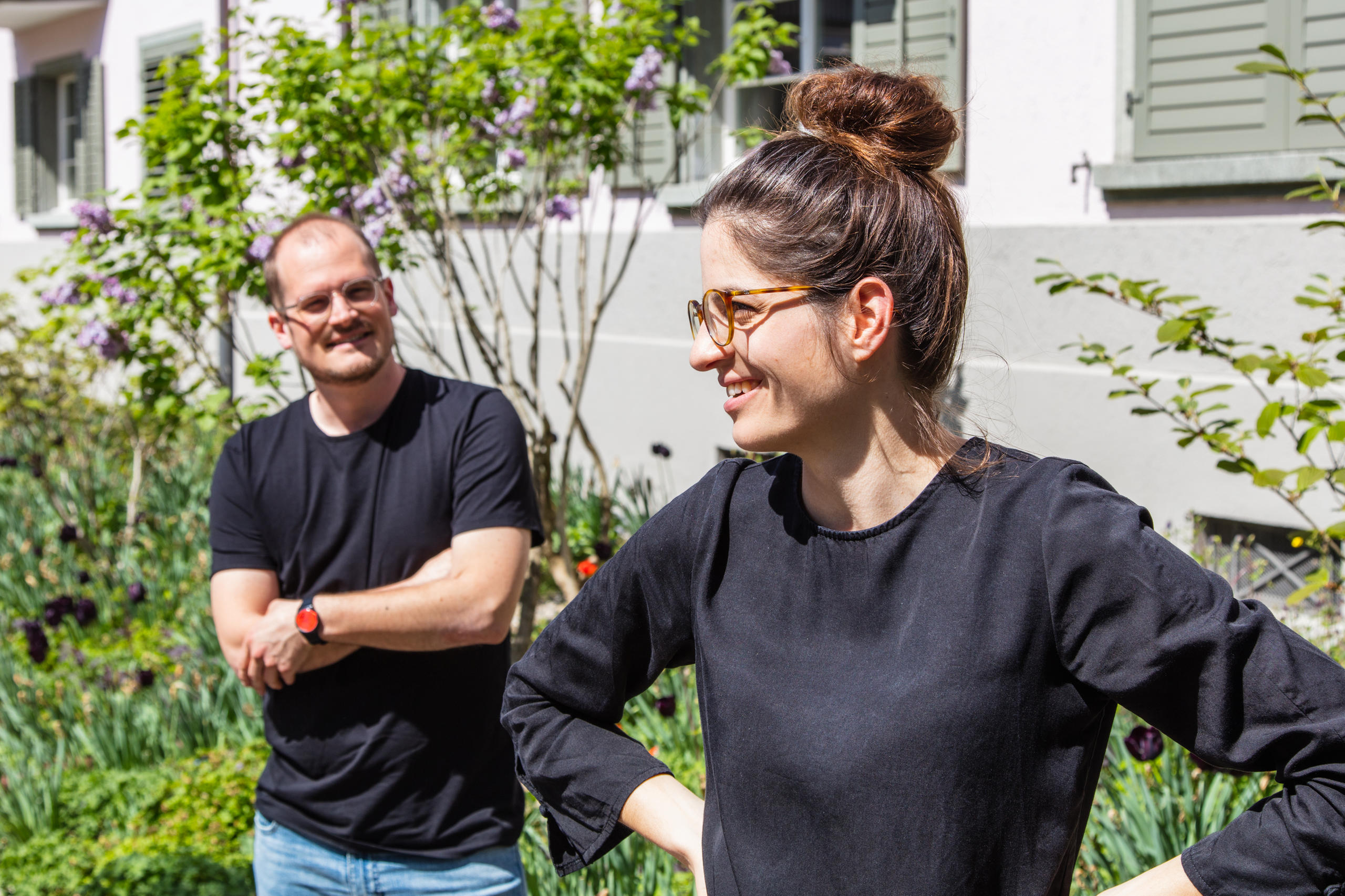
>>>We spoke to Carla Frehner before she moved to Beijing in 2023:
More
A teacher in a foreign land: a Swiss woman moves to Beijing
Pupils’ parliament in Bangkok and Singapore
Sensitive topics vary from country to country. “In Thailand, we cannot criticise the royal family,” explains Christian Vogel, headteacher of the Swiss School in Bangkok. To enable the children to experience democracy in practice, a pupils’ parliament has been set up. This is a tool also used by other Swiss schools to encourage young people to participate in political life later on.
This is particularly the case in Singapore. “Each class elects a representative to the pupils’ parliament for one year,” says Rahel Eckert-Stauber, headteacher of the Swiss School in Singapore. She is keen to show the children that their involvement can lead to tangible results. For instance, when the pupils’ parliament highlighted the lack of privacy in the sports changing rooms, work was carried out to adapt the facilities. “In the past, the bell signalling the start and end of lessons could not be heard in part of the building. As a result, pupils regularly arrived late, much to their teachers’ annoyance. The parliament drew our attention to this problem and we were able to resolve it,” says the headteacher.

The Swiss School of Singapore has set itself the aim of helping its approximately 250 pupils understand democracy and the fundamentals of the Swiss political system. “We have so many different cultures in our school that it is also important to promote tolerance and openness,” says Eckert-Stauber. In a country situated at the crossroads of many cultures, current affairs must be addressed with tact. “For example, we have Russian and Ukrainian pupils. So we have to be careful about how we discuss the war in Ukraine,” notes the headteacher.
A UN assembly in Bogota
In a representative democracy like Colombia, democratic values are already part of everyday life. Nevertheless, the Swiss School in Bogota is working to explain the specific features of Swiss direct democracy to some 800 pupils. “They don’t see their parents going to vote several times a year, as they do in Switzerland. In Colombia, people only vote to elect a president every four years,” explains the school’s headteacher, Thomas Schwarb.

History lessons provide them with the necessary theoretical foundations, while a pupils’ committee allows them to gain hands-on experience of political engagement. “In Year 10, pupils can also spend four months in Europe – in Switzerland, France or other places,” says Schwarb.
Civic education at the Swiss School in Bogota also has an international dimension. “Every year, students in the school’s university-preparatory Swiss Matura programme take part in a United Nations simulation organised by the SwissMUN association,” says the headteacher. The pupils represent different countries and work on a specific topic, such as poverty or women’s rights. At the end of the day, they adopt a resolution.
All over the world, citizenship education presents a challenge for teaching staff. “It requires solid, reflective training. It is a major educational challenge requiring adequate resources,” says Monika Waldis, director of the Centre for Citizenship Education at the University of Applied Sciences and Arts Northwestern Switzerland, during the conference. This is an issue that concerns schools in Switzerland, as well as those based abroad.
Edited by Samuel Jaberg. Translated from French by Patrick Huwyler/ac

In compliance with the JTI standards
More: SWI swissinfo.ch certified by the Journalism Trust Initiative

You can find an overview of ongoing debates with our journalists here . Please join us!
If you want to start a conversation about a topic raised in this article or want to report factual errors, email us at english@swissinfo.ch.