








‘A wild west’: how one Swiss company aims to tame the botox boom
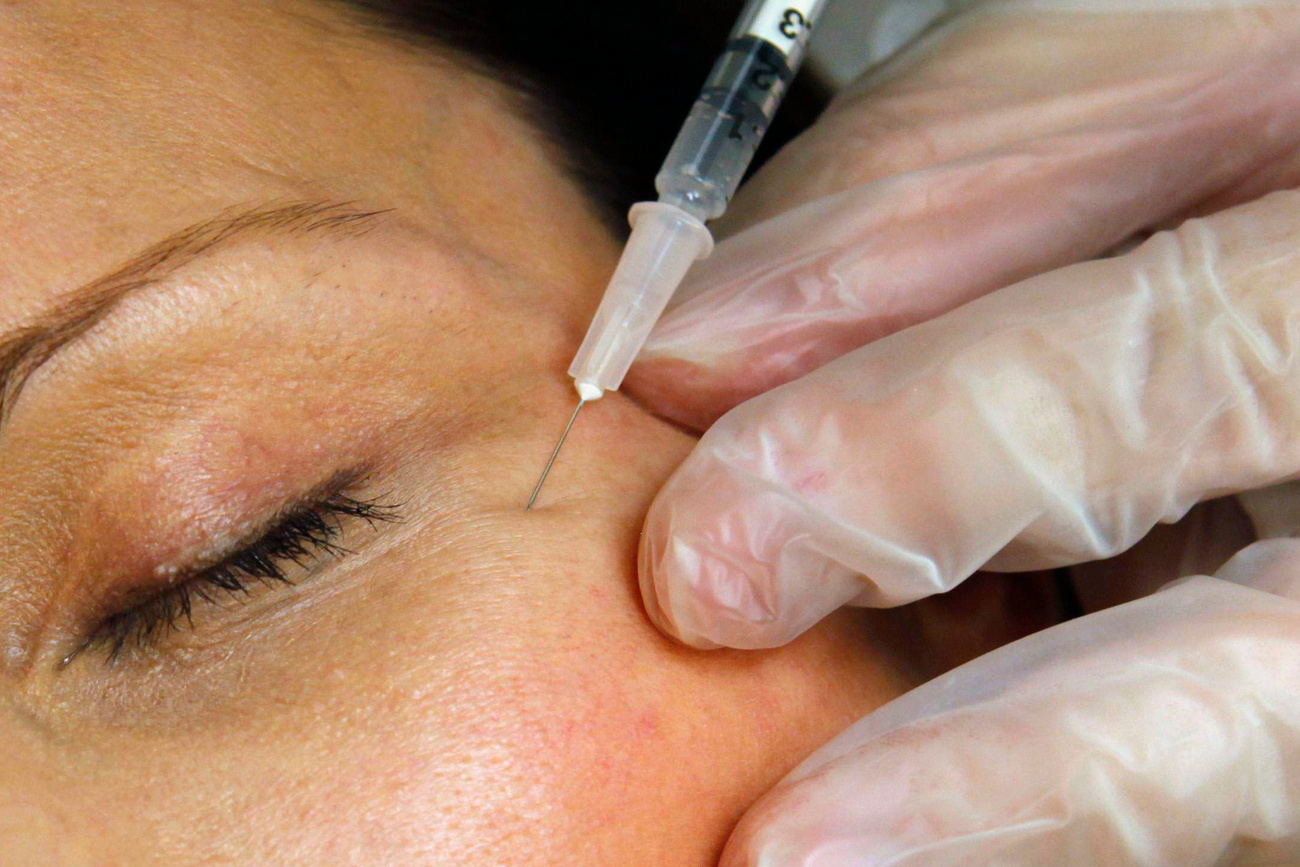
Galderma, headquartered in the Swiss canton of Zug, is training thousands of doctors to administer jabs as the risk of botched procedures rises.
Select your language
Generated with artificial intelligence.
Listening:
‘A wild west’: how one Swiss company aims to tame the botox boom
Keywan Taghetchian, a Zurich-based doctor who trains practitioners on how to use Galderma’s treatments, asserts that “beauty is very objective”.
Galderma is one of the prime beneficiaries of the normalisation of “tweakments” like botox and filler.
Sales of its injectables – which include botulinum toxin (equivalent to US company AbbVie’s Botox), gel-like “fillers” to add volume under the skin and injections that stimulate collagen production – rose 11.5% to $2.5bn (CHF2.02 billion) in 2025.
External Content

Clinics administering these treatments have become a fixture of high streets and shopping malls in the past few years. Doctors-turned-influencers tout new procedures on social media, posting close-up videos of people having needles inserted into their lips and foreheads. Hollywood actors appear to have stopped ageing.
In an interview at Galderma’s immaculate lakeside headquarters in Zug, chief executive Flemming Ørnskov said “the train has left the station in terms of people wanting to look a certain way, to augment what they want to augment”.
For Galderma, however, this surge in demand comes with risks. The company exerts little control over who administers its treatments, potentially leaving it exposed when they go wrong. Unwanted side effects of injectables such as botox range from swelling to a crooked smile or trouble breathing.
Naveen Cavale, a board member at the International Society of Aesthetic Plastic Surgery (ISAPS), said the injector industry was “a wild west”. The established companies did their best to stop their product getting into the wrong hands, she said, but there was only so much they could do.
Galderma is now racing to train up the fast-growing ranks of doctors, dentists and nurses entering the aesthetics field and injecting its products into members of the public.

More
Longevity clinics: modern-day snake oil or the key to healthy ageing?
The Swiss company was founded in 1981 as a joint venture between L’Oréal and Nestlé. After five years under the ownership of a consortium led by private equity firm EQT, Galderma was floated on the Swiss stock exchange in 2024.
Its shares have more than doubled since and Galderma has become the world’s second-largest injectables maker after US healthcare giant AbbVie, with a market capitalisation of about CHF41 billion.
The group’s shares fell 6% earlier this month, however, after the US Food and Drug Administration turned down its application for the approval of Relfydess, a longer-lasting rival of Botox.
As well as injectables, which make up about half of group sales, Galderma sells prescription drugs for skin conditions, such as eczema and acne, and specialist skincare brands like Cetaphil. Analysts estimate the Swiss company will generate $1.1 billion of pre-tax profit this year on revenues of $6.3 billion, which would be an increase of 21% on last year.
L’Oréal has reinvested with a 20% stake. The beauty company’s chief executive, Nicolas Hieronimus, has said women who pay for the sort of treatments Galderma offers spend twice as much on creams and beauty products.
Longevity boom
The two companies are capitalising on the booming business of longevity, driven by wealthy women typically between the ages of 40 and 65.
Ørnskov trained as a doctor in his native Denmark before moving into the pharmaceutical industry. He now hosts a video series, “Beauty X Medicine”, which “uncover[s] the science behind beautiful, healthy skin”, featuring guests such as Dr Jean Carruthers, who first discovered that Botox could treat frown lines. Her catchphrase: “I haven’t frowned since 1987.”
Galderma’s chief said its core consumers want to “age in a natural way” and is keen to distance the company from the “pillow face” look of those who have applied fillers liberally.
Galderma and AbbVie suffered a slowdown in sales a few years ago following a period of “filler fatigue”. Ørnskov said the company dealt with the slowdown by pushing Sculptra, an injection that helps stimulate collagen production.
It was first used to treat people living with HIV/Aids who lost fat around their cheeks and temples. Now it is a hit with users of GLP-1 drugs such as Ozempic and Wegovy who experience the same conditions from rapid weight loss.

More
Pharma’s obesity campaigns juggle awareness and advertising
Ørnskov’s contention that Galderma’s products give users a “natural look” is dependent on them being administered judiciously by trained professionals.
The ballooning number of clinics and medical spas offering injectables has drawn large numbers of untrained providers into the industry, raising the risk of botched procedures.
UK and US expansion
A University College London study published earlier this year counted 19,701 professionals administering botox in the UK in 2025, a jump of 437% in just two years. Doctors made up 28% of all practitioners, while the proportion of aestheticians injecting botox without a medical licence doubled to 24%.
Parts of the US show a similar pattern. A study last year by the University of Central Florida and the American Foundation for Aesthetic Medicine found that the number of medical spas in Florida doubled over a four-year period to 1,038. Over three quarters of them were found to be run by practitioners with no training in aesthetic medicine.
Rules governing who is allowed to inject Galderma’s products vary. In the UK, practitioners do not need dedicated training to inject fillers, so long as they are a medical professional. Rules vary state by state in the US. Galderma says that, where possible, it only sells to qualified injectors.
The company said it wants to train as many practitioners buying its products as possible. In 2025, Galderma trained more than 100,000 healthcare professionals.
Stefan Schneider, analyst at Vontobel, said “the goal is to minimise the risk of adverse outcomes that could end up associated with the brand through social media”.
“These programmes are expensive and time-consuming, but they’re essential,” he added.
Galderma was raided by French authorities in April on suspicion that two of its Botox-like brands were illegally sold to general practitioners. The country’s rules state that botox must be administered by doctors with specialities in dermatology or cosmetics
Ørnskov said it was difficult to control where products ended up in France because they had to be sold through pharmacies. “France is a special situation,” he said. “We will do everything possible. We have stopped delivering to certain pharmacies.”
‘Baby botox’ for prevention
Another area of concern to regulators is a growing trend for so-called “baby botox”, in which young people procure the injections as a preventive measure, in the hope it will stop wrinkles ever forming.
Barclays analyst James Gordon said anecdotal evidence from clinicians showed growing use of botox among women in their twenties was helping drive overall injectables growth.
“When you’ve got people who might start a lot younger, then they potentially stay on [the jabs] for their entire life,” he said.
A report by the UK government’s Women and Equalities Commission found that higher demand for cosmetic procedures, particularly among young women, has in recent years been driven in part by extensive use of social media, where practitioners advertise their services.
Ørnskov pushed back on concerns about Galderma’s role in driving this trend, arguing that the scale of its business was “a drop in the ocean” compared with the global cosmetics industry, as well as sectors like nutrition and wellness.
“We are such a small part of a colossal, monumental wave in society where people want to live longer, look better,” he said.
“And of course, the thing they look at every single day is the face.”
Copyright The Financial Times Limited 2026


See more Swissinfo articles in your Google results. Learn more

In compliance with the JTI standards
More: SWI swissinfo.ch certified by the Journalism Trust Initiative

You can find an overview of ongoing debates with our journalists here . Please join us!
If you want to start a conversation about a topic raised in this article or want to report factual errors, email us at english@swissinfo.ch.