





What to expect from the Geneva talks between Russia, Ukraine and the US

Russian, Ukrainian and American representatives will be in Geneva on Tuesday and Wednesday to negotiate peace in Ukraine. While this is a coup for Swiss diplomacy, the chances of resolving the conflict are minimal. Here are some explanations.
Select your language
Generated with artificial intelligence.

Listening:
What to expect from the Geneva talks between Russia, Ukraine and the US

What is the background to these talks?
For the first time in almost four years of war, Geneva will host direct peace negotiations between Russia, Ukraine and the United States on Tuesday and Wednesday. These tripartite talks follow on from the two previous rounds held in January and early February in Abu Dhabi, in the United Arab Emirates.
On Monday, Moscow and Kyiv expressed their expectations of the meeting. On the Russian side, Kremlin spokesman Dmitri Peskov told the state agency TASS that the main topic would be “the territories” annexed by Russia, which Moscow partially controls.
After Crimea in 2014, Russia annexed four other Ukrainian regions in 2022: Donetsk, Luhansk, Zaporizhzhia and Kherson, located in the east and south of the country. Moscow now controls around 20% of Ukraine.
On the Ukrainian side, President Volodymyr Zelensky reaffirmed on the Telegram social network his desire to obtain “clear” security guarantees from the United States and European countries. In his view, this point should be negotiated before any territorial concessions are made.
Control of the Zaporizhzhia nuclear power plant and the possibility of Western troops being sent to Ukraine in the event of a ceasefire complete the list of the most sensitive issues. The two previous rounds did not result in any diplomatic breakthroughs, but they did result in prisoner exchanges.
Who is taking part in the negotiations?
As in previous rounds, the delegation from Washington – which is acting as mediator – will be led by Steve Witkoff, a property developer who has become US President Donald Trump’s emissary for the peace negotiations, accompanied by Jared Kushner, Trump’s son-in-law.
Ukraine will again be sending Rustem Umerov, head of the National Security and Defence Council. For its part, Russia has announced that it is sending Vladimir Medinski, a Kremlin adviser who was the chief negotiator at the very first talks between Kyiv and Moscow in March 2022 in Istanbul, Turkey.
The announcement of the return of this Russian ideologue was received rather coolly by Kyiv, which at the time of his replacement by the head of Russian military intelligence, Igor Kostyukov, had spoken of “a qualitative change” and the end of “pseudo-history courses”.
However, this change in the composition of the Russian delegation should not be over-interpreted, according to Vassily Klimentov, associate researcher at the Geneva Graduate Institute. “When it comes to the war in Ukraine, it is Vladimir Putin who decides,” he stresses.
The three delegations are due to meet at Geneva’s Hotel Intercontinental, a stone’s throw from the UN headquarters and the Russian and American diplomatic missions. The big absentees over the next two days are the European countries, which will not be taking part in the negotiations.
What can we really expect from these talks?
Almost four years after the start of Russia’s invasion of Ukraine, and more than a year after Trump returned to the White House, having made resolving the conflict an election promise, it has to be said that peace still seems a long way off.
“At previous talks, the Americans, Ukrainians and even the Russians spoke of progress and constructive discussions. But on the major stumbling blocks that are at the heart of these negotiations, i.e. territory and security guarantees, nothing has really changed,” Klimentov said.
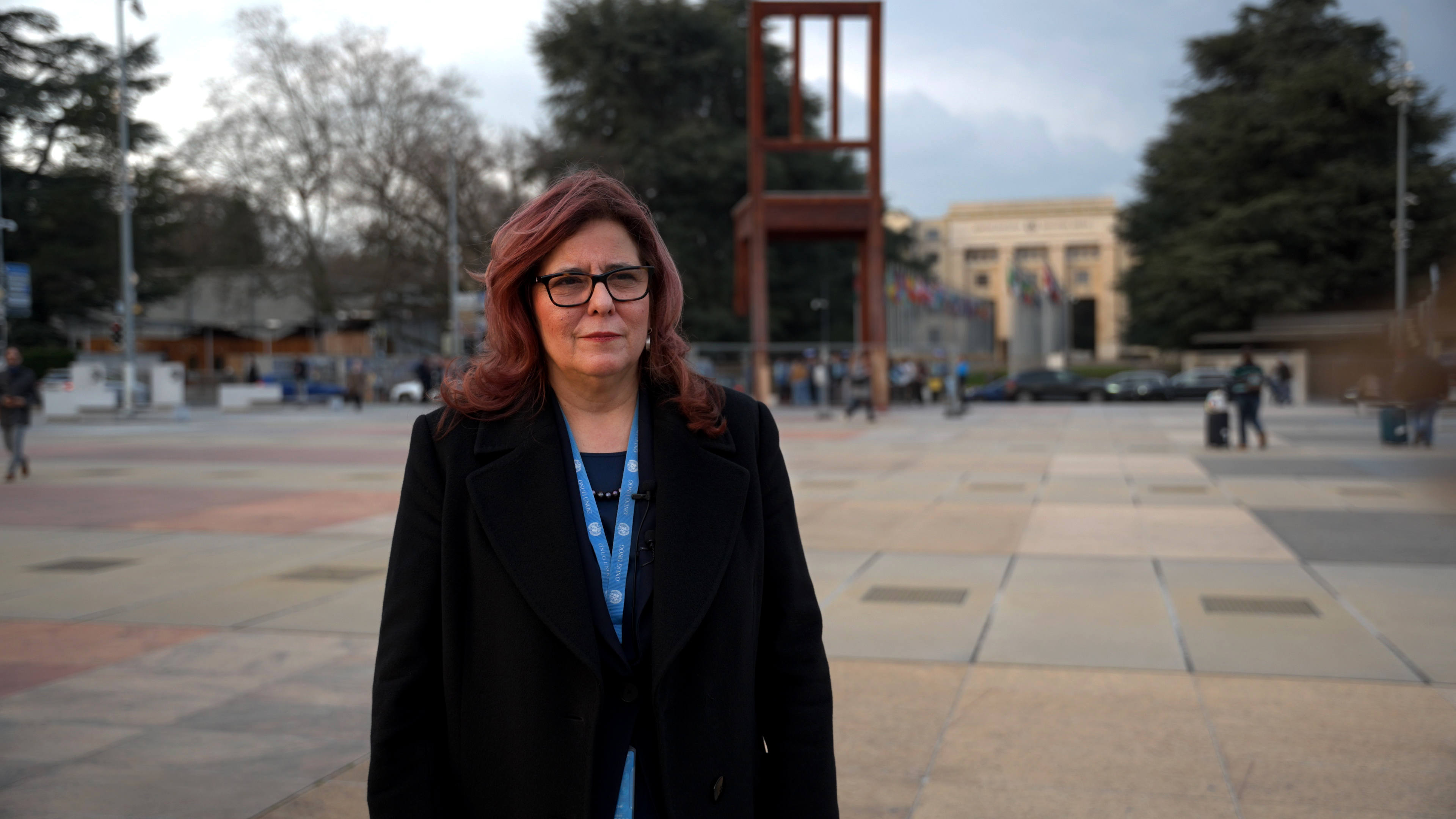
>> See our documentary on the first UN Special Rapporteur on Russia, Mariana Katzarova:
More
Mariana Katzarova: a mandate for the Russian people
According to Klimentov, the pressure is mainly on Ukraine, which is in military difficulties and faces uncertainties over future support from Western countries, particularly in the face of a US president in a hurry to get results. Russia, for its part, believes that the passage of time is working in its favour and that there are still gains to be made on the ground, he adds.
Against this backdrop, Klimentov believes that a breakthrough in Geneva, even a ceasefire, is unlikely. In his view, the number of Ukrainian civilian victims shows that Russia is not afraid of pressure from the new American administration. The NGO Action on Armed Violence revealed on Monday that in 2025 civilian casualties in Ukraine rose by 26% to 2,248 killed and 12,493 injured.
What signal will Geneva send?
However, these negotiations mark Geneva’s return to the international stage in the context of the war in Ukraine. The city, which shone in 2021 by organising a summit between Putin and US President Joe Biden, was overshadowed by Istanbul and Abu Dhabi, with Russia claiming that Switzerland was no longer a “neutral meeting place” after Bern adopted sanctions against Moscow.
The recent trip to Kyiv and Moscow by Swiss Foreign Minister Ignazio Cassis, who is chairing the Organisation for Security and Co-operation in Europe (OSCE) this year, seems to have borne fruit. Interviewed by Swiss public broadcaster RTS on Friday on the fringes of the Munich Security Conference, Cassis shared his “satisfaction”, saying that it was worth “daring to knock on Moscow’s door” to re-establish dialogue.
>> Read our portrait of Gabriel Lüchinger, architect of major diplomatic meetings in Switzerland:

More
Gabriel Lüchinger – Switzerland’s relationship manager
Switzerland also organised two conferences on Ukrainian reconstruction and peace, but Russia was not invited. In November, Geneva hosted separate negotiations between Europeans and Ukrainians and Americans and Ukrainians. They focused on Trump’s 28-point peace plan, which critics said was particularly favourable to Russia.
It should also be noted that talks on the Iranian nuclear issue between Tehran and Washington, mediated by Oman, will also take place in Geneva on Tuesday. Iranian Foreign Minister Abbas Araghchi arrived in Geneva on Monday and has already met Rafael Grossi, director of the International Atomic Energy Agency.
Edited by Virginie Mangin/sj. Translated from French by AI/ts
How we translate with AI
We use automatic translation tools, such as DeepL and Google Translate, for some content.
Each translated article is carefully reviewed by a journalist for accuracy. Using translation tools gives us the time for more in-depth articles.
Learn more here about how we work with AI.

More
International Geneva

In compliance with the JTI standards
More: SWI swissinfo.ch certified by the Journalism Trust Initiative

You can find an overview of ongoing debates with our journalists here . Please join us!
If you want to start a conversation about a topic raised in this article or want to report factual errors, email us at english@swissinfo.ch.