








Swiss at heart, not on paper: the challenges of naturalisation from abroad
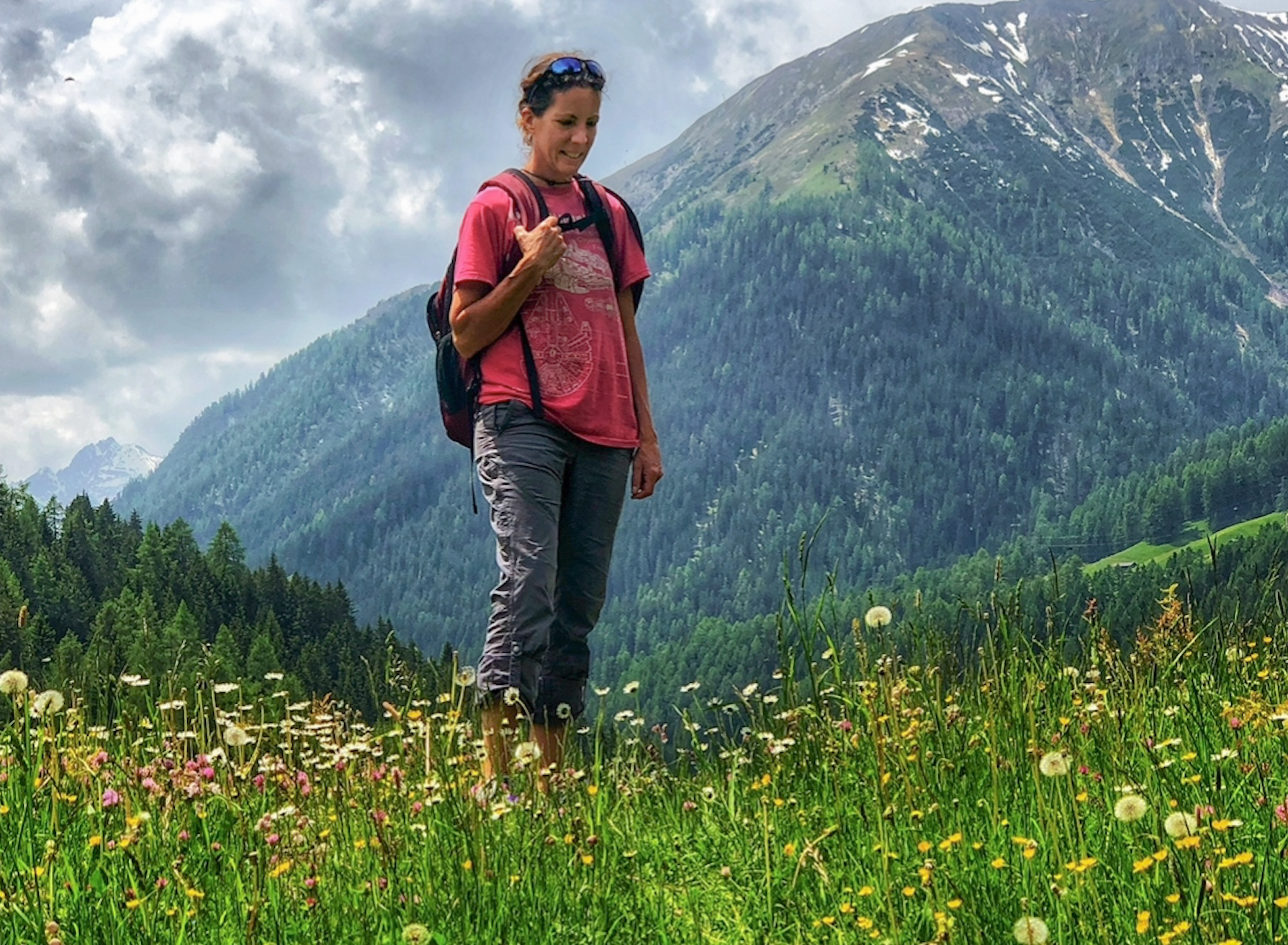
The number of people acquiring Swiss citizenship from abroad has fallen to a historic low. One person currently going through the naturalisation process is Kendall Gewalt. She had always assumed she was Swiss. Only as an adult did she discover she wasn’t.
Select your language
Generated with artificial intelligence.
Listening:
Swiss at heart, not on paper: the challenges of naturalisation from abroad


In her mid-twenties, as she began exploring study opportunities and career prospects in Switzerland, Gewalt made a surprising discovery. She was not a Swiss citizen after all. “It was a shock,” recalls the now 56-year-old, whose mother is Swiss and whose father is American.
At first, she thought the problem lay in an oversight on her mother’s part and tried to correct it. But she soon found out that she would have needed to register with a Swiss authority abroad before her 22nd birthday. It was too late to pursue Swiss citizenship. Or so she believed at the time.
Kendall Gewalt was born in California in 1969. Although her mother held Swiss citizenship at the time, it was not automatically passed on to Gewalt or her siblings. She grew up with two brothers.

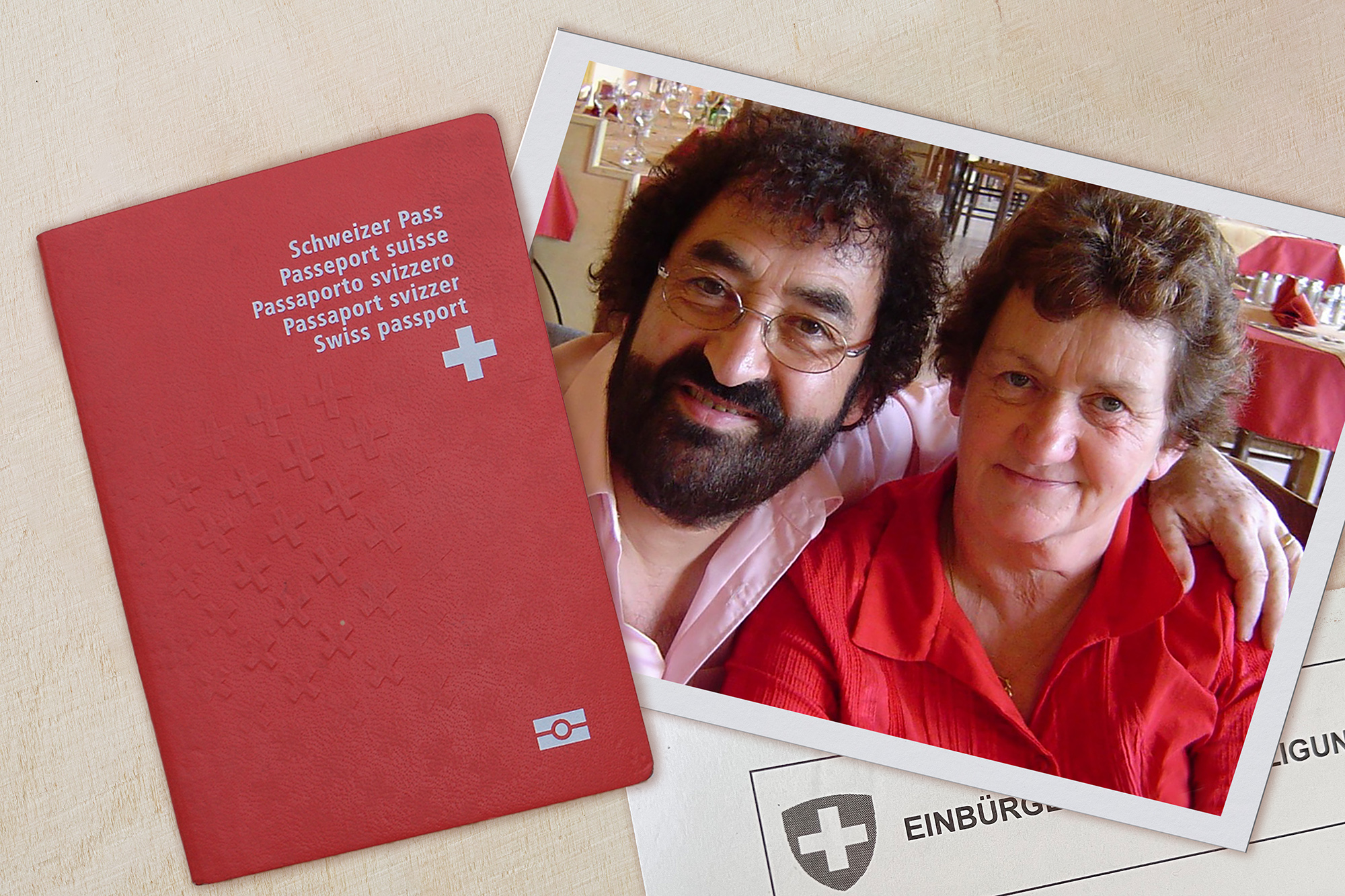
According to the family, their mother likely reported the births of her children to the Swiss authorities. However, until 1978, Swiss women married to foreigners were not allowed to transfer Swiss citizenship to their children.
Even until 1985, Swiss citizenship was passed on through the mother only if the parents were living in Switzerland at the time of the child’s birth.
More
Swiss citizenship: discrimination against women continues
Looking back, Kendall Gewalt says she should have sought information about the registration requirements earlier. “In the pre-internet era, it wasn’t so easy to access information,” she says.
Thousands of applications
Gewalt’s case is far from unique. Over the past decade, more than 4,000 people descended from Swiss citizens living abroad have applied for facilitated naturalisation, according to figures from the State Secretariat for Migration (SEM).
Like Gewalt, many only learned as adults that their entitlement to Swiss citizenship depended on strict deadlines and formal registration requirements abroad. Overall, the number of naturalisations initiated from outside Switzerland remains low. In 2024 there were 608 cases, compared with 40,077 domestically.
External Content
Gewalt points out that between 1975 and 1980, when her family lived in the Swiss municipality of Frauenkirch (now part of Davos), no one questioned her lack of Swiss citizenship. Her father travelled back and forth between the US and Switzerland, while Gewalt and her brothers attended school in Switzerland.

“I remember ski races where I finished second,” Gewalt recalls with a smile, “right behind Martina Accola”, who later became a professional skier.
Long-held wish
In the early 1980s, the Swiss-American family moved back to Napa Valley in California. Gewalt continued to visit her grandparents and former school friends in Switzerland regularly, keeping her ties to the country alive.

“My mother never spoke Swiss German with us,” Gewalt says. However, Gewalt herself continued to maintain her German language skills.
Today, she lives with her partner in Colorado, where she occasionally hosts Swiss skiers in her holiday apartments outside the ski resort town of Aspen.
Gewalt went to university in Arizona before moving back to the San Francisco Bay Area, where she worked as a deputy sheriff with the Marin County Sheriff’s Office in California. After a career in law enforcement, she retired in 2022 at the age of 53.
After retiring, she finally had the time and means to pursue her long-held wish of regaining Swiss citizenship.
“My family doesn’t know about it,” she says. The plan is to surprise her mother and, at the same time, fulfil a wish close to her heart. She says she is now in the “final stages of the naturalisation process”, having spent recent years working to meet all the requirements for facilitated naturalisationExternal link.
More
Everything you need to know about the Swiss Abroad
More than ticking boxes
Applicants must meet a list of criteria. These include having spent at least five days in Switzerland on at least three separate occasions within the six years prior to submitting their application, being able to communicate in a national language, and maintaining contact with Swiss citizens.
“I had to provide clear evidence that I was integrated, for example, through involvement in community and public life,” Gewalt says.
Another requirement is that the applicant must be born abroad to a Swiss woman married to a foreign national, and that the mother held Swiss citizenship before or at the time of the child’s birth.

More
How to get Swiss citizenship?
In May 2025, Gewalt attended a personal interview at the relevant Swiss representation. Officials assessed her ties to Switzerland, tested her general knowledge of the country, and asked for personal references in Switzerland.
She says the interview went smoothly. “But I also made the point that it is about more than ticking boxes. If you grow up with Swiss parents, you internalise Swiss values and feel Swiss, wherever you live.” Gewalt is convinced that one can always pick a Swiss person out of a crowd.
Need for patience
According to the foreign ministry, Swiss representations abroad conducted 631 interviews as part of naturalisation procedures in 2023. In 2024, the figure rose to 685. After the interviews, Swiss representations prepare a “report on the collected dataExternal link” on the applicant’s eligibility. This is then forwarded to the State Secretariat for Migration as the basis for a decision.
The process can take more than two years from application to the final granting of citizenship, according to the foreign ministry’s websiteExternal link. For now, Gewalt will need to be patient. It will be some time before she can one day hold her own Swiss passport in her hands.
The statistics show that these procedures have become increasingly infrequent. Naturalisations initiated from abroad are at their lowest level in 30 years. According to citizenship law specialist Barbara von Rütte, this may be linked to changes in the law introduced in 2018.
External Content
Sharp decline in naturalisations from abroad
In 2018, the age limit for registering with a Swiss authority abroad or in Switzerland was raised from 22 to 25. “It may be precisely these three years that make the difference, as this is often when people start looking for study or work opportunities in Switzerland,” von Rütte says. This means that people realise in time that registration is required, do not lose their entitlement to citizenship, and do not need to go through the facilitated naturalisation process.
Regarding the peaks in the graph showing naturalisations from abroad, von Rütte again suspects a link to changes in the law. “Starting in 1992, Switzerland allowed dual citizenship,” she says. From 2000 onwards, Germany did the same. Von Rütte has no legal explanation for the peak around 2014.
SEM figures show that France recorded the highest number of naturalisations from abroad in 2024, ahead of Germany and the US. (Data for 2025 will not be published until March 2026.) These are also the countries with the largest populations of Swiss Abroad. France is home to 212,143 Swiss nationals, Germany to 100,956 and the US to 84,739.
External Content
For Kendall Gewalt, Swiss citizenship would make many things easier. For example, she looks after financial matters related to her grandparents’ grave in Switzerland.
She would also then finally become an official part of Switzerland. “At the moment, I’m an outsider who has no political voice,” she says. “I stay in close contact with my relatives in Switzerland and also follow political developments there closely.”
She can also imagine dividing her life between the two countries in future and accompanying her mother, now in her eighties, during extended stays in Switzerland. Although long Swiss in her heart, it will still be several months until it becomes clear if she will also be Swiss on paper.
Edited by Balz Rigendinger. Adapted from German by David Kelso Kaufher/ts
More


In compliance with the JTI standards
More: SWI swissinfo.ch certified by the Journalism Trust Initiative

You can find an overview of ongoing debates with our journalists here . Please join us!
If you want to start a conversation about a topic raised in this article or want to report factual errors, email us at english@swissinfo.ch.