








Crans-Montana disaster raises questions over Swiss federalism’s crisis response

Since the deadly fire at the Le Constellation bar in Crans-Montana, Switzerland’s federal system has come under scrutiny and criticism. But for Andreas Stöckli, a board member of the Institute of Federalism, the country’s decentralised structure has little to do with the failures identified so far.
Select your language
Generated with artificial intelligence.
Listening:
Crans-Montana disaster raises questions over Swiss federalism’s crisis response

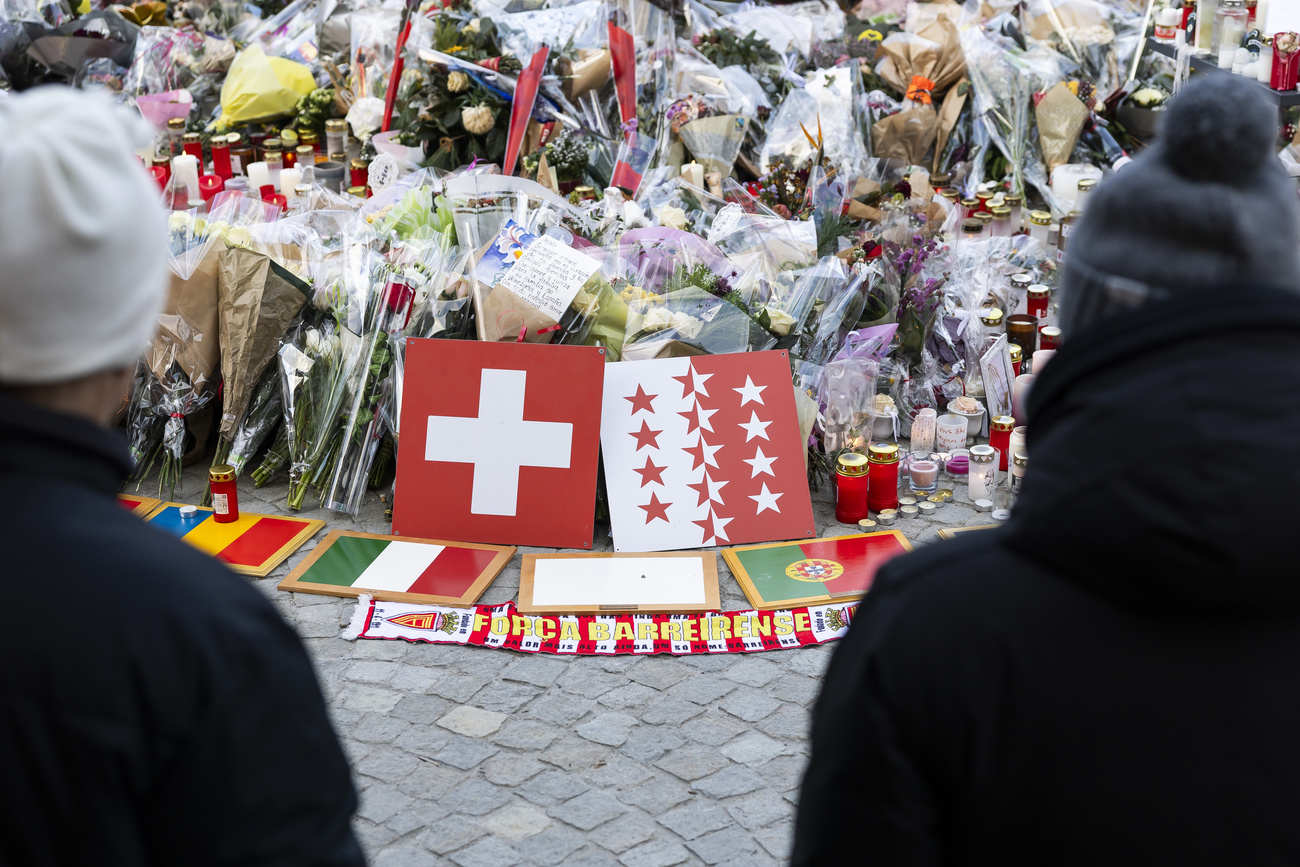
Since the fateful early hours of January 1, when 40 young people lost their lives and a further 116 were seriously injured in a blaze at the Le Constellation bar in Crans-Montana, many questions have arisen.
Some of them concern a cornerstone of the Swiss state: federalism. Why is an investigation of this scale being conducted by cantonal rather than federal judicial authorities? Have responsibilities along the chain of accountability been diluted? Are the cantons – and even more so the municipalities – able to enforce regulations and respond effectively in exceptional situations?
>> Read our analysis of the Crans-Montana tragedy:
More
Crans-Montana tragedy highlights limits of Swiss federal system
Andreas Stöckli is a professor of constitutional and administrative law at the University of Fribourg and a member of the management board of the Institute of Federalism. He outlines the basic principles governing the allocation of state powers and shares his assessment of the Crans-Montana tragedy.
Swissinfo: How are responsibilities for fire safety organised in Switzerland?
Andreas Stöckli: Responsibility for building regulations – and therefore also for fire safety in buildings – lies with the cantons.
In general, the rules governing the construction, operation and safety of restaurants and bars vary from canton to canton, and in some cases even from municipality to municipality.
Swissinfo: Does that mean the cantons can do whatever they want when it comes to fire safety?
A.S.: The cantons can choose to harmonise their rules and practices if they wish. That is precisely what they have done in the field of fire safety. There are fire safety standards which are harmonised across the cantons: the Swiss fire safety regulations issued by the Association of Cantonal Fire Insurance Providers. These standards have been declared binding for all cantons by the competent inter-cantonal body.
Their practical implementation is the responsibility of the cantons or, as in the canton of Valais, of the municipalities.
However, in the present case, if media reports are to be believed, there are indications that the problem lay less with inadequate standards than with how they were applied and monitored.
That has nothing to do with Switzerland’s federal structures as such.
>>Under Switzerland federal system, legislation relating to bars and the minimum entry age vary by canton:

More
What does Swiss law say about minors in bars?
Swissinfo: Given the seriousness of the incident, is it surprising that the investigation remains in the hands of the cantonal authorities? Could the federal government take over the case?
A.S.: First, it is important to distinguish between the different types of proceedings that may arise. Criminal proceedings have already been initiated in part; there will certainly also be civil lawsuits, and possibly claims against the municipality or the canton for inadequate inspections. In addition, there will most likely be a political review of what happened.
As far as criminal prosecution is concerned, the federal authorities do have certain powers, exercised by the Swiss office of the attorney general. However, these are limited to clearly defined offences, which do not appear relevant in this case.
The applicable offences are likely to include, for example, negligent homicide, negligent bodily harm or negligent causing of a fire. These do not fall within federal jurisdiction. Criminal prosecution therefore falls to the authorities of the canton of Valais, and the federal government cannot simply take over the proceedings. The question of appointing an extraordinary external prosecutor remains open, however.

More
Swiss bar fire likely started by sparklers on champagne bottles, says prosecutor
The same applies to civil proceedings. Apart from the role of the Federal Court as a court of appeal, jurisdiction lies with the cantonal civil courts.
The Swiss legal system does not provide for the federal government to take over proceedings that fall within cantonal competence. In my view, this is also not necessary. Clearly, this is an extraordinary situation, but the competent authorities must be capable of handling such cases.
Swissinfo: Some observers say this tragedy exposes the limits of federalism. Do you share that view?

A.S.: In exceptional situations and disasters, federalism is often called into question. I think the issue needs to be looked at in a more nuanced way.
In this case, cantonal and municipal authorities are responsible for the initial response and crisis management. When it comes to first response, federalism actually has advantages in my view. This was already evident during the Covid-19 crisis: local authorities and actors are often better placed to act quickly and effectively.
But there is a need for coordination. In areas such as care for the injured, a canton can reach its limits. In the Crans-Montana disaster, however, solidarity from other cantons came very quickly. Patients were transferred relatively swiftly to hospitals in Zurich, Lausanne and elsewhere.
My assessment is that decentralised structures function well in such situations. Help can be mobilised rapidly on the ground, assistance can be provided quickly, and the various actors are well coordinated.
Criticism from abroad suggests that even Switzerland is unable to prevent such disasters, which damages its reputation. But this has nothing to do with federal structures. Such tragedies are rather the result of human failings.
Edited by Samuel Jaberg/adapted from German by Catherine Hickley/gw
More


In compliance with the JTI standards
More: SWI swissinfo.ch certified by the Journalism Trust Initiative

You can find an overview of ongoing debates with our journalists here . Please join us!
If you want to start a conversation about a topic raised in this article or want to report factual errors, email us at english@swissinfo.ch.