








Crans-Montana tragedy highlights limits of Swiss federal system
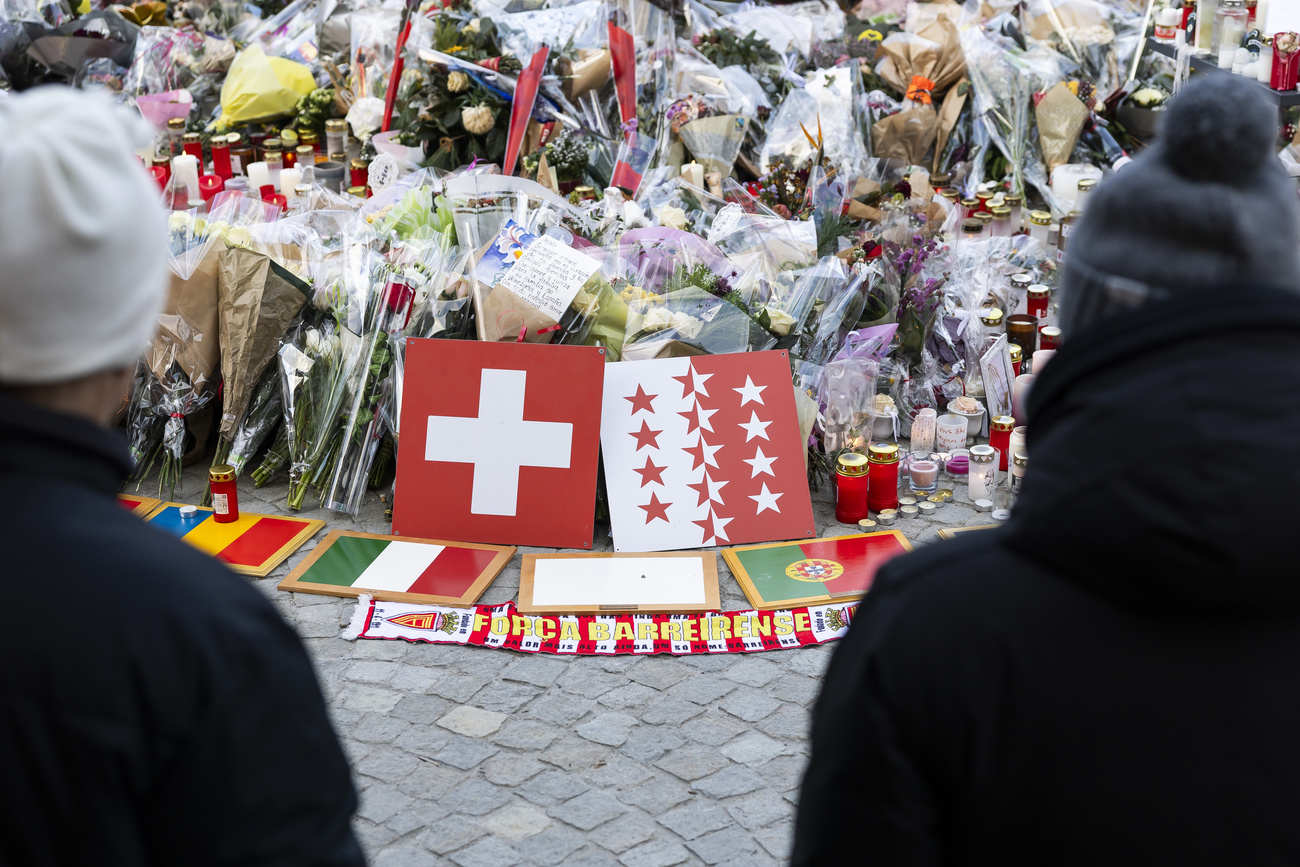
The deadly New Year’s Eve blaze in the Swiss ski resort of Crans-Montana has raised questions and criticism abroad: how could such a tragedy occur in Switzerland, which is often viewed as "the land of rules"? An analysis by Swissinfo journalists.
Select your language
Generated with artificial intelligence.
Listening:
Crans-Montana tragedy highlights limits of Swiss federal system


A few days after the devastating fire in the Le Constellation bar, one thing is clear: the tragedy was avoidable. If the existing safety standards had been properly applied, the death toll – 40 victims, including 20 minors, and 116 injured – would probably have been much lower. The disaster might not even have happened.
This has not escaped the attention of the rest of the world. Among Switzerland’s immediate neighbours, emotions are running high, amid incomprehension and anger. “Perhaps it’s time for the country of supposed perfection to lower its sights, not out of shame, but to face reality,” wrote the Italian press.
Switzerland is being forced to rise to the challenge of a dramatic event which is disrupting its traditional way of doing things – and perhaps even overwhelming it.
Wide repercussions
Following the tragedy, the Crans-Montana authorities initially reacted like a village. The resort’s permanent resident population is typically less than 11,000, but in winter it can rise to around 40,000. This is when the village turns into an international town. With this kind of growth, responsibility inevitably increases.

More
Swiss bar fire likely started by sparklers on champagne bottles, says prosecutor
Crans-Montana is both small and large. It’s almost an allegory for Switzerland – a geographical dwarf but an economic giant. And when the going gets tough, it tends to keep a low profile. When necessary, it rises to the occasion. Today, the world is watching to see how the country deals with one of the worst disasters in its history. Will it hide behind its intricate federal system, or will it acknowledge its responsibility by offering transparency, support and compensation?
The risk of damaging the country’s image is considerable. During a recent visit to a Valais hospital, Interior Minister Elisabeth Baume-Schneider declared: “This tragedy in Crans-Montana will have repercussions far beyond canton Valais, throughout Switzerland and abroad.”
Sadness and shock
In the first few days after the tragedy, a blanket of sadness covered the country. Then gradually the feeling that dominated abroad took hold in Switzerland: shock. Shock and dismay that such a death trap could exist in the supposedly strictly regulated world of Swiss chalets.
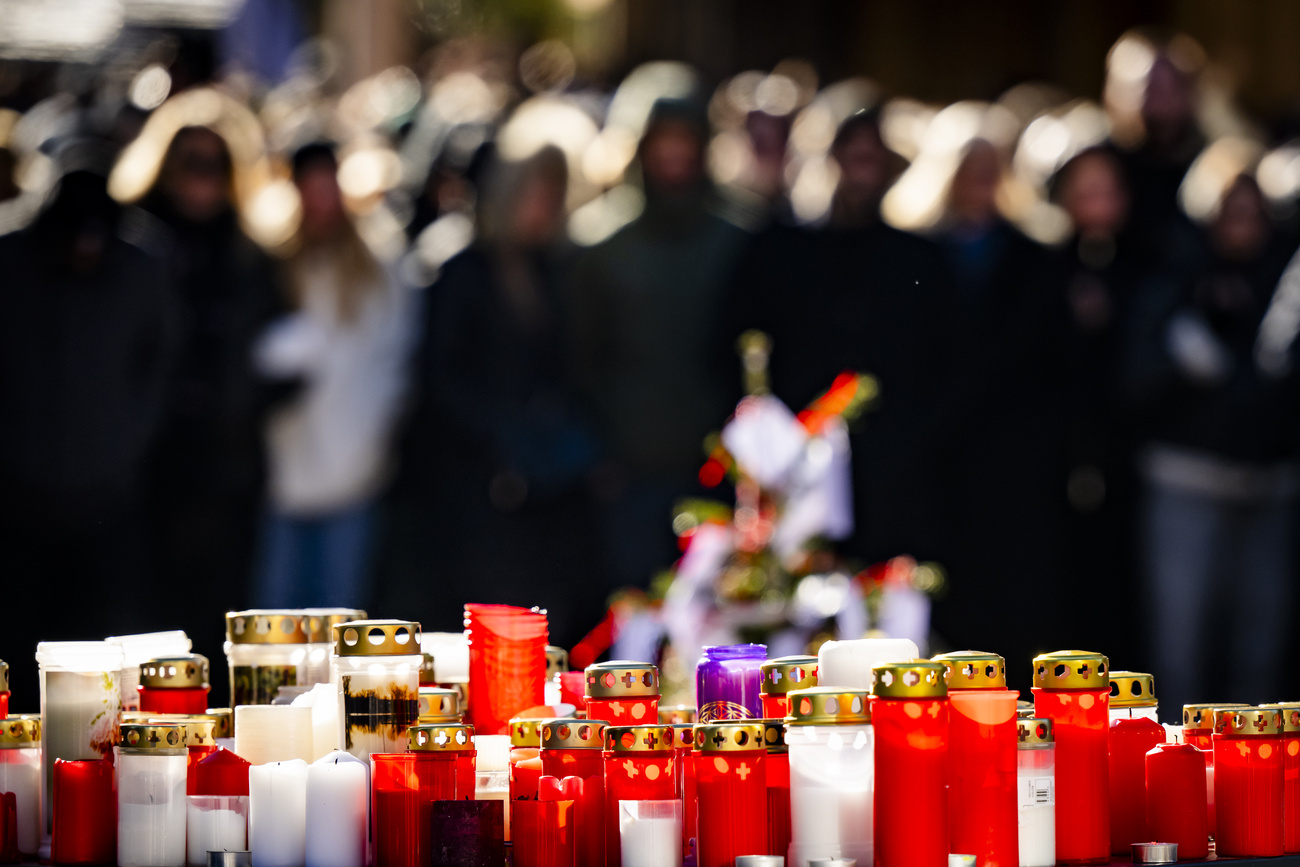
Sadness and shock are two different emotions. Sadness is silent and heavy; it leads us to seek comfort and kinship in mourning. This is how Switzerland reacted.
More
Crans-Montana tragedy: Swiss press question lax regulations and insufficient safety measures
Shock, on the other hand, is loud and impatient, demanding clear answers and accountability. This is how the rest of the world has reacted, and this is what the relatives of the victims from several countries are expecting.
Italy, via its ambassador to Switzerland, Gian Lorenzo Cornado, and France, which has opened its own probe into the tragedy, have already made clear that they will follow Swiss investigations very closely until the truth comes out and justice is done.
Local authorities under pressure
There are many reasons for this mistrust. Rather than offer calm or clarity, the press conference held by the Crans-Montana municipality a week after the tragedy has added fuel to the fire after unconvincing answers and an accumulation of obvious failings were brought to light.
The mayor, Nicolas Féraud, admitted that the bar had not been checked for years. When asked by an Italian journalist if the municipality was going to apologise, he replied: “We have expressed our sadness several times.”
Meanwhile, unease is spreading about the conduct of the investigation and the Valais attorney general, Béatrice Pilloud, is under pressure. She has been criticised for excluding the victims’ lawyers from the hearings, for example. “This restriction was imposed to avoid leaks to the media,” she explained.

More
Owners of Swiss fatal fire bar break silence
“Shocking,” retorted Romain Jordan, a lawyer representing several families. “The respect due to the victims (…) must also be enshrined in the procedure, where they must at least be given the space they are entitled to under the law.”
Live and let live
“We’ll sort it out amongst ourselves, in our own way”: that’s how some people in Switzerland view canton Valais, which often presents itself as a “free Alpine republic”, a sort of friendly Wild West.
But although the region has undergone rapid modernisation in recent decades – it has become a hub of expertise for everything from biotechnology and energy to digital health – its recent history has been punctuated by wine laundering scandals, poaching, environmental damage and major bankruptcies. This week, Swissinfo learned that several Valais hotels had not conducted fire checks for decades.
This is partly due to the region’s culture and geography. The canton still has strong Catholic roots. Individuals are ultimately answerable to God and tend to let their neighbour do as they please. The bilingualism and multiplicity of valleys also encourage a laissez-faire attitude: if you want to live in peace, you must let others live too.
Federalism reinforces this logic. The Swiss federal government sets the guidelines and the cantons apply them. But unlike other cantons, Valais delegates security matters to the municipalities, where the traditional militia system prevails. This is a well-established Swiss principle whereby public duties are not necessarily conducted by professionals, but by ordinary citizens on a voluntary basis, alongside their main job.
Switzerland is proud of this exceptional system, but which only works thanks to trust and individual responsibility.
>>Almost half of the victims who died in the Crans-Montana bar fire on New Year’s Eve were minors.

More
What does Swiss law say about minors in bars?
What are the limits of the Swiss exception?
“In calm times, our system works well: federalism, militia and proximity,” writes the daily Blick. “But when there’s a crisis, its weaknesses come to the fore. When responsibility is shared, nobody feels responsible anymore.”
At the municipality’s press conference, a tough question was asked: “We always talk about the Swiss militia system, but is the president of a municipality trained to demand meticulous and essential safety checks [on bars and restaurants]? Nicolas Féraud’s answer was that the municipality “knows how to surround itself” with people who know what needs to be done.
The fact remains that conducting checks is particularly difficult at municipal level. Not only is the militia system constantly being renewed, but it is also run by amateurs. “There are no standards when it comes to fire protection,” said one Valais hotelier. “Someone comes in and takes the inspections seriously; four years later, he’s replaced.”
The question of resources is a relevant one, but obvious contradictions are emerging. While denying the municipality was “overwhelmed”, the Crans-Montana president pointed out that their workload was “immense” and the pace “very fast” for the team of five people responsible for fire safety checks.
Within the Valais fire service – which is made up of volunteers – tongues are now also wagging about the lack of human resources. They claim that if the fire had broken out on an ordinary night rather than New Year’s Eve (when staff are automatically mobilised to the local fire station), the consequences could have been even worse.
Solidarity, organisation, reliability
Abroad, people have also expressed surprise at the fact that first aid is entrusted to non-professionals, concluding that it must be predictably amateurish or, at the very least, unprepared for emergency situations.

More
Swiss bar that caught fire had not been inspected since 2019
Among the first responders to the disaster, however, the assessment was different. Stéphane Ganzer, head of security in canton Valais, was full of praise for the efficiency, solidarity and commitment of the citizens involved. “That’s the magic of our system: we bring together professionals and militiamen, and it’s a system that has proved its worth,” he told Radio Chablais the day after the fire.
An anaesthetist from Geneva hospital, who happened to be in Crans-Montana on the night of the blaze, told Swiss public radio RTS that the rescue chain was “admirable”.
“Personally, I didn’t see any malfunctions, but a great deal of mutual aid,” he declared.
So, during the initial emergency response, Switzerland showed itself to be true to its image: organised, reliable and supportive.
Shortcomings in structural solidarity
But this solidarity, indisputable at the individual level, is now also showing structural cracks. In Switzerland, solidarity is hierarchical: the big help the small. If a citizen cannot cope with a loss, the municipality steps in; if the municipality is overwhelmed, the canton takes over; and if the canton is at its wits’ end, the federal government offers support. This is what happened with the huge landslide in the Swiss mountain village of Blatten last year.
Cantonal insurance schemes also operate on the principle of solidarity: everyone contributes and everyone takes part in prevention. And if a disaster does occur, the strength of the community comes into play. Canton Valais is one of the few regions that has no cantonal property insurance and no compulsory insurance. In Blatten, some owners were not insured.
Left-wing political groups in canton Valais have been trying for years to change this situation. They have been calling for the introduction of a cantonal property insurance scheme, which would have all the levers needed to enforce the rules: financial resources, independence, genuine interest, and professional expertise in fire prevention. The cantonal parliament has rejected this model on numerous occasions.
Canton Valais benefits greatly from federal financial equalisation system (CHF826 million in 2026) and from aid to prevent natural hazards, financed by the economically stronger cantons. Few other cantons are as exposed to natural hazards. Hence the irritation in Zurich and Basel when canton Valais gives the impression that it is disregarding the most basic rules of community safety.
Watch our video for footage from the memorial service, provided by Swiss public broadcasters RTS and SRF.
The fact remains that on January 9, neither the municipality of Crans-Montana nor the canton of Valais will be alone during the national day of mourning. It is the whole of Switzerland, as a nation, that will unite to commemorate one of the worst tragedies in its history.
More

Edited by Samuel Jaberg/adapted from French with AI/sb
How we translate with AI
We use automatic translation tools, such as DeepL and Google Translate, for some content.
Each translated article is carefully reviewed by a journalist for accuracy. Using translation tools gives us the time for more in-depth articles.
Learn more here about how we work with AI.

In compliance with the JTI standards
More: SWI swissinfo.ch certified by the Journalism Trust Initiative

You can find an overview of ongoing debates with our journalists here . Please join us!
If you want to start a conversation about a topic raised in this article or want to report factual errors, email us at english@swissinfo.ch.