








Swiss are going cashless despite attachment to paper money

Though still seen as a country where cash is king, Switzerland is well ahead of the pack when it comes to digital payments. Yet, more than anywhere else, physical money is still seen as a safe haven, and high-denomination banknotes continue to nestle in many wallets.
Select your language
Generated with artificial intelligence.
Listening:
Swiss are going cashless despite attachment to paper money

Despite, or perhaps because of, the trend towards the disappearance of physical money, the Swiss will vote in early March on whether to enshrine cash in the constitution.
>> Read more about the issues on the March 8 ballot:

More
Swiss to vote on preserving cash as a payment system
Spearheaded by a group of citizens known for their opposition to compulsory vaccination, the popular initiative aims to ensure that paper money will always be accessible and available in sufficient quantities in the future.
The main argument is that cash offers security against the different risks seen as inherent to digital transactions (e.g., system failures, hacking, financial flow surveillance). Polls indicate that a “yes” vote could carry the day, even as the use of cash has declined sharply in the country in recent years.
Cash used less than elsewhere in Europe
Just a decade ago, it was not uncommon in Switzerland to have to rush to an ATM to withdraw cash to pay for purchases in a shop that did not take bank cards. Those days seem to be well and truly over.
In 2017, more than 7 out of ten transactions at points of sale in Switzerland were settled in ready money, according to a study by the Swiss National BankExternal link (SNB). Five years and a pandemic later, this figure had dropped to less than 4 out of ten, but cash was still the most widely used means of payment among the population.
This is no longer the case. Dethroned by the bank card, cash was used for only 30% of in-shop payments by 2024. This share sinks to 27% if all transactions are taken into account (also online purchases and person-to-person payments).
External Content
Within the eurozone, the use of cash has also declined, albeit to a lesser extent. Cash payments, which accounted for nearly 8 out of ten transactions in 2016, still represented more than half of all payments in 2024, according to a study by the European Central BankExternal link (ECB). Over the same period, the share of bank card transactions doubled.
Mobile applications, on the other hand, reached only 6% of total transactions in the EU, while in Switzerland use of this payment method has skyrocketed in recent years, mainly thanks to the app Twint.
External Content
One in five transactions in Switzerland is now made using a payment app. This is more than in any other Eurozone country apart from The Netherlands. It helps explain why Switzerland is now one of the European countries that uses the least cashExternal link.
It is important to note that neither Sweden nor Norway were included in the ECB study, as they are not part of the euro zone. However, they are by far the European countries where payments are the most dematerialised.
In a study by the Swedish Central Bank publishedExternal link in 2024, 10% of respondents said they had paid for their last shop purchase in cash. The Norwegian population, meanwhile, almost never pays in cash: Only 2% of purchases in the country were paid for in cash in 2024, according to the Norwegian central bank.External link
Outside Europe, Hong Kong, Australia and China are also forerunners in this respect.
External Content
Global trend
The trend toward digital payments is evident worldwide. According to a 2024 report by management consultant McKinseyExternal link, global cash usage is now at 80% of its 2019 level and continues to decline by 4 percentage points each year.
Between 2014 and 2024, the percentage of adults reporting that they made or received payments using digital means almost tripled in low-income countries (from 13% to 37%) and doubled in middle-income countries (from 24% to 47%), according to the World Bank’s Global FindexExternal link.
In wealthy countries, most people had already taken this step several years ago. Many states are now at the next stage: the transition to “cash-lite” (where cash plays a marginal role) and even cashless environments, according to the OCDEExternal link. This is the case in Switzerland where, for instance, more and more restaurants are refusing cash and prepaid wristbands are the only means of payment at many festivals.
In 2024, the Norwegian financial information provider FinansplassenExternal link analysed to what extent the infrastructure of European countries was prepared for a cashless future. Those with the highest scores (the Nordic countries, as it happens) all had more electronic payment terminals, fewer ATMs (a sign of less reliance on cash), and a high proportion of people using online banking services. Switzerland ranked tenth out of 45 countries examined. The relatively high density of ATMs is what pushed it down the ranking.
External Content
People who prefer digital payments generally cite, as reasons, the convenience of not having to withdraw and carry cash and the speed and ease of use.
At the macro level, the demise of cash is seen by some as a means of combating money laundering and illicit financial flows. This was notably the argument put forward by Norway’s largest bankExternal link in 2016 when calling for the complete elimination of cash.
In spring 2024, French Justice Minister Gérald Darmanin caused a stir with a similar proposalExternal link.
Cash still a safe haven for the Swiss
But this overlooks the fact that many people are still attached to banknotes and do not want to see them disappear. In Switzerland, going 100% cashless is a development far from welcomed by allExternal link. According to the SNB study, nearly 7 out of ten people say they want to continue using cash in the future. This proportion rises to almost 85% among the over-55s, and has increased in the last two years.
>> Read more on this subject:
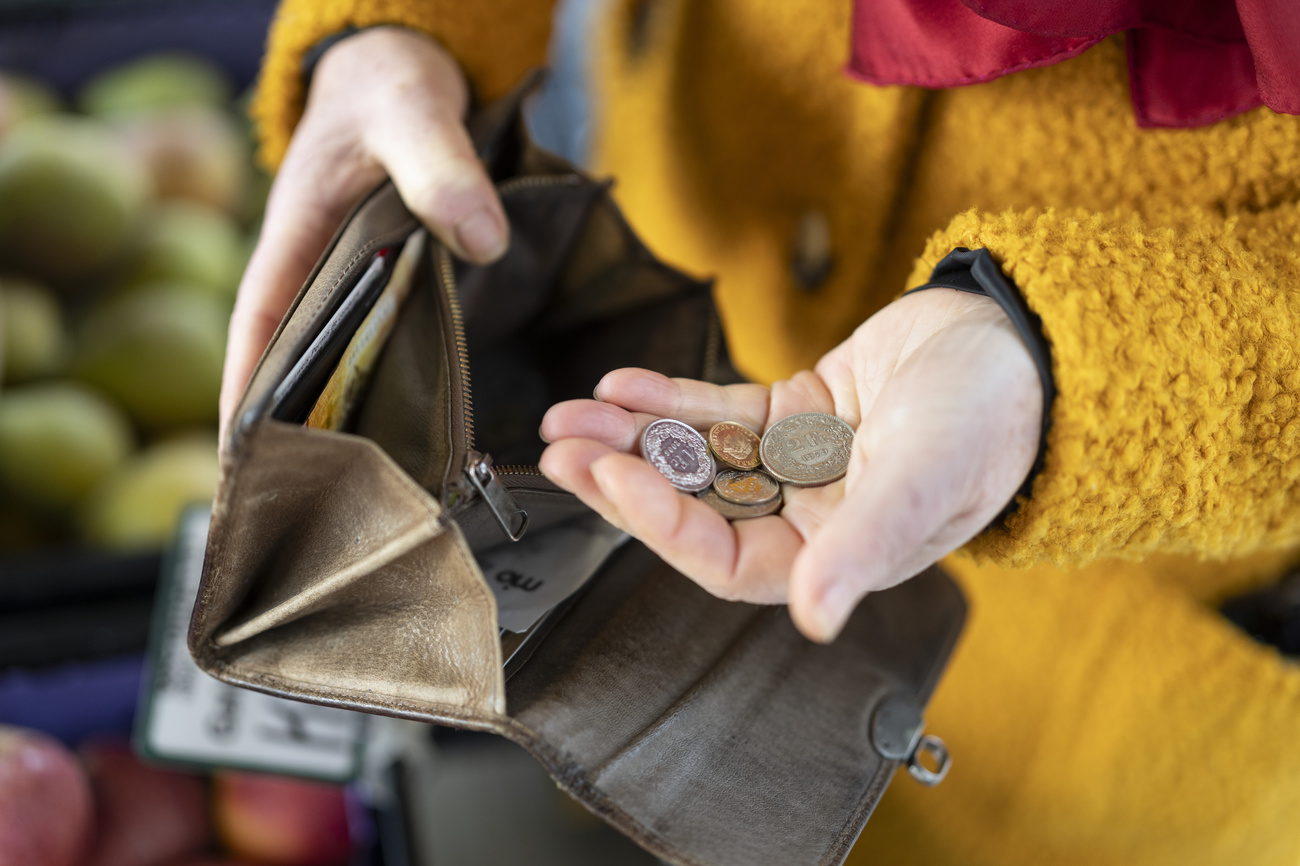
More
Why the Swiss still like to have cash in hand
Even those who no longer use cash want it to remain accessible. Only 4% of respondents said they were in favour of its elimination.
External Content
Attachment to cash appears to be much stronger in Switzerland than in the rest of Europe. In the ECB survey, nearly two-thirds of respondents felt that it was important to retain the option of paying with cash, while 12% did not think it was important at all.
In the euro area, those who prefer cash payments mainly cite anonymity and privacy as reasons. The security argument comes only in seventh place. In Switzerland, meanwhile, security is the second most important motive (given by nearly 40% of respondents), after expenditure control.
‘Keep calm and carry cash’
The safeness of cash is, however, increasingly being put forward by European authorities, starting with the Scandinavian countries, which until recently were strong advocates for going totally digital.
Amid rising cybercrime and the fear of hybrid warfare waged by Russia, last year Sweden and Norway advised their citizens to make greater use of cash and to build up a reserve in order to be able to cope with potential system failures, The GuardianExternal link reported.
“Keep calm and carry cashExternal link“ was also the recommendation issued by the ECB last September. The central bank advised EU citizens to make sure they had €70-100 (CHF65-90) in cash per person so as to be able to pay for essential expenses in case of a major power failure, cyberattack or health crisis.
The OECD report on the subjectExternal link also emphasises that the disappearance of cash could weaken and exclude certain parts of society for whom it is essential, in particular people with disabilities, those undergoing financial hardship, or those with lower digital literacy.
Currently, the median amount of cash found in EU wallets is €59. The amount is lower in highly digitised countries such as The Netherlands (€35) and Finland (€47). Switzerland is on a par with the European average, with a median of CHF50, according to the Swiss Payment MonitorExternal link, which nevertheless notes that its sample includes significantly higher individual values.
The Swiss, meanwhile, are more inclined to set aside a stash for a rainy day: 60% say they generally keep ready money at home. This is significantly more than in any country in the eurozone (only Slovakia comes close, at 57%), where on average a third of the population has cash reserves. The average sum tucked away in Swiss drawers is CHF700.
Edited by Samuel Jaberg. Adapted from French by Julia Bassam/gw
Note: This article was updated on February 18, 2026 to specify that Norway and Sweden are the European countries that use the least cash by a wide margin. They are not included in the ECB’s ranking because they are not part of the eurozone.

In compliance with the JTI standards
More: SWI swissinfo.ch certified by the Journalism Trust Initiative

You can find an overview of ongoing debates with our journalists here . Please join us!
If you want to start a conversation about a topic raised in this article or want to report factual errors, email us at english@swissinfo.ch.