








Nestlé recalls BEBA and Alfamino infant milk in Switzerland
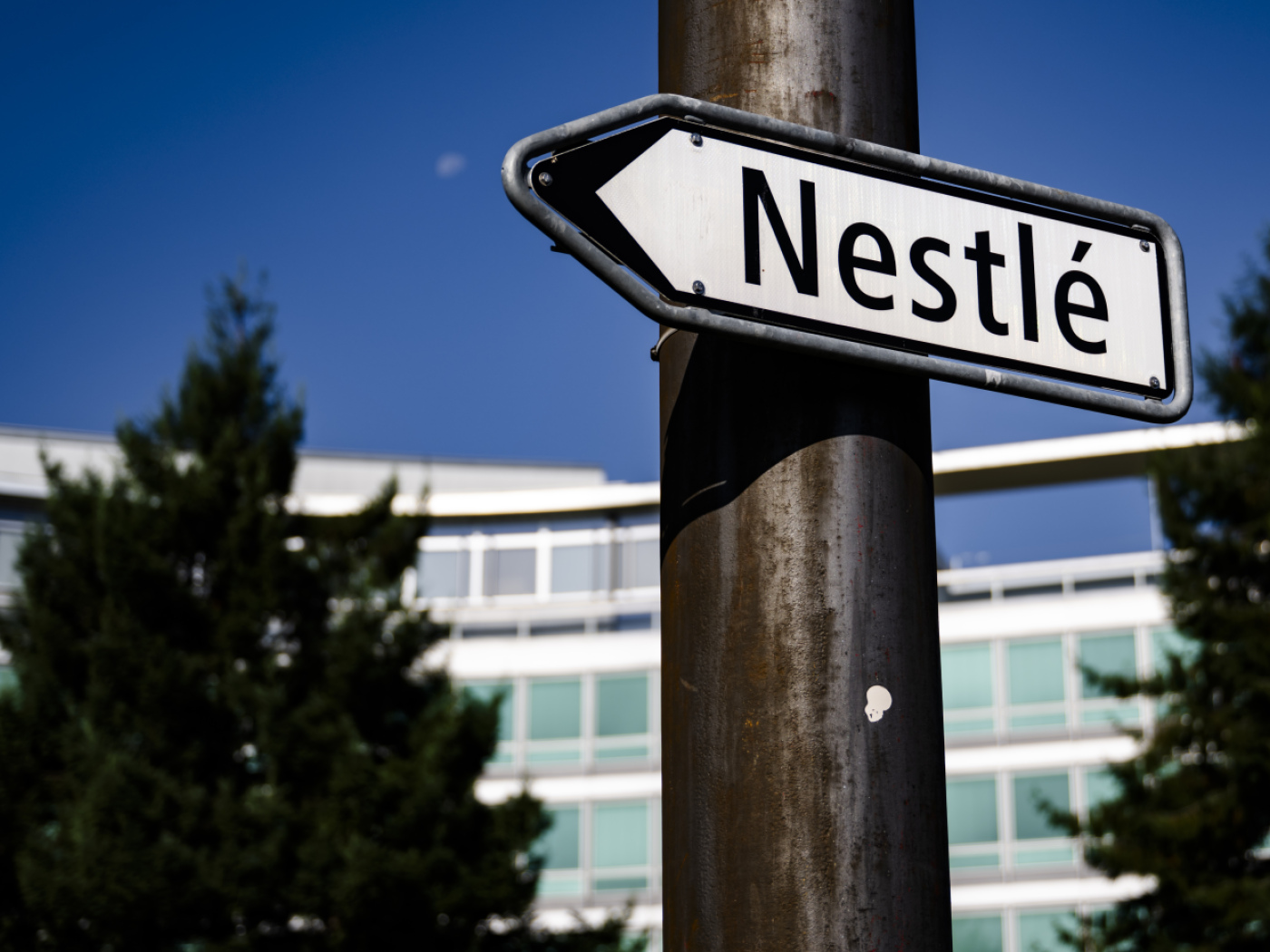
Swiss food multinational Nestlé is recalling certain batches of its BEBA and Alfamino infant milk brands in Switzerland. The product recall affects a total of 31 countries and accounts for less than 0.5% of group sales.
Select your language
Generated with artificial intelligence.
Listening:
Nestlé recalls BEBA and Alfamino infant milk in Switzerland
+Get the most important news from Switzerland in your inbox
“Nestlé, in close collaboration with the competent Swiss authorities, is recalling certain batches of various BEBA and Alfamino infant nutrition products available in Switzerland as a precautionary measure,” said the Vevey-based food giant in a press release posted online on Monday.
The products in question are BEBA Bio 1 (800g), BEBA Comfort (800g), BEBA Optipro PRE (800g), BEBA Optipro 1 (800g), BEBA Expert HA 1 (800g), BEBA Aliment pour prématurés étape 2 (32x90ml) and BEBA Supreme 1 (800g), with expiry dates ranging from October 2026 to June 2027.
Consumers who have purchased these products should no longer give them to their children and are invited to contact Nestlé Switzerland for an exchange or refund (0800 55 44 66 or www.nestle.ch/fr/infoExternal link).
The group adds that “this recall is a precautionary measure due to the possible presence of cereulide, produced by the micro-organism Bacillus cereus”.
This substance was detected in an ingredient supplied by a supplier and used in the batches concerned. The group said it had carried out tests on oils containing arachidonic acid (ARA) and the corresponding oil blends used in the manufacture of these infant products.
“No illnesses linked to the consumption of the products concerned have been reported to date”, Nestlé added.
Foodwatch monitors
The recall affects a total of 31 countries, mainly in Europe (Germany, France, Italy, etc), but also Argentina, Mexico, Peru and Hong Kong. Nestlé said that the batches affected by the recall represent less than 0.5% of group sales and that the financial impact should not be significant.
In a statement sent to AWP, the consumer protection organisation Foodwatch estimates that some 60 countries are now affected by these recalls, compared with just a handful in 2025, based on a notification from the European alert network. These countries include Ukraine, Russia, South Africa, Jordan, Pakistan, Kazakhstan, Malaysia, Vietnam and China.
The NGO questions Nestlé’s “transparency towards consumers around the world”. “Why did we discover in January 2026 that some 60 countries were affected by the recall of baby milk powder due to the presence of Bacillus cereus, when nine countries were concerned in December? How does Nestlé, which is supposed to ensure the immediate traceability of sensitive baby products, explain the drip-feed of information and the late recalls in many countries,” writes Foodwatch.
It also questions “the role of the Dutch authorities, since the products came from a factory in the Netherlands”.
Contacted by the AWP agency, the multinational had confirmed in December that it was indeed Nestlé’s Nunspeet factory, located to the east of Amsterdam and entirely dedicated to the production of baby milk powder, whose products are exported to some 140 markets around the world.
Last month, the consumer protection NGO denounced “an unacceptable risk for newborn babies”, after Nestlé recalled Guigoz infant milk in France and elsewhere in Europe, following the detection of Bacillus cereus bacteria during a self-check.

More
Nestlé launches large baby food recall in Europe
Adapted from French by DeepL/mga
We select the most relevant news for an international audience and use automatic translation tools to translate them into English. A journalist then reviews the translation for clarity and accuracy before publication.
Providing you with automatically translated news gives us the time to write more in-depth articles. The news stories we select have been written and carefully fact-checked by an external editorial team from news agencies such as Bloomberg or Keystone.
If you have any questions about how we work, write to us at english@swissinfo.ch
External Content

In compliance with the JTI standards
More: SWI swissinfo.ch certified by the Journalism Trust Initiative

You can find an overview of ongoing debates with our journalists here . Please join us!
If you want to start a conversation about a topic raised in this article or want to report factual errors, email us at english@swissinfo.ch.