








Swiss study: solitary confinement counterproductive
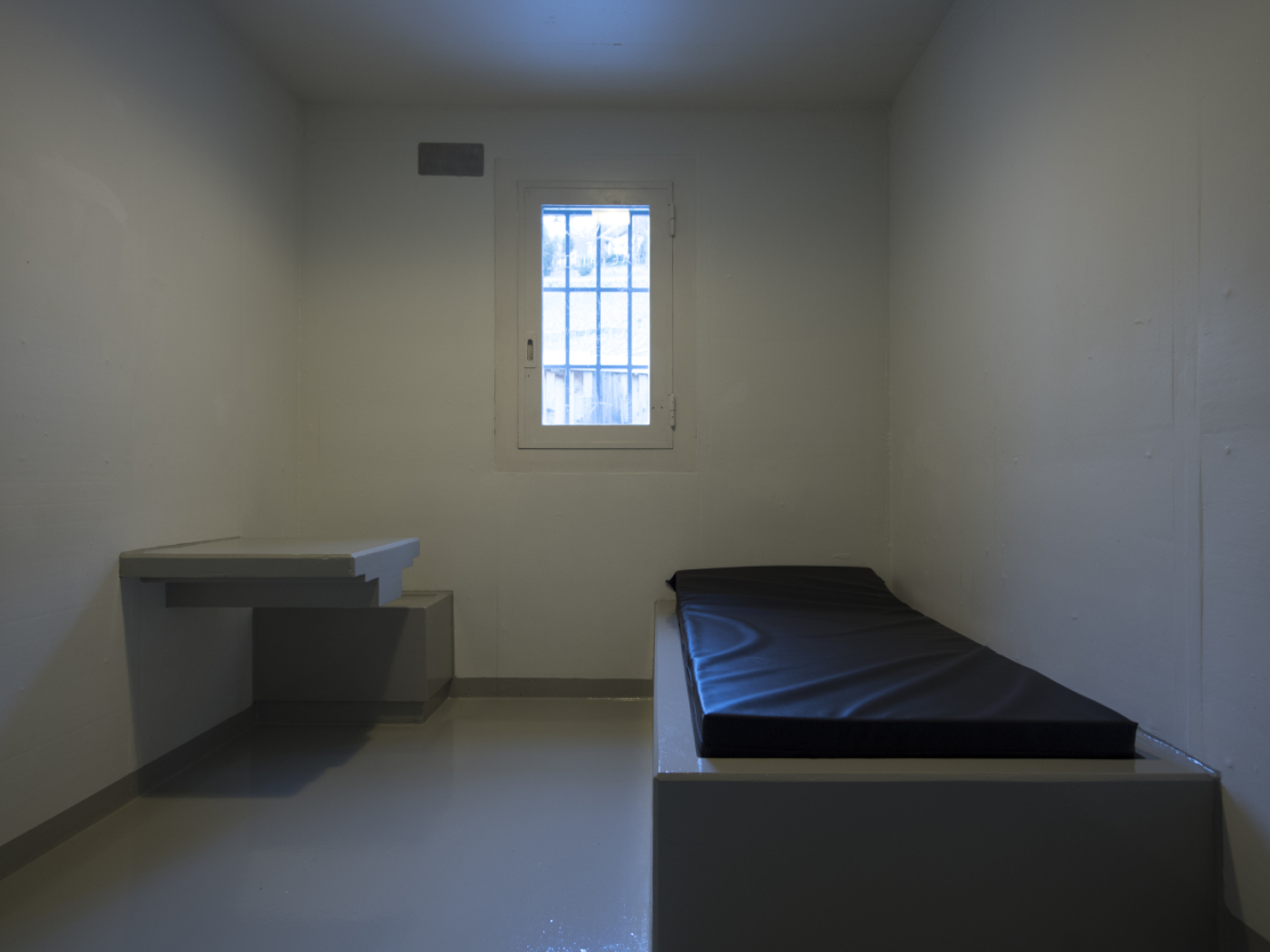
Solitary confinement in prisons is ineffective or even counterproductive, according to a study, whose authors are calling for the abolition of this form of detention in Switzerland.
Select your language
Generated with artificial intelligence.
Listening:
Swiss study: solitary confinement counterproductive
The research was carried out by Thierry Urwyler, a professor of criminal law, together with Iris Weidmann, Thomas Noll and Nina Schnyder, who work at the Office for the Enforcement of Sentences and Reintegration of canton Zurich. Previously, the topic had only been the subject of sporadic studies in Switzerland.
In an interview published on Friday by the University of Zurich, Urwyler says that people with mental health issues, in particular, tend to comply even less with the rules following their arrest. Furthermore, solitary confinement can lead to a deterioration in mental health, for example by increasing the risk of suicide.

More
Anti-torture body criticises overcrowded Swiss prisons
Some of the international studies analysed for the Swiss investigation show that being held in solitary confinement can, among other things, increase the likelihood of reoffending after release. The authors therefore regard it as an ineffective, if not harmful, measure that cannot be constitutionally justified.
According to Urwyler, Pöschwies Prison in Regensdorf, canton Zurich, has already amended its policy and now imposes solitary confinement less frequently. This is “an important and commendable step”, he said.
According to the four specialists behind the study, a plan is needed to set out how to end this practice as quickly as possible. In addition, a multidisciplinary committee, rather than the current purely legal bodies, should conduct a review of detentions. Finally, solitary confinement should be geared more towards therapy, so that prisoners no longer have to remain in their cells for 22 hours without any activities.
Translated from Italian, sub-edited by ts
External Content

In compliance with the JTI standards
More: SWI swissinfo.ch certified by the Journalism Trust Initiative

You can find an overview of ongoing debates with our journalists here . Please join us!
If you want to start a conversation about a topic raised in this article or want to report factual errors, email us at english@swissinfo.ch.