








Fuel prices continue to rise in Switzerland
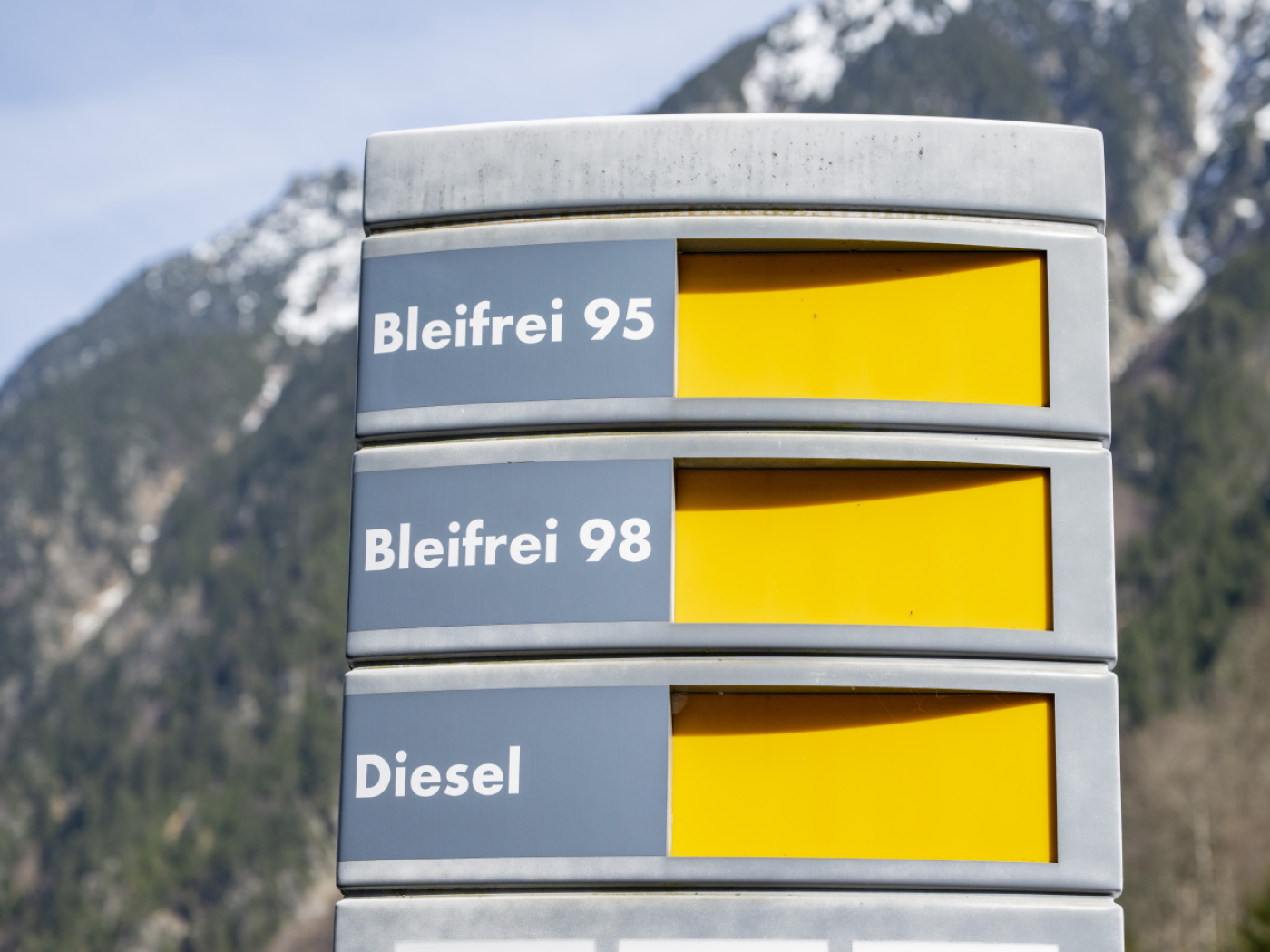
The war in Iran has driven fuel prices in Switzerland even higher. Within a week, the price of petrol rose by a further 5 centimes per litre.
Select your language
Generated with artificial intelligence.
Listening:
Fuel prices continue to rise in Switzerland
This is shown by analyses from the Touring Club Switzerland (TCS). Whereas a litre of unleaded 95 cost an average of CHF1.82 ($2.29) across Switzerland a week ago on February 19, this figure had already risen to CHF1.87 by Tuesday.
+ Get the most important news from Switzerland in your inbox
The surcharge for diesel is even higher. According to TCS, the increase over the same period was 9 centimes per litre to CHF2.19.
Since the outbreak of war, petrol has thus increased by 20 centimes per litre. Diesel has risen by 40 centimes since then.
Join the debate:
External Content
The TCS publishes estimates of current petrol and diesel prices in Switzerland at irregular intervals. These are made by TCS experts on the basis of information from various sources and random samples.
Swiss supply secured for now
However, it is unlikely that a tightening supply will make prices even more expensive, at least in Switzerland for the time being. “Switzerland’s supply of petroleum products is currently secure,” a spokesperson for the Federal Office for National Economic Supply (FONES) told the news agency AWP on request.
More
US oil buoys Swiss fossil fuel needs amid Middle East conflict
Should there nevertheless be a shortage, the petroleum products held in compulsory stocks by companies could be tapped into. These cover national requirements for four and a half months and aviation requirements for three months.
Gas storage facilities in Europe unusually empty
Due to high market prices, the European gas storage facilities, which are crucial for Switzerland’s energy supply, are currently relatively empty. The fill level is just 28.5%, compared to the average of 38.1% over the past ten years.
This is according to data published by the operators on Thursday. Particularly in Germany, the EU country with the largest storage capacity, refilling after the cold winter is stalling.
Currently, German storage facilities are 22.3% full. This level is significantly below the long-term average of 43.1% at the same time of year.
Switzerland has no commercially operated gas storage facilities. It is therefore dependent on the reserves of other countries. Germany’s storage facilities cover approximately 17% of the total capacity in Europe. Italy, the Netherlands, and France follow.

More
Switzerland sees battery boom as homes and firms store more solar power
High market prices make refilling less profitable for operators. The gas price has doubled since the start of the Iran war at the end of February, rising from around €30 per megawatt-hour to a high of over €60 a few days ago. The price for gas deliveries is currently around €55 per megawatt-hour – about a third higher than a year ago.
The Title Transfer Facility (TTF) trading platform at the Amsterdam Energy Exchange is considered a benchmark for European gas prices. The contract for delivery in the following month is typically used as a guideline for the European price level.
Adapted from German by AI/ac
We select the most relevant news for an international audience and use automatic translation tools to translate them into English. A journalist then reviews the translation for clarity and accuracy before publication.
Providing you with automatically translated news gives us the time to write more in-depth articles. The news stories we select have been written and carefully fact-checked by an external editorial team from news agencies such as Bloomberg or Keystone.
If you have any questions about how we work, write to us at english@swissinfo.ch.
External Content

In compliance with the JTI standards
More: SWI swissinfo.ch certified by the Journalism Trust Initiative

You can find an overview of ongoing debates with our journalists here . Please join us!
If you want to start a conversation about a topic raised in this article or want to report factual errors, email us at english@swissinfo.ch.