








Number of schoolkids in Switzerland set to drop by 2035

According to government estimates, the number of university students is set to rise by more than 20% over the next nine years. From 2029 to 2035, the number of primary school pupils is expected to fall as a result of the decline in the birth rate.
Select your language
Generated with artificial intelligence.
Listening:
Number of schoolkids in Switzerland set to drop by 2035
Depending on the level of education, primary and tertiary student numbers in Switzerland are set to develop very differently up to 2035. This is evident from the education scenarios for 2026 to 2035 published on Monday by the Federal Statistical Office (FSO). The FSO emphasises that the results are subject to uncertainty due to unclear birth and immigration figures.
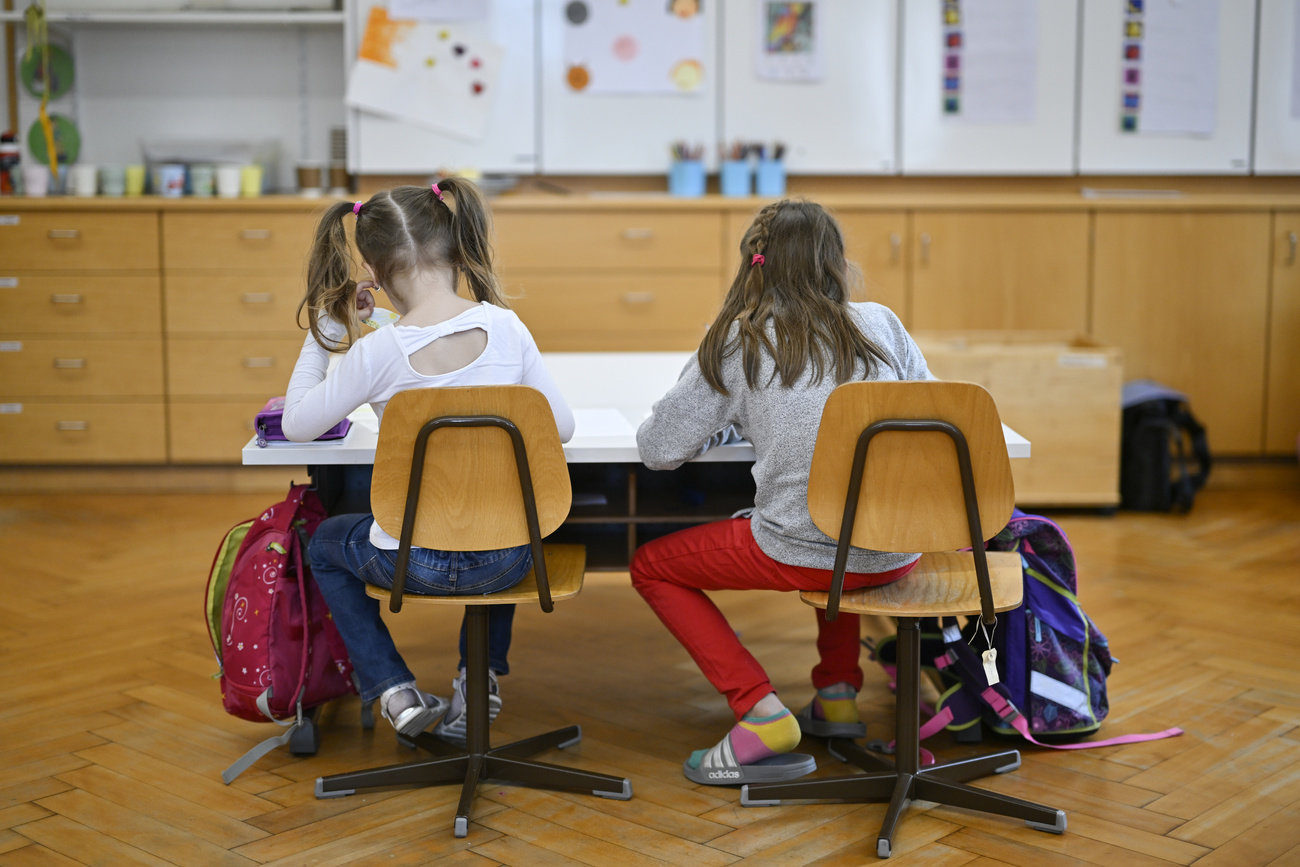
At primary level, the number of pupils has risen sharply in recent years. However, since 2022, birth rates have been falling, which is why the number of primary school pupils is expected to peak between 2027 and 2028, and then fall by 8% by 2035, according to the FSO’s forecast. A decline is expected at lower secondary level from 2033 onwards.
More
Why the Swiss school system is so successful
The FSO forecasts moderate growth for lower secondary education, with a 10% increase in basic vocational training and a 12% rise in general education programmes. An increase of 17%, to 41,300 students, at higher technical colleges is also expected in higher vocational education.
At universities, universities of applied sciences and teacher training colleges, federal authorities anticipate 305,000 students at Bachelor’s and Master’s levels by 2035. This represents an increase of 21% compared with 2026. The main reasons are population growth and the rise in the number of international students.
This surge in university enrolment comes at a time when young graduates are finding it increasingly difficult to enter the job market. According to the University Graduates Survey, conducted by the Federal Statistical Office in August, unemployment among graduates rose noticeably between 2023 and 2025. The only exception to this trend is teacher training colleges.
Join the debate:
External Content
+ How we produce news in English
Translated from German/reviewed by an English Department journalist.

In compliance with the JTI standards
More: SWI swissinfo.ch certified by the Journalism Trust Initiative

You can find an overview of ongoing debates with our journalists here . Please join us!
If you want to start a conversation about a topic raised in this article or want to report factual errors, email us at english@swissinfo.ch.