








Syngenta’s efforts to settle US herbicide litigation rejected by hundreds of plaintiffs

Hundreds of people who claim they developed Parkinson’s disease after using or being exposed to the weedkiller paraquat have rejected settlement offers from the Swiss agricultural giant Syngenta, a stand-off that could lead to a wave of individual trials.
Select your language
Generated with artificial intelligence.
Listening:
Syngenta’s efforts to settle US herbicide litigation rejected by hundreds of plaintiffs

When Syngenta agreed in 2025 to settle claims brought by 8,488 people that its herbicide paraquat caused Parkinson’s disease, it was sign that the Swiss-based agricultural giant was ready to end a nine-year litigation battle and move on.
But that reckoning has proved complicated: at least three law firms report refusal rates of 80% or higher among their clients, and Swissinfo estimates that more than 900 plaintiffs overall have rejected Syngenta’s offers.
>>> Read more about the case in our first coverage of the litigation five years ago
More
American farmers pursue Syngenta over herbicide’s link to Parkinson’s disease
In the first six months of this year, the company paid out around $300 million (CHF248 million) for legal and product liabilities, according to its interim financial report published on August 27. And while no breakdown of that figure was provided, it’s possible, although unconfirmed, that some of the payouts went to plaintiffs covered by the master agreement reached in April 2025 and formally signed later that year. Syngenta also disclosed that it had reached a further confidential agreement in June this year to settle “a number of pending product liability claims”, although it didn’t reveal the amount or whether paraquat was involved.
“Syngenta believes that all of these claims are without merit and the settlement is not an admission of liability but solely for the purpose of bringing to an end these claims,” it said in its interim report.
The problematic hold-outs
The Basel-based company says 10,911 lawsuits have been filed in federal and state courts since 2017 and most (8,488) have entered a federal multidistrict litigation (MDL), or what’s known as a mass tort. An MDL is a legal process that combines similar lawsuits filed in federal courts across the country before a single judge, to handle shared pretrial steps like evidence-gathering more efficiently. Unlike a class action, each case remains legally separate because personal injury claims like these, with different individual medical histories, generally cannot be certified as a single class action. That means plaintiffs can still be sent back to their home courts for individual trials if they don’t settle.
Of the 8,488 actions involved in the MDL, 6,666 remain pending, according to the Settlement Record websiteExternal link, and no information has been released about how many plaintiffs have actually accepted. In February 2026, the plaintiffs and Syngenta jointly requested the court to approve a Qualified Settlement Fund – a court-supervised account that holds settlement money and pays claimants once their eligibility is confirmed – to create a mechanism to process payments to claimants once their settlements are finalised.
However, a significant number of plaintiffs, concentrated among clients of a handful of law firms, are refusing to take part. In April, the court overseeing the MDL in the Southern District of Illinois, ordered a special master to meet with hold-out plaintiffs, or their lawyers, to confirm they understood the implications of refusing to settle. By June, after learning that refusal rates were unusually concentrated among clients of three law firms, it went further, ordering formal discovery – including depositions and evidence of paraquat use – for a sample of those firms’ cases.
The court disclosed that the rejection rate for The Smith Law Firm was over 90% and DiCello Levitt’s was 100%. Among claimants represented by the Nachawati Law Group, 183 out of 217 refused. Based on the number of cases the court selected for scrutiny – roughly 10% from each firm’s hold-outs – Swissinfo estimates that around 470 of The Smith Law Firm’s clients and 270 of DiCello Levitt’s rejected settlement offers, suggesting a combined total in the region of 923 when Nachawati Law Group’s 183 confirmed refusals are included. None of the three firms responded to Swissinfo’s request for comment on the high refusal rates.

More
How a handful of big agriculture companies have taken over food production
Discovery of this kind is a standard step before a case goes to trial, and Syngenta has strong reasons to want to avoid that outcome. But it also serves another purpose: sorting out which hold-out claims are strong enough to survive scrutiny and which are not, before either side commits to the time and expense of a jury trial. There is a well-documented pattern in mass tort litigation that most opt-out cases eventually settle once discovery shows how strong or weak they are – which is likely why the court chose this route rather than sending the cases straight to trial.
“Regarding legal claims and litigation, as a general principle, Syngenta Group does not comment on specific matters,” a company spokesperson told Swissinfo by email. “Syngenta continues to maintain that Paraquat is safe when used in accordance with registered label instructions.”
No longer a money-spinner
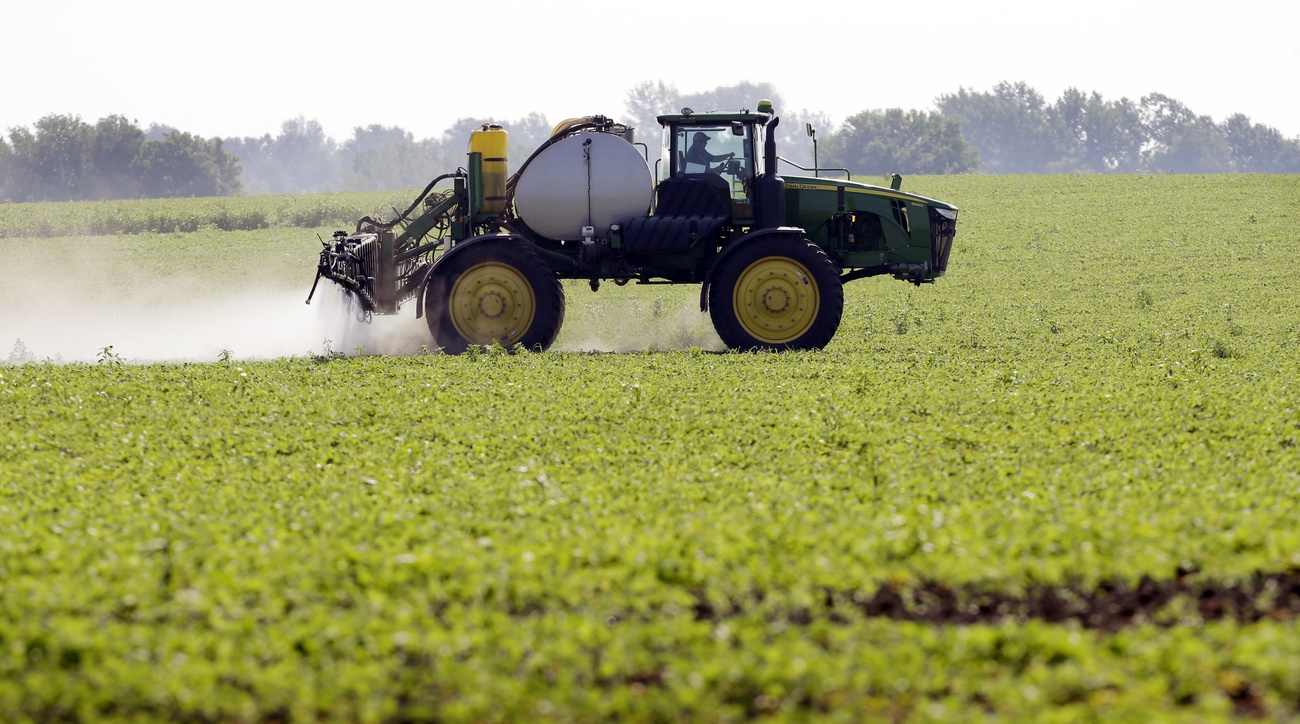
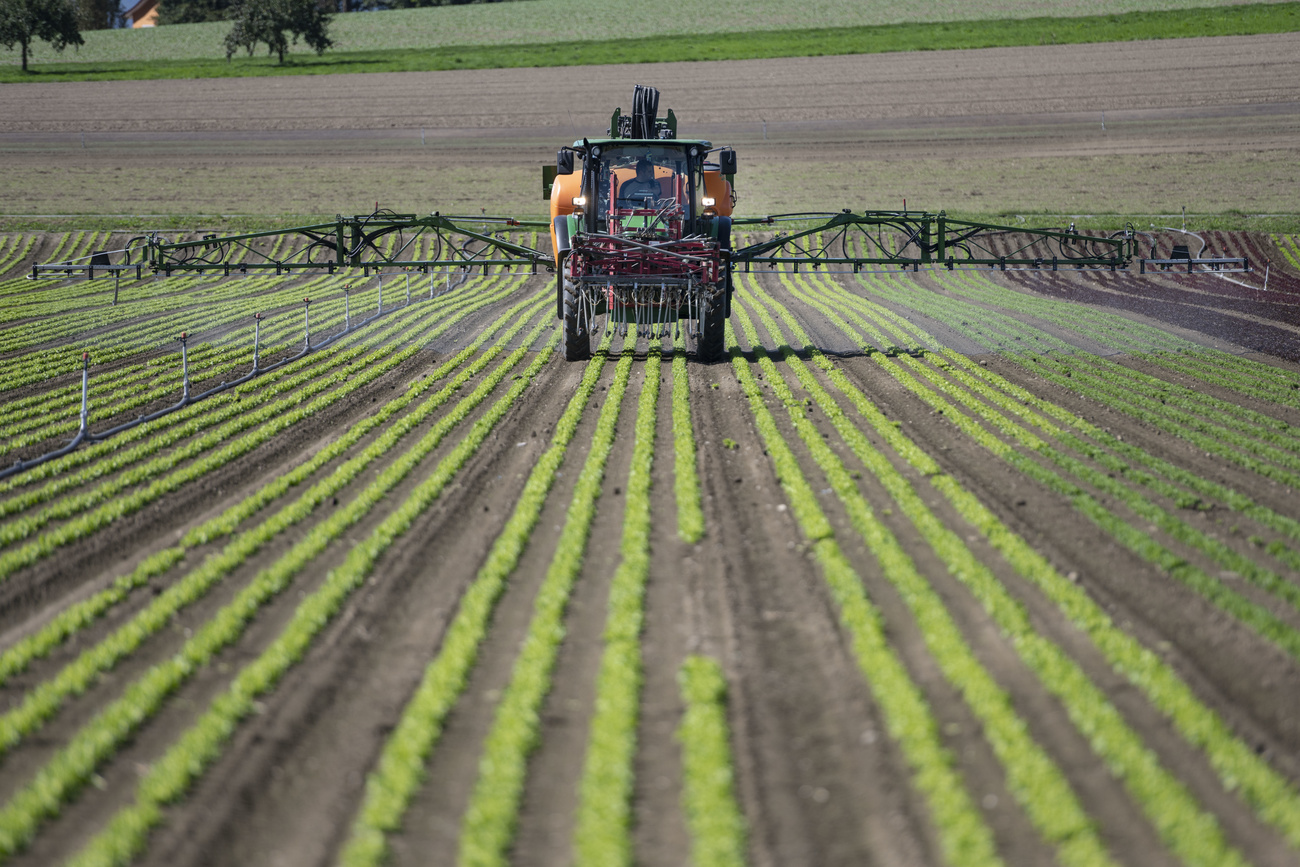
Paraquat was first commercialised over 60 years ago by a predecessor company that eventually became Syngenta. It is now a generic herbicide sold by more than 750 companies worldwide and is used to kill weeds that affect crop growth. In the US, it is widely sprayed on soybean, cotton, corn, and fruit farms.
Over the past decade, multiple studies have shown that the herbicide may increase the risk of developing Parkinson’s disease, the tenth leading cause of death for people aged 65 and older in the US. In 2023, 39,283 deaths were recorded in this age group, although there is no data showing how many of those were linked to paraquat. A 2011 study sponsored by the National Institute of Environmental Health Sciences (NIEHS) showed that users of the herbicide were 2.5 times more likely to develop this neurodegenerative disease than non-users.
More
Pesticide-free but not organic: Swiss offer alternative to wean agriculture off chemicals
Paraquat is no longer a money-spinner for Syngenta. It accounts for less than 1% of group sales and in March the company announced production will cease in 2026. The active ingredient was being manufactured at Syngenta’s Huddersfield site in the UK.
“This decision is about focusing our resources where they deliver the greatest value for our business and our customers,” Mike Hollands, president of Syngenta UK and head of Syngenta global production and supply, said in the press release announcing the move.
More

Edited by Nerys Avery/sb

In compliance with the JTI standards
More: SWI swissinfo.ch certified by the Journalism Trust Initiative

You can find an overview of ongoing debates with our journalists here . Please join us!
If you want to start a conversation about a topic raised in this article or want to report factual errors, email us at english@swissinfo.ch.