








Is Switzerland’s decentralised democracy a helpful model for the Kurds?

Could Switzerland’s federal structure suggest ideas for greater Kurdish autonomy? Some Kurdish activists and intellectuals in Switzerland believe it does.
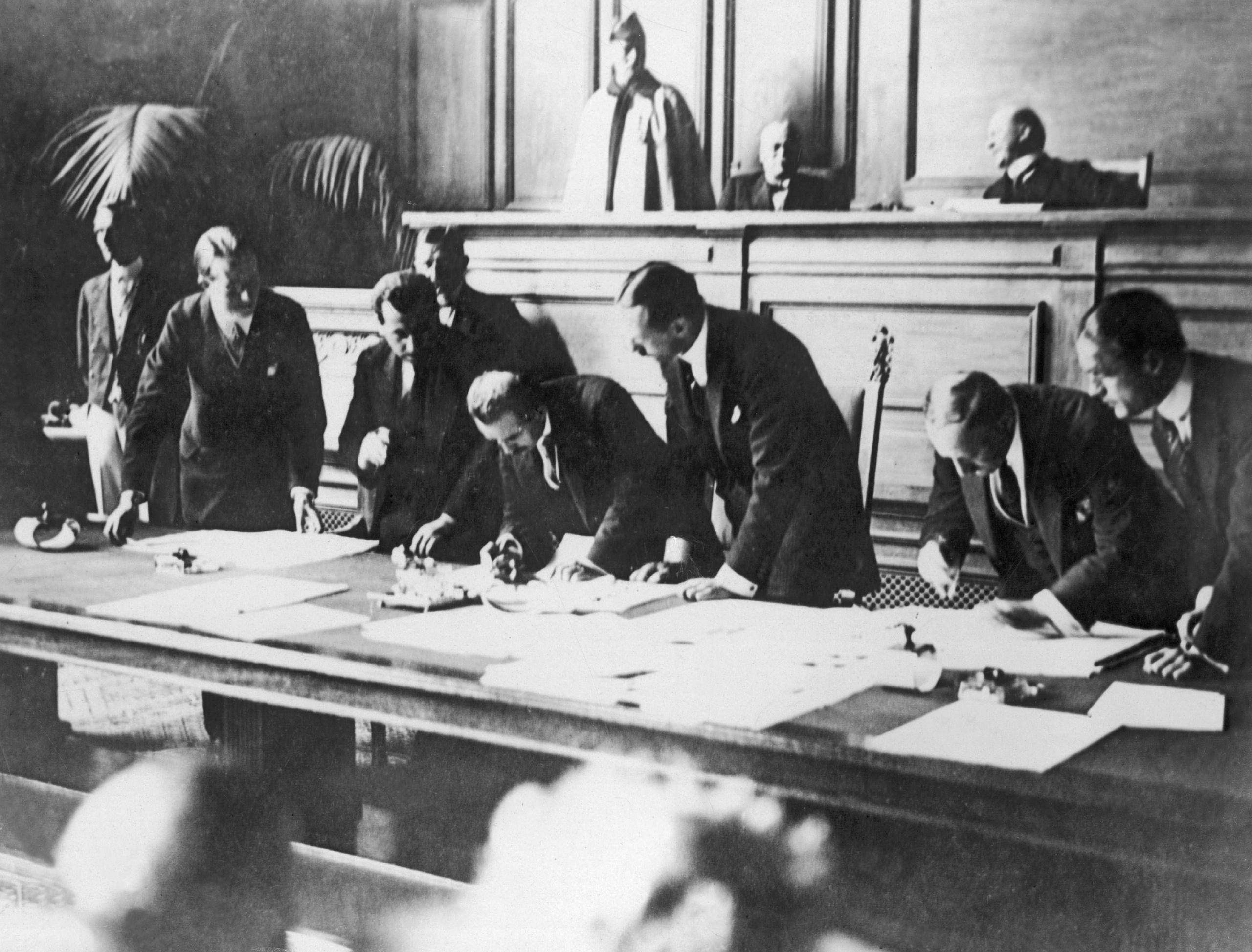
The Kurds, whose population is estimated at 40 to 50 million, are one of the largest ethnic groups without their own country. After the First World War, their historical territory was divided – by a treaty signed in Lausanne, Switzerland – between four states: Turkey, Iran, Iraq, and Syria.
For decades, the Kurds have led political and military struggles to defend their status in these countries, with mixed results. Recently, Kurdish autonomy in northern Syria was dissolved after negotiations with the government in Damascus. This summer, Turkey passed a law aimed at ending the armed conflict with Kurdish militants.
Today’s debates about the Kurdish question are generally no longer limited to the expansion and protection of Kurdish minority rights. They also consider models of governance and democracy that would include and recognise the distinct identities of all citizens of a country.
Although Switzerland does not appear, at first glance, to be an obvious model for the Kurds, some Kurdish activists and intellectuals living in the country are intrigued by its example. Even if an independent Kurdish state is never established, they believe Switzerland’s multilingualism and elements of its federal system could inspire reforms in the countries where Kurds live as minorities, allowing greater autonomy.
More
When the Middle East was reinvented in Switzerland
Coexistence and decentralisation
Hüsnü Yılmaz is a lawyer, a member of the executive committee of the European Association of Lawyers for Democracy and World Human Rights, and chair of the foundation board of the Mesopotamia Observatory of Justice in Geneva. He believes coexistence is the key element of the Swiss model. “The country’s different languages and cultures are protected by constitutional guarantees, and the various interest groups participate in the functioning of the political system,” he says.
Decentralisation also plays a role, according to Yılmaz. Cantons, for example, enjoy extensive authority over education, health, and the organisation of certain public services. Cantonal and municipal autonomy allows for local solutions to local problems, which avoids having to rely entirely on the federal government. And in certain regions, he points out, education, public administration, and the courts are multilingual. He believes this fosters coexistence among the different language groups.
Multilingualism and unity
Ozcan Yılmaz, a historian at the University of Geneva, also emphasises the importance of daily coexistence among Switzerland’s linguistic communities. He feels the state’s formal recognition of language equality not only protects cultural rights but also reinforces citizens’ sense of belonging.
“But transferring the Swiss experience to Turkey, Iran, Iraq, or Syria is more complicated,” Ozcan Yılmaz explains. In his view, these countries embrace the idea of a nation-state with a single national language and identity as well as strong centralisation. Fundamental political change would be necessary to include governance principles comparable to those in Switzerland. As examples he cites administrative impartiality, secularism, a civic conception of citizenship, the separation of powers, and greater local autonomy.
In addition, both Hüsnü Yılmaz and Ozcan Yılmaz note that the Swiss federal system, which facilitates coexistence, is the product of a historical compromise developed over nearly two centuries. The success of this compromise rests not only on constitutional provisions, Hüsnü Yılmaz explains, but also on the way Swiss society embraced government institutions throughout the process. In a country like Turkey, he says, simple legislative and administrative reforms would not suffice: “Democratic change would require a new constitution as well as a fundamental [reconsideration] of the concept of a centralised state”.

Direct democracy and local autonomy
According to the Kurdish politician and lawyer Fırat Anlı, one of the key lessons of the Swiss model lies beyond multilingualism and federalism in the interplay between direct democracy and local autonomy.
Anlı sees interesting examples for Kurds in the powers given to local Swiss authorities and in Swiss citizens’ direct participation in democracy via referendums and popular initiatives. “Such principles have been championed for many years by the Kurdish political movement, especially a strengthening of local authorities.”
Anlı points out that the Kurdish governance model established in the Rojava region in northern Syria – an extremely politically fragile experiment – was largely inspired by principles also paramount in Switzerland, namely local democracy, cultural pluralism, and citizen participation. The Kurdish regions in Syria have an additional Swiss echo: they are called cantons.
To move towards fuller democracy in Turkey, Anlı believes a right to mother-tongue education must be recognised. As he points out, the Kurds cannot currently use their own language in public institutions. In addition, Anlı feels the state must uphold the rule of law and fully implement international human-rights standards. Lastly, in his view, local authorities must be strengthened, not only through administrative reform but by envisioning them as “a mechanism for addressing issues of political representation and social belonging”.
Role of women
Fatma Şık is a former co-mayor of the district of Sur in Diyarbakır province, Turkey. She has now lived in Switzerland for a number of years and is particularly impressed by the scope of its direct democracy. “The ability to make decisions via [referendums and popular] initiatives, and at the local level, is one of the defining features of the Swiss experience,” she says. In this she sees a similarity with the Kurdish concept of democracy: a recognition of cultural diversity.
Şık thinks that in matters of equality, however, the Kurdish women’s movement has developed an original approach that goes beyond certain Swiss practices. She points out that despite progress for women’s rights in Switzerland, women remain under-represented in the upper echelons of political and administrative hierarchies.
In contrast, Şık sees the Kurdish movement’s practice of co-chairing (a man and a woman sharing a leadership position), equal representation for men and women, and autonomous organisation as a model of advanced democracy. Citing her experience in Diyarbakır, she feels co-chairing has not only increased political representation of Kurdish women but has “also contributed to democratising decision-making processes, to power sharing, and to creating a space for challenging political practices traditionally dominated by men”.
In Şık’s view, comparisons should not be made only in one direction. While Switzerland can offer lessons for the Kurdish political movement, the Kurdish women’s movement has also developed political practices that could inform debate in Switzerland and other democracies.
Alternative to ‘one state, one people’
Although Switzerland’s political structure can offer inspiration to the Kurdish movement – especially to Kurds living in Switzerland – is it really likely to inspire concrete change?
Eva Maria Belser, professor at the University of Fribourg and expert on federalism, notes the importance of factoring in the historical, cultural, political, and geopolitical differences between countries. Nonetheless, she says, “vastly different historical contexts don’t make it impossible to transfer constitutional experiences”.
Switzerland itself was inspired by other countries when it built its federal structure in the 19th century, Belser points out. The bicameral system of the United States was a particular influence, although Switzerland did not create an exact copy. Instead, it adapted the idea to its own historical and political needs.
In the Kurdish context, Belser feels the Swiss federal system serves above all as a counter-example to the classic nation-state model of “one state, one people”. Switzerland shows that the individuality of different linguistic, religious, and cultural groups can be preserved, even as these groups live and participate peacefully within one political system.
Realistically, Belser says, Switzerland is more likely to act as a model for Kurdish coexistence in Turkey, Syria, Iraq, and Iran than as a model for a separate Kurdish state. “By allowing these historically established minorities to manage their own affairs autonomously, especially in cultural [matters], federalism can enable these communities to participate as full partners in the governance of the state as a whole,” she says.
Need for social consensus
Belser emphasises, however, that federal models based on the idea of a multinational state and on the principle of “unity in diversity” are rarely accepted immediately by the majority group. In this, she notes, Switzerland was an exception: it was the conservative rural German-speaking majority – not the linguistic minorities – that called for federalism. In general, she says, implementing federalism is not simply an administrative matter. “It also requires political will and social consensus,” she explains.
Where there is political deadlock, Belser believes it could be helpful not to limit debate over federalism to a “national question” or the “Kurdish question”. Instead, she recommends emphasising how decentralisation, in the sense of greater decision-making power for citizens, can offer advantages to the society as a whole.
Edited by Domhnall O’Sullivan, Pauline Turuban
Adapted from French by K. Bidwell/gw

In compliance with the JTI standards
More: SWI swissinfo.ch certified by the Journalism Trust Initiative

You can find an overview of ongoing debates with our journalists here . Please join us!
If you want to start a conversation about a topic raised in this article or want to report factual errors, email us at english@swissinfo.ch.