








Committee calls for double-majority approval of Swiss–EU accords

The package of bilateral agreements being finalised between Switzerland and the EU must be anchored in the Federal Constitution through a transitional provision, a parliamentary committee says.
Select your language
Generated with artificial intelligence.
Listening:
Committee calls for double-majority approval of Swiss–EU accords
+Get the most important news from Switzerland in your inbox
The House of Representatives’ Committee of Political Institutions backs a proposal from a parallel Senate committee that calls for approval by a double majority of Swiss voters and cantons.
The lower chamber committee backed the proposal by 15 votes to 10, parliamentary services announced on Friday. Submitting the Swiss-EU agreement package to both voters and the cantons is “justified by its importance and constitutional nature”.
At the same time, the committee believes a simpler solution could be a “sui generis” one-of-a-kind referendum. By 16 votes to 9, it has asked for this option to be examined in greater detail.

More
The Swiss-EU bilateral treaty updates, explained
A minority of parliamentarians opposes the proposal, arguing that a constitutional amendment would prevent the Swiss-EU agreements and their implementing legislation from being put to a single vote. This could jeopardise the overall compromise — for example on wage protection — and thus endanger Bilaterales III as a whole.
The proposal seeks to resolve uncertainties over the constitutionality of amending the Agreement on the Free Movement of Persons. According to the Senate committee, a contradiction exists between extending free movement and the constitutional provision on the autonomous management of immigration.

More
Switzerland, EU sign package of agreements to strengthen ties
The new transitional provision would allow the approval of the agreement package despite constitutional rules limiting immigration. It would also settle the question of whether a double majority of the people and the cantons is required.
The proposal further stipulates that, in the event of a conflict between the agreements and either the Constitution or federal law, the Federal Court must apply Swiss law if the legislator has expressly rejected the agreements. This is intended to preserve sufficient national leeway to act accordingly and to accept the consequences under international law.
Views of legal scholars
The Senate committee heard from Stefan G. Schmid, professor of constitutional law at the University of St Gallen, at the end of March. He highlighted the constitutional tension created by extending free movement, which confers new residence rights.
More
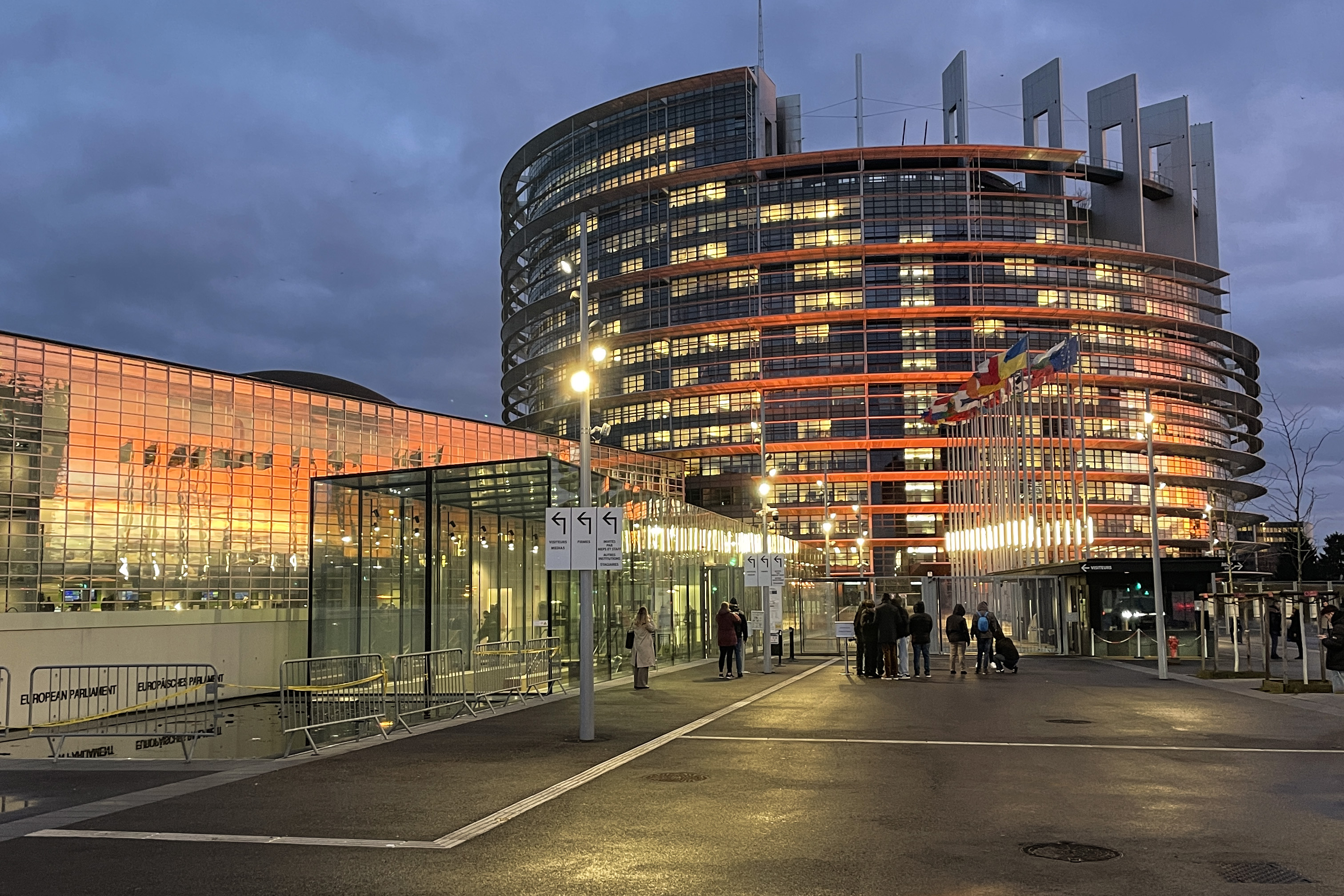
Swiss-EU accords have more support in Strasbourg than in Bern
While the Federal Council argued that the quantitative impact would be limited, Andreas Glaser, professor of public and administrative law at the University of Zurich, countered that the key issue is not the numbers but the legal ability to control them.
Schmid described a transitional provision as “legally feasible but politically difficult”.
Join the debate:
External Content
Translated from French by AI/sb
We select the most relevant news for an international audience and use automatic translation tools to translate them into English. A journalist then reviews the translation for clarity and accuracy before publication.
Providing you with automatically translated news gives us the time to write more in-depth articles. The news stories we select have been written and carefully fact-checked by an external editorial team from news agencies such as Bloomberg or Keystone.
If you have any questions about how we work, write to us at english@swissinfo.ch
External Content

In compliance with the JTI standards
More: SWI swissinfo.ch certified by the Journalism Trust Initiative

You can find an overview of ongoing debates with our journalists here . Please join us!
If you want to start a conversation about a topic raised in this article or want to report factual errors, email us at english@swissinfo.ch.