








Swiss government details Schengen/Dublin benefits

A Swiss government reports details economic and security benefits from Switzerland's association with Schengen/Dublin migration accords.
Select your language
Generated with artificial intelligence.
Listening:
Swiss government details Schengen/Dublin benefits
Without this association, Swiss gross domestic product (GDP) in 2035 could be up to 3.9% lower, representing an annual loss of income of CHF1,300 per capita.
The government has also submitted to parliament its response to the Swiss People’s Party popular initiative ‘Stop asylum abuse! (initiative to protect our borders)’.
It rejects the text without putting forward a counter-proposal. The initiative calls for systematic border controls and restrictions in the area of asylum.
Adoption of the text would jeopardise Switzerland’s participation in the Schengen/Dublin system. A report commissioned by parliament specifically examines the consequences, by 2035, of Switzerland’s withdrawal.
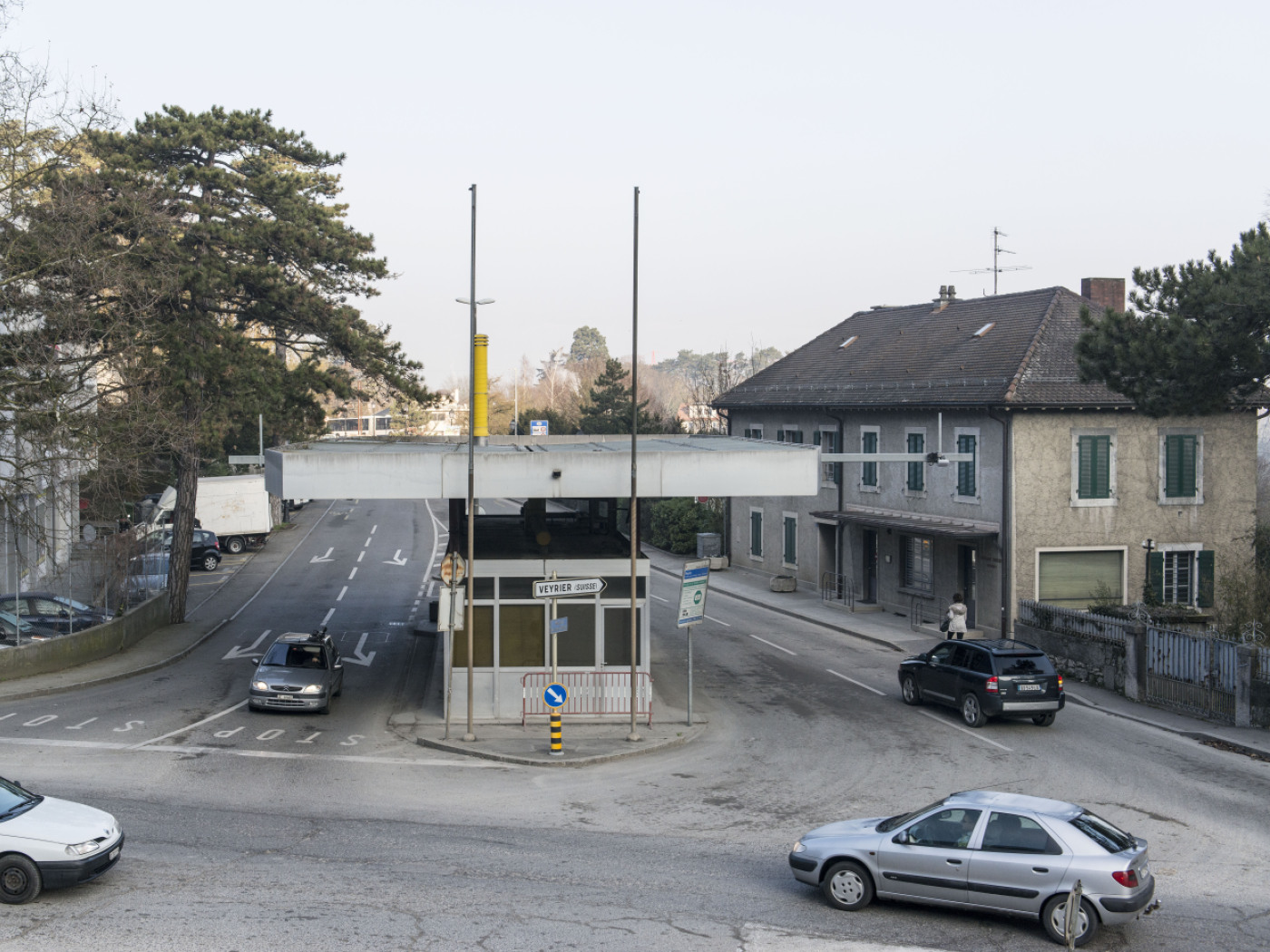
In this scenario, Switzerland would have to significantly strengthen its infrastructure and staffing levels in order to carry out border controls.
Economic and security implications
The report also highlights several negative economic and security consequences that would result. The healthcare and catering sectors would be particularly affected, as they employ large numbers of cross-border workers.
These workers could lose 422,000 hours a day in traffic jams, resulting in costs of between CHF1.08 billion and CHF2.27 billion.
The tourism sector would also be affected, with an estimated loss of revenue of between CHF320 million and CHF810 million in 2035. Obtaining a separate visa for Switzerland would not only entail additional costs but also extra administrative procedures for visitors to Switzerland.
There would also be disadvantages in terms of asylum. Bern would have to examine applications from asylum-seekers who have already lodged an application in another Dublin State.
Furthermore, transfers to other Dublin states would no longer be possible. As a result, asylum seekers would remain in Switzerland for longer, leading to additional costs of between CHF166 million and CHF824 million.
Apart from the financial aspects, Switzerland would suffer in terms of security and would be unable to plug the gaps on its own.
It currently has access to the Schengen/Dublin databases and cross-border cooperation networks. There would therefore be a risk that a threat might not be detected, or might not be detected in time.
More
Schengen Area marks 40-year anniversary
+ How we produce news in English
Translated from French, reviewed by an English Department journalist.

In compliance with the JTI standards
More: SWI swissinfo.ch certified by the Journalism Trust Initiative

You can find an overview of ongoing debates with our journalists here . Please join us!
If you want to start a conversation about a topic raised in this article or want to report factual errors, email us at english@swissinfo.ch.