








Why Switzerland stays out of the European Union

At the heart of Europe, Switzerland is deeply intertwined with the European Union but remains firmly outside the bloc. Has this carefully guarded independence served its interests, or do the Swiss hold an overly idealised view of their autonomy?
Select your language
Generated with artificial intelligence.
Listening:
Why Switzerland stays out of the European Union

Switzerland has charted its own course in Europe, relying on a web of agreements that govern its relations with Brussels. This distinct approach is widely considered to have worked so far. But there is no guarantee that it will last.
One reason for this uncertainty is that the agreements need updating, and negotiations have been ongoing for more than ten years. In 2021, after repeated talks failed to produce a result, the Swiss government unilaterally broke them off. Now, Bern and the European Commission have reached agreement.
External Content
But the agreement must still win the support of the Swiss parliament and probably voters. Their approval is far from certain, even at a time when great-power politics lays bare the limits of Switzerland’s geopolitical influence.
How did Switzerland get into this predicament, and why does it persist in this approach? We examine the key questions.
1. Why is Switzerland so ambivalent about the EU?
When Austria and other European countries moved towards membership in the newly established European Union in the 1990s, Switzerland considered following suit. Joining the European Economic Area (EEA) would have marked a major step towards the EU. But in 1992, voters rejected the proposal by a very narrow margin.
Stefanie Walter, professor of international relations and political economy at the University of Zurich, recalls: “That was a turning point in relations between Switzerland and the EU because the issue became highly politicised. When the government later pursued EU membership, voters rejected it unequivocally at the ballot box.”
The Swiss government was left with little choice but to pursue the bilateral approach. This “tailor-made solution” also meant ruling out EU membership for the long term. It allowed Switzerland to align itself closely with the bloc in selected areas without formally joining.
The first package of bilateral agreements started being developed in 1994, while the EU was still young. A second package followed ten years later. Known as the Bilateral Agreements II, it brought Switzerland into the Schengen and Dublin systems and aligned it more closely with EU migration and asylum policy.
“The paradox, in a sense, is that the closer Switzerland’s ties with the EU became, the further it moved away from joining it,” says Walter. On the one hand, Switzerland increasingly brought its regulations into line with EU rules to benefit from access to the European single market.
On the other hand, this removed the incentive to go one step further. “The bilateral agreements enjoy enormous popularity in Switzerland, and the more popular they became, the less popular EU membership became,” says Walter. Today, only 5% to 10% of Swiss people support joining the EU.
More details in this article:

More
The Swiss-EU bilateral treaty updates, explained
2. How has direct democracy shaped Switzerland’s relationship with the EU?
Would Switzerland already be part of the EU if not for direct democracy? “I think so,” says Walter. “The 1992 EEA referendum played an important role. Practically all the major political actors supported EU membership, along with the vast majority of civil society organisations and trade unions.”
Since the 1992 referendum, political sovereignty has been a guiding principle of Switzerland’s policy towards Europe. Pascal Sciarini, professor of comparative politics at the University of Geneva, says that beliefs about the country’s political institutions, combined with a pragmatic assessment of its economic interests, have kept Switzerland outside the EU.
“Many people believe that Switzerland has special political institutions that would be incompatible with EU membership, such as federalism or neutrality,” says Sciarini. But he argues that this is largely a political construct: “A legal and institutional analysis shows that Switzerland could join the EU while preserving its federal system, an active direct democracy and its neutrality.”
3. Does Swiss neutrality stand in the way of EU membership?
Walter says neutrality forms part of Switzerland’s national identity and commands broad public support. Legally, however, it does not preclude EU membership. Finland and Sweden joined the EU in 1995. Following Russia’s invasion of Ukraine, they abandoned their military non-alignment by joining NATO, Finland in 2023, and Sweden in 2024. Austria and Ireland remain neutral while belonging to the EU.
For Walter, the main obstacle lies in Swiss political culture, not in law. Many Swiss see closer integration with other countries as incompatible with Switzerland’s traditions of neutrality and military non-alignment.
In Switzerland, the EU’s mutual assistance clause is frequently cited as a point of contention. Under Article 42(7) External linkof the Treaty on European Union, member states must provide aid and assistance to another member that suffers armed aggression. Critics argue that this obligation may be difficult to reconcile with a strict interpretation of Swiss neutrality. Others note that the provision expressly safeguards the particular security and defence policies of individual member states.
More
What does the future hold for Swiss neutrality?
4. Why is Switzerland determined to retain its monetary and economic independence?
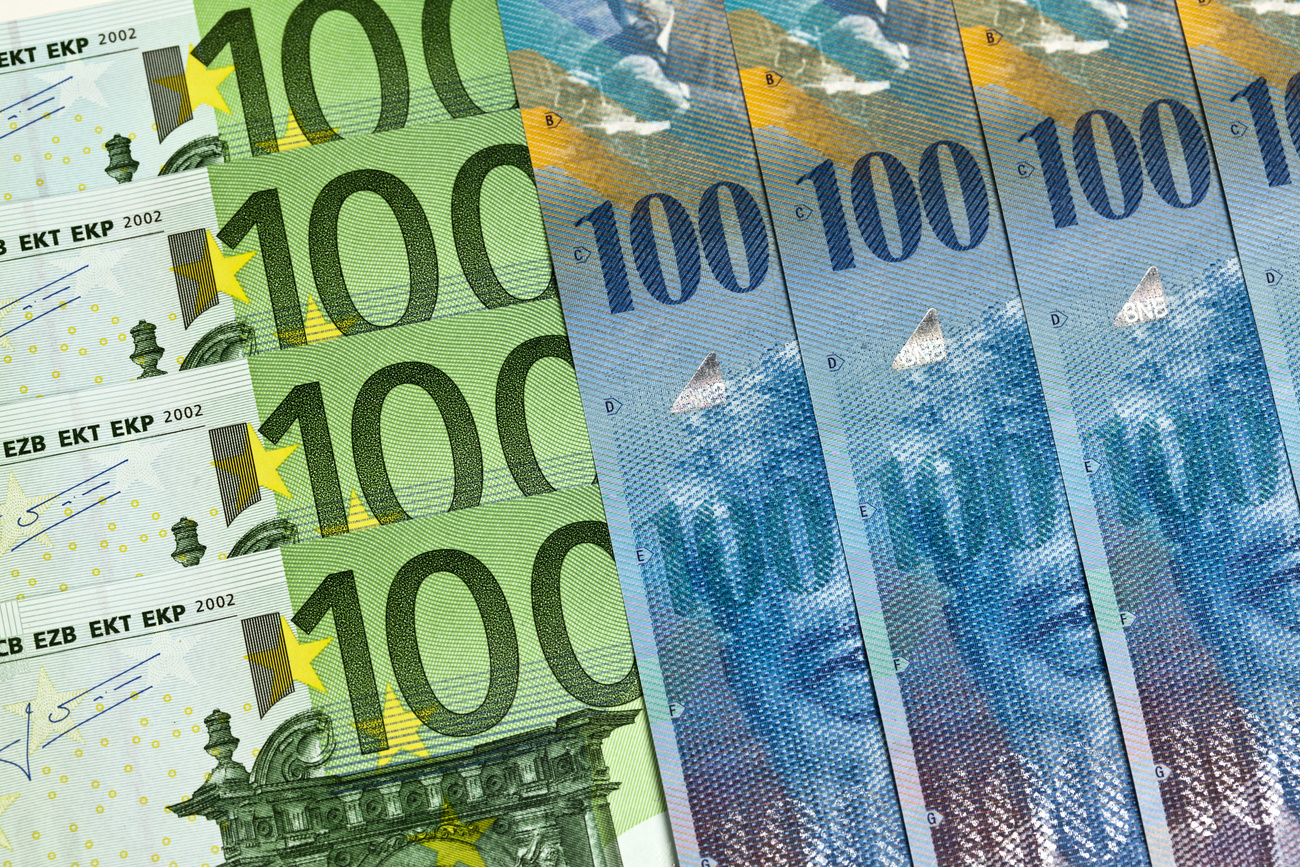
The euro is widely considered one of the achievements of European integration. Yet Switzerland has not regretted staying outside the single currency. The Swiss franc is in strong demand on global markets and has appreciated in value significantly against most major currencies.
According to Walter, many Swiss are also suspicious of what they see as excessive bureaucracy in Brussels, a model they consider at odds with Switzerland’s liberal political culture and decentralised system of government.
This scepticism is also evident among some of Switzerland’s leading business figures. Swatch Group founder Nicolas Hayek believed the EU was interested in Switzerland chiefly for its financial resources. According to Hayek, former German chancellor Helmut Kohl once explained the EU’s interest in the country by telling him: “Because you have a great deal of money, and we have projects to spend it on.”
For Hayek, Switzerland’s reluctance to integrate more deeply with Europe can also be attributed to its political culture. He argued that the Swiss distrust excessive concentrations of power and have little appetite for charismatic personality politics, preferring pragmatic leaders who manage public money responsibly.
More
Swiss-EU economic relations in eight charts
5. How is Switzerland’s bilateral approach perceived abroad?
Advocates of national sovereignty and EU sceptics, for example in Britain, see Switzerland as a model of success. For them, it is proof that a country can retain its political independence while securing access to the European market.
Proponents of European integration take a different view. They accuse Switzerland of enjoying the benefits of the single market without taking on all the obligations of EU membership. Charles Grant, director of the Centre for European Reform, says it bluntly: “The EU has a very strong aversion to the Swiss model.”
European security expert Constanze Stelzenmüller argues that some Western partners see Switzerland as benefiting from Europe’s economic and security order without playing a full part in determining how it operates. In times of geopolitical crisis, its position as a major international financial centre, as well as certain aspects of its neutrality policy could also make it a weak link for Europe.
6. How are geopolitical upheavals affecting Switzerland’s distinctive approach?
According to Sciarini, recent geopolitical turmoil has shown the Swiss how limited their room for manoeuvre is as a small country. And it has underscored how closely the country’s prosperity is tied to developments abroad.
Donald Trump’s conduct in the White House and worsening transatlantic relations have been a wake-up call for Switzerland. US tariffs on Swiss exports have demonstrated that the EU is the country’s most important partner and export market. Switzerland has reliable partnerships there, Sciarini says.
According to Walter, Trump is making an example of Switzerland. It costs the US less than taking similar measures against the EU or China would.
The war in Ukraine has also highlighted Switzerland’s declining ability to operate independently of the major blocs. “When the EU or the US applies pressure, a small country such as Switzerland has no choice but to yield,” Sciarini says.
Not everyone in Switzerland agrees. The right-wing Swiss People’s Party wants to enshrine neutrality in the constitution. If voters approve its initiative, Switzerland would no longer be able to adopt EU economic sanctions. Polls indicate that the proposal is likely to be decisively defeated on September 27, in a vote that may also reveal broader public sentiment towards the EU.
7. Will Switzerland eventually join the EU?
EU membership is not currently on Switzerland’s political agenda and would stand no chance of winning public approval. Sciarini says accession is unrealistic in both the short and medium term. But this could change if the bilateral approach eventually ceased to protect Swiss interests.
The fate of the Bilaterals III, the latest effort at a sweeping reset and upgrade of Swiss-EU relations, remains uncertain. The treaty package faces several political hurdles and will likely be put to a nationwide vote. Paradoxically, rejecting a deal intended to preserve Switzerland’s place outside the EU could ultimately make membership more likely, if the bilateral path becomes increasingly difficult to sustain.
“If voters reject it, the chances of Switzerland joining the EU could actually increase, as a country at the heart of Europe would find it increasingly difficult to hold its own in a hostile geopolitical climate,” says Walter. “For a country that does not want to join the EU, the Bilaterals III are the best option,” she adds.
Sciarini says rejection by voters would have serious consequences for Switzerland’s relationship with Brussels. Approval, however, would probably put the country “on a stable and secure footing” for the next 10 or 20 years.
Join the debate:
External Content
Edited by Marc Leutenegger. Adapted from German by David Kelso Kaufher/ds

More
Our newsletter on geopolitics

In compliance with the JTI standards
More: SWI swissinfo.ch certified by the Journalism Trust Initiative

You can find an overview of ongoing debates with our journalists here . Please join us!
If you want to start a conversation about a topic raised in this article or want to report factual errors, email us at english@swissinfo.ch.