








Switzerland lowers 2026 growth forecast due to Middle East conflict
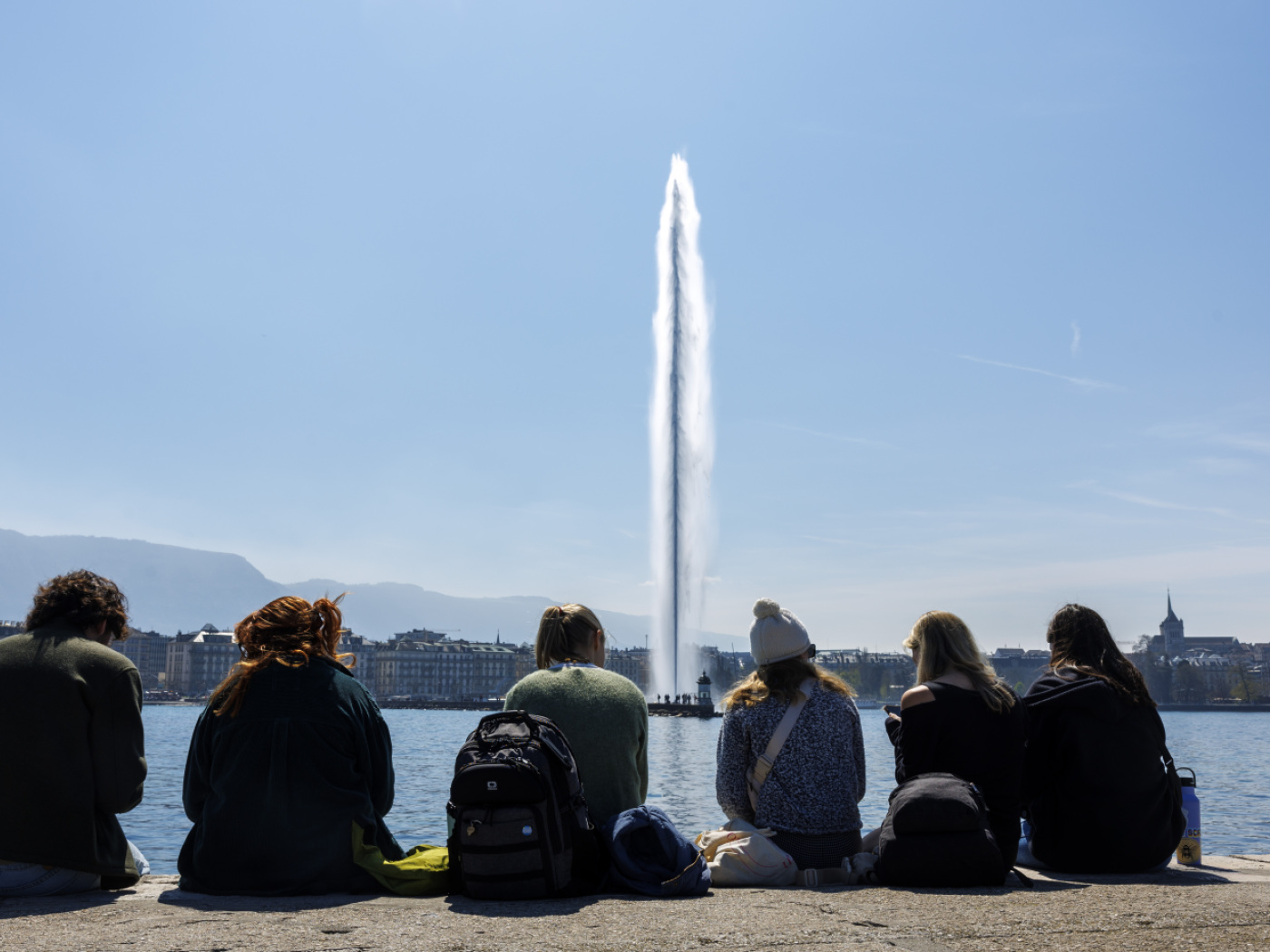
The State Secretariat for Economic Affairs (SECO) has lowered its forecast for Swiss growth this year due to the conflict in the Middle East.
Select your language
Generated with artificial intelligence.
Listening:
Switzerland lowers 2026 growth forecast due to Middle East conflict
+Get the most important news from Switzerland in your inbox
Swiss gross domestic product (GDP) in 2026 is expected to rise by only 1%, compared to 1.1% estimated in December. By contrast, the figure of +1.7% for 2027 remains the same. In both years under review, Swiss GDP growth will therefore be below the historical average (since 1980) of 1.8%.
These figures have been corrected while taking into account the impact of sports events, which are significant because Switzerland is home to major international federations like FIFA and UEFA, which collect billions every year in broadcasting rights. Based on the gross figures, GDP will grow by 1.3% in 2026 and 1.4% in 2027 (1.4% in both years in the previous assessment).
“The war in the Middle East has led to a sharp rise in international energy prices since the end of February. This is dampening the international economic outlook and is expected to result in higher inflation rates, including in European and Asian trading partner countries,” SECO experts declared.
The further development of the conflict and its economic repercussions remain highly uncertain, they warn.

More
US oil buoys Swiss fossil fuel needs amid Middle East conflict
In this context, technical assumptions about average oil prices have been revised upwards. This has knock-on effects on inflation, which will be slightly higher than assumed for 2026: inflation will be 0.4 % (December estimate: 0.2 %). This will also generate a slightly lower dynamic in private consumption.
In 2027, the growth of the Swiss economy should then accelerate, with average inflation of 0.5% (unchanged forecast). Global demand is expected to pick up moderately, and European countries, led by Germany, should gradually recover from the current weakness.
The economic situation is also reflected in the labour market: the unemployment rate is expected to rise to 3% on an annual average in 2026 and fall to 2.8 % no earlier than 2027.
However, there are many uncertainties. SECO’s forecasts are based on the assumption that US import duties will remain at the current level. But it is possible that tariffs will undergo further changes, such as after the current regime expires, officials say.
On the financial markets, the risk of corrections remains present and the dangers associated with global indebtedness remain high. In addition, the Swiss franc could experience further upward pressure, SECO concludes.
More
Where Switzerland stands on the Iran war
Adapted from Italian by AI/sb
We select the most relevant news for an international audience and use automatic translation tools to translate them into English. A journalist then reviews the translation for clarity and accuracy before publication.
Providing you with automatically translated news gives us the time to write more in-depth articles. The news stories we select have been written and carefully fact-checked by an external editorial team from news agencies such as Bloomberg or Keystone.
If you have any questions about how we work, write to us at english@swissinfo.ch
External Content

In compliance with the JTI standards
More: SWI swissinfo.ch certified by the Journalism Trust Initiative

You can find an overview of ongoing debates with our journalists here . Please join us!
If you want to start a conversation about a topic raised in this article or want to report factual errors, email us at english@swissinfo.ch.