








Swiss village remains on alert over unstable Weisshorn Glacier

The hanging glacier on the eastern side of the Weisshorn mountain above Randa, in southern Switzerland, will continue to be closely monitored and safety measures will remain in place due to the potential dangers, the authorities said on Tuesday.
Select your language
Generated with artificial intelligence.
Listening:
Swiss village remains on alert over unstable Weisshorn Glacier
Access to a local danger zone is still forbidden and access points for pedestrians and cyclists remain closed. The residential area is not affected by the current situation. Local authorities and experts are in close contact and are monitoring developments.
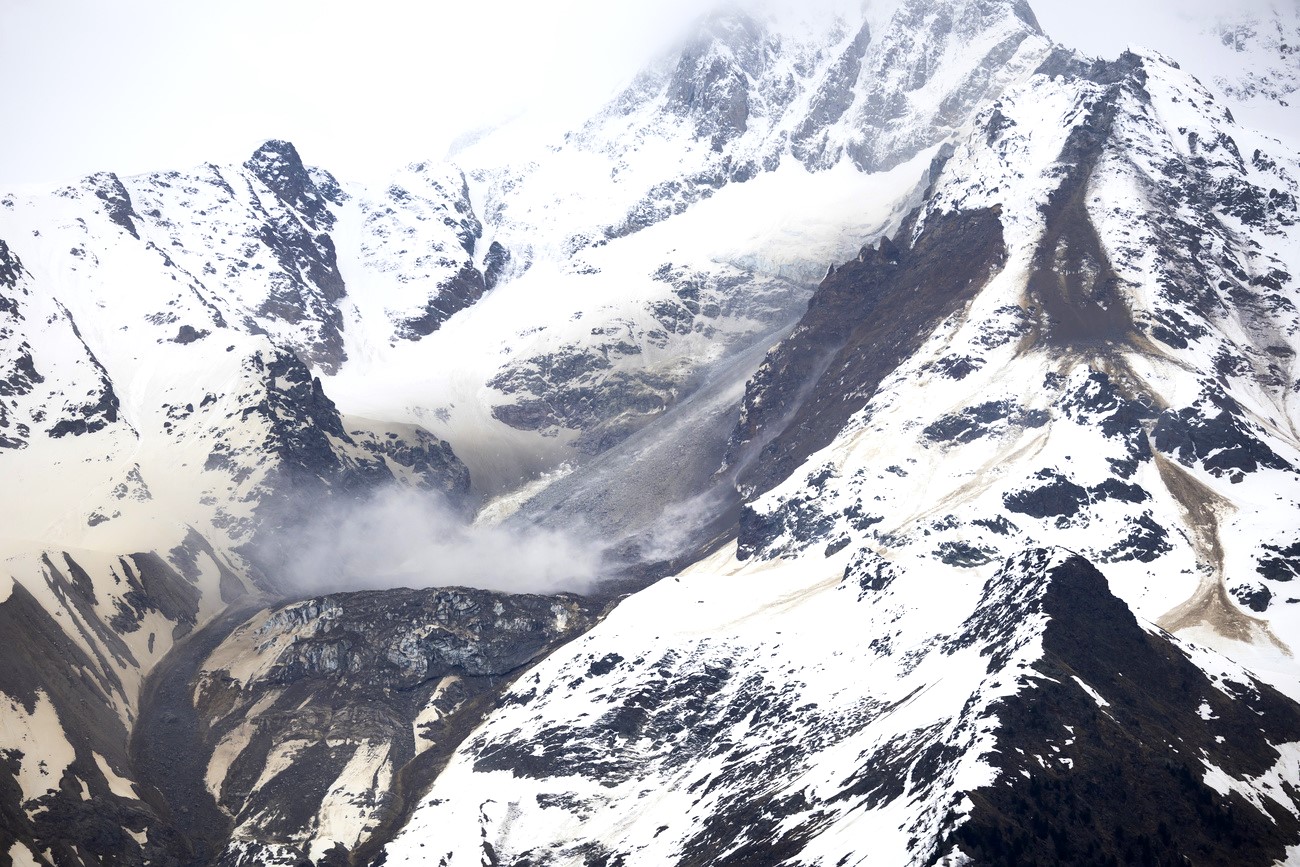
In mid-August, several rockfalls were recorded on the Weisshorn East hanging glacier. Due to a significant increase in movement, the authorities raised the monitoring to level 3 (on a scale of 1-5). Additional rockfalls have not been ruled out.

More
Swiss municipality raises alert level following glacier break-offs
Due to increased activity, movements on the glacier have been monitored since the end of June. A danger zone has been defined and marked out.
The first heavy snowfalls could significantly increase the risk of a glacier collapse, the Walliser Bote newspaper reported in mid-October. A block of ice measuring around 300,000 cubic metres remains suspended on the hanging glacier, moving downhill at a rate of up to 20 centimetres per day.
If a large amount of fresh snow were to fall on the Bis Glacier plateau below, a calving event could trigger a dangerous ice-and-snow avalanche. This would have a significantly greater reach than a pure ice calving event in summer.
More
Why do Swiss mountains collapse? It’s complicated
Repeated glacier break-offs on the Weisshorn
In the past, there have been repeated glacier break-offs on the Weisshorn. The largest historically documented event dates back to 1819. The avalanche triggered at that time is said to have caused extensive damage in the village of Randa. Further events in 1972 and 1973 were less severe and came to a halt on a glacier field.
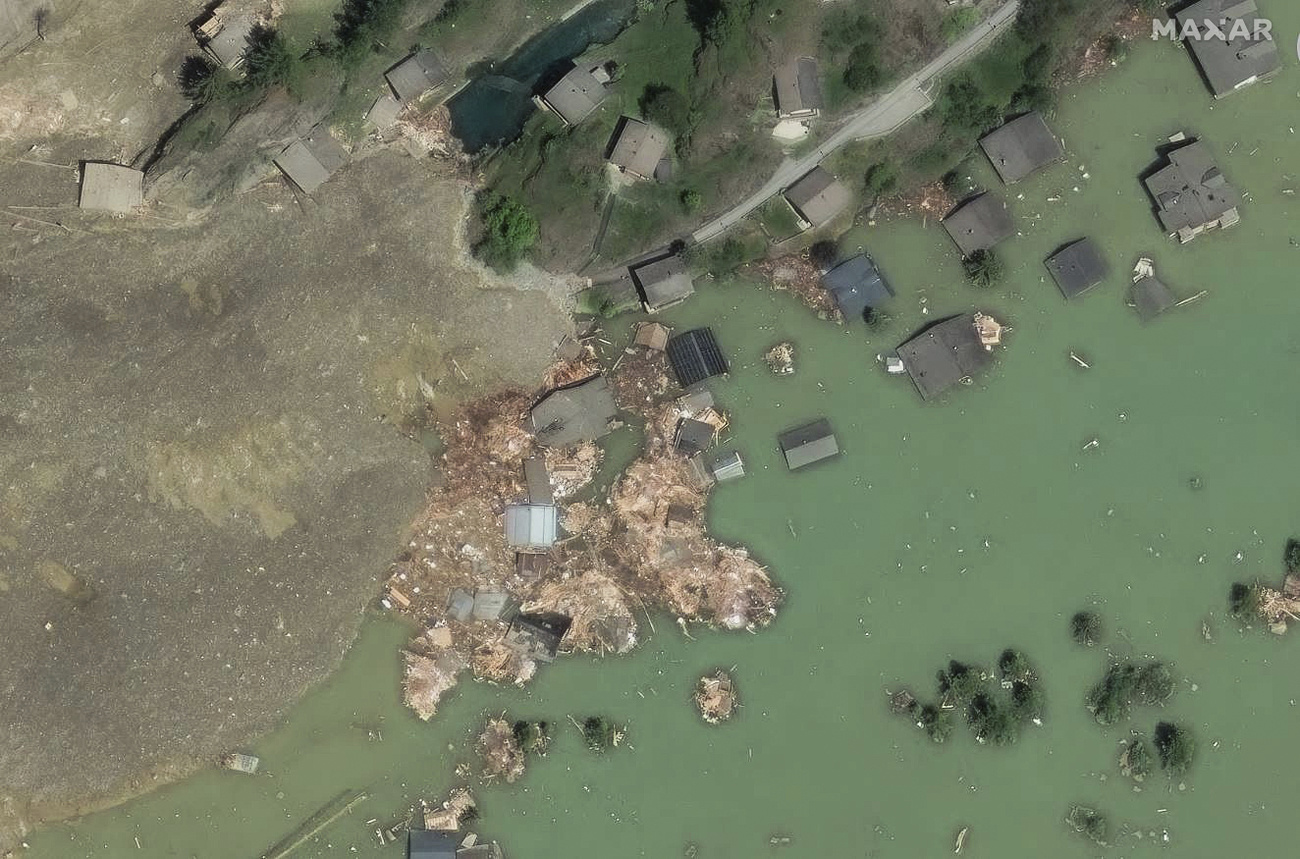
The municipality of Randa has also historically been affected by other natural hazards. In 1991, a triple rockslide occurred on the Längenfluhberg. Within a few weeks, almost 50 million cubic metres of rock tumbled into the valley.
The rock masses buried the railway line and the main road. They also dammed up the River Vispa. No one was injured in the rockfalls, but livestock were killed and 33 buildings were destroyed.
More
The seven worst landslides in Swiss history
+ How we produce news in English
Translated from German, reviewed by an English Department journalist.


See more Swissinfo articles in your Google results. Learn more

In compliance with the JTI standards
More: SWI swissinfo.ch certified by the Journalism Trust Initiative

You can find an overview of ongoing debates with our journalists here . Please join us!
If you want to start a conversation about a topic raised in this article or want to report factual errors, email us at english@swissinfo.ch.