








The girl who fled Rhodesia but never let go of her African roots
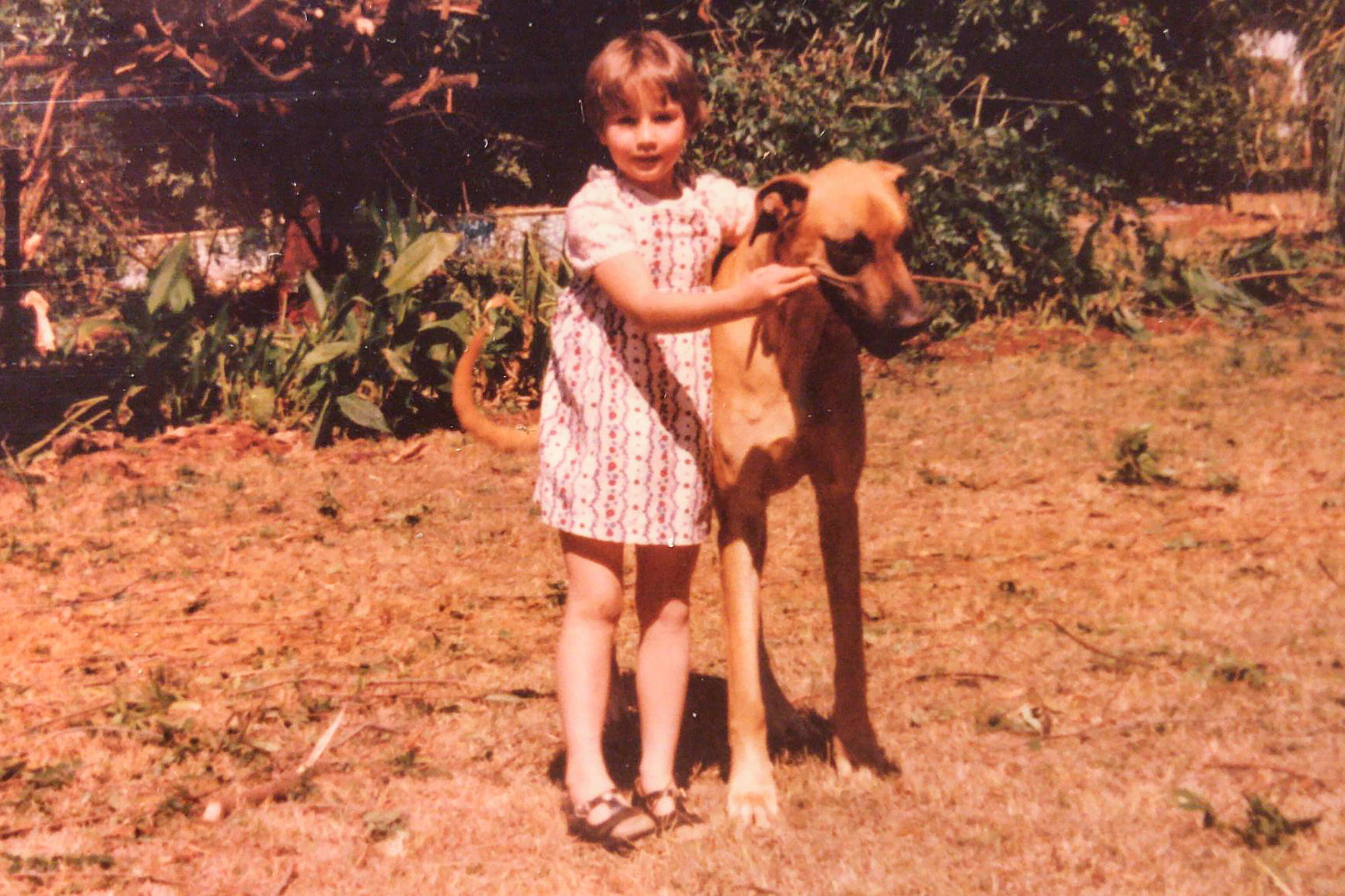
Marina Biber was eight when her family fled Rhodesia and came to Switzerland. Decades later, she stumbled across old television footage of herself as a child after reading a Swissinfo article. Now she shares her story.

Sometimes, all it takes is a news headline to bring the past flooding back. Earlier this year, Biber was scrolling through the news when she spotted a Swissinfo article about a Swiss man put up for adoption as a child in what was then Rhodesia. Intrigued, she read the article and watched the accompanying video by Swiss public television, SRF, about Swiss people living in Rhodesia in the 1970s.
Then she spotted her late father in the footage.

“I took a screenshot and sent it to my mother,” she recalls. “Is that Daddy?” she wrote. Her mother confirmed it straight away.
The footage dates from a time that Biber only vaguely remembers. Watching the full television report from the SRF archives, she spotted another familiar face: her own, as a little girl in Rhodesia more than 40 years ago.
“It was really a bit of a shock,” she says.

Biber was born in Rhodesia (now Zimbabwe) in 1972. Her mother had moved there from Kenya as a young woman and soon became pregnant. During the pregnancy, her mother split up with her biological father. Later, she met and married a Swiss watchmaker who had settled in Rhodesia. He adopted Biber and became the man she called “Daddy”.
Biber’s family history stretches across several continents. She has Italian roots and a Scottish grandmother. Born and raised in Africa, she moved to Switzerland with her mother and adoptive father when she was eight.
She now lives in Kreuzlingen, in northeastern Switzerland. Yet part of her has never quite left Africa.
Horses, a big house and wide-open skies
Biber remembers horses, dogs, a large property and children running around outside. Most of all, she remembers the vast sky, which seemed to stretch further than in Switzerland.
“When I was young, I never understood why vast skies moved me so deeply,” she says. Even now, when the landscape opens up and the sky stretches out before her, she sometimes feels that same childhood emotion.
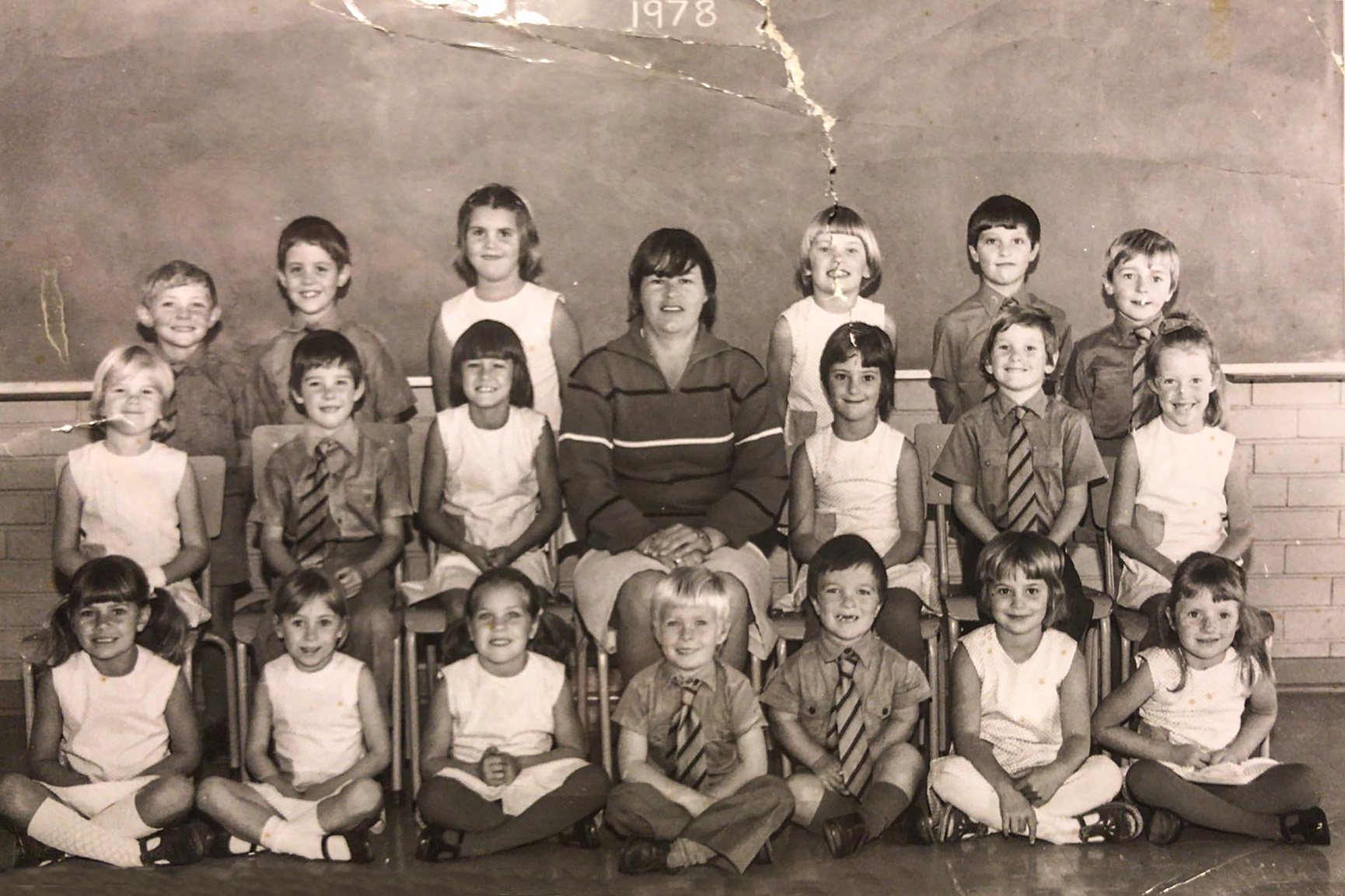
Only when she first returned to Africa at 24 did she begin to make sense of where that feeling might come from. “So much sky. And completely different stars and cloud formations,” Marina says, visibly moved. It is not just the landscape that moves her. African music has a similar effect.
Other memories are more troubling. She clearly recalls the shop shelves in Rhodesia gradually emptying. Certain goods became impossible to find. The security situation had deteriorated. She heard helicopters at night, a sound that still triggers flashbacks. Eventually, her father began keeping a pistol under his pillow in case he needed to protect the family. Still, most of her memories are happy ones.
The day everything changed
On Saturdays, Biber took regular riding lessons at the local stables, where white settler families often met. The children looked after the animals and played together.
That Saturday, the family had also been invited to a party elsewhere. After Biber’s riding lesson, they left. Later that day, the stables were attacked. People and animals were killed.
At the time, Marina did not know what had happened. Her father only told her the story many years later. He had kept a newspaper clipping showing a white girl, about Biber’s age, who had been killed in the attack.
“That could have been Marina. We have to get out of here,” her father had said. To this day, she does not know whether any of the victims were people she knew.
Within a week, the family was on a flight to Switzerland. For Biber, just eight years old, it all felt like an adventure at first. There was snow, and everything was new.

For her mother, it was a very different experience. She had lived in Africa her whole life and she did not want to leave. She was forced to abandon her home, friends, animals, and everything that had made up her life there.
“I think it was traumatic for my mother,” Biber says. As a child, she never thought of their departure as escaping danger. Only years later did she come to see her family’s arrival in Switzerland as refugees fleeing their home. Except that her stepfather was Swiss. He had parents and siblings in Switzerland who took them in when they arrived and he was able to make a fresh start.
“That was a privilege,” she says.
The painful reality of starting over
Biber’s family first settled in Interlaken before moving to the Zurich Oberland region. She went to school in Hinwil and learnt German. At home, she still speaks English with her mother.
Her parents coped with leaving Africa in very different ways. Her father built a new life in Switzerland and took over a watch shop, while her mother remained deeply attached to Africa. Their marriage fell apart a few years after their arrival.
Her mother became an alcoholic before eventually giving up drinking. She still lives in Switzerland but is terribly homesick, Biber says.
In the 1970s, Rhodesia was ruled by a white minority: 270,000 whites ruled over 5.8 million blacks. At that time, about 660 Swiss nationals lived in the country. But the armed conflict between the government and black liberation movements spread. For safety reasons, many whites left the country.
In 1980, the country gained independence as Zimbabwe. Since then, it has been governed by the ZANU-PF party. Political repression, corruption, and economic crises continue to plague the country to this day. According to the Federal Statistical Office, 166 Swiss nationals were living in Zimbabwe at the end of 2025.
Returning to Zimbabwe was no longer an option because of the dire political and economic situation there. Health problems and financial difficulties made matters worse. Even years after the divorce, Biber’s mother continued working for her ex-husband in the watch shop. No money was set aside for her pension which made life difficult in retirement.
Biber bears no resentment when telling her story, just a mixture of sympathy and sadness. Her mother had never really given up hope that they would one day return to Zimbabwe.
Searching with a name and a phone book
It was years before Biber began the search for her African roots. In 1996, she travelled to South Africa and Zimbabwe with a friend, hoping to find her biological father. All she had to go on was his name.
These days an online search would provide clues but back then, Biber had to trawl through telephone directories. Eventually, she found her father and learnt that she had a step-brother and two step-sisters. She still keeps in touch with the former.
It was more difficult with her biological father. Watching the old video footage has changed how Biber sees the place she comes from. She feels ashamed of how black people are referred to in the television programme. “I find it really disturbing,” she says.
Biber recognises that she grew up in a society dominated by a white minority. Yet her own family history does not fit neatly into categories. Her mother had friends and relationships with people from different racial backgrounds. Biber tries to cope with these conflicting memories.
An excerpt from the Swiss news report from 1978 in German:
Africa never really left her
After returning from her trip in 1996, Africa faded into the background. She married, raised three children and built a career, first as a radiographer and later in the social services sector. For the past two years, she has been working in medical imaging at the University of Zurich’s veterinary hospital. Now, her work is giving her a chance to return to Africa.

This autumn, Biber plans to take part in a veterinary project in Zimbabwe. She will spend two weeks on a farm helping to monitor and protect wildlife. Then she will take a week off to rediscover her roots. But many people have warned her that travelling alone in Zimbabwe as a woman is too dangerous. She is still unsure how much of her childhood home she will safely be able to see.
Biber hopes one day to take her three teenage children back to Zimbabwe to see where she grew up. So far, though, they have not had the chance.
Her children know about their mother’s past, but Zimbabwe feels distant to them. Biber never placed much emphasis on her African heritage when bringing them up. They talk about it, but it plays little part in their everyday lives. “I do not make a big thing of it,” she says.
Perhaps her children will join her on a trip to Zimbabwe someday. For now, Biber wants to make the journey herself.
“I feel a very strong need to set foot in Africa again and see how it makes me feel,” she says. Marina does not know whether the trip will live up to her expectations. Perhaps she will come back feeling that it was a wonderful experience and leave it at that. Or perhaps her longing for Africa will grow even stronger.

More
Ian’s parents left him in Africa. Will he ever get Swiss citizenship?
Edited by Balz Rigendinger. Adapted from German by David Kelso Kaufher/ac


See more Swissinfo articles in your Google results. Learn more

In compliance with the JTI standards
More: SWI swissinfo.ch certified by the Journalism Trust Initiative

You can find an overview of ongoing debates with our journalists here . Please join us!
If you want to start a conversation about a topic raised in this article or want to report factual errors, email us at english@swissinfo.ch.