








Taking the pulse of the UN at 80

Select your language
Generated with artificial intelligence.

Listening:
Taking the pulse of the UN at 80
On October 24 the UN officially marked its 80th birthday. In 1945, that ceremonial signing of the UN Charter in San Francisco marked a real moment of aspiration towards a more peaceful, more humane, fairer world.

We all know by now that many of those aspirations have not been fulfilled – but why not? Were they unrealistic? Was the United Nations fundamentally flawed from the start? And can some of those initial hopes still be realised?
Inside Geneva
Subscribe to
-
 Apple PodcastsExternal link
-
 SpotifyExternal link
-
 YouTubeExternal link
-
 Amazon MusicExternal link
-
 iHeartRadioExternal link
-
 Podcast IndexExternal link
-
 CastboxExternal link
-
 OvercastExternal link
-
 Pocket CastsExternal link
-
 Podcast AddictExternal link
-
 DeezerExternal link
-
 Listen NotesExternal link
-
 PodchaserExternal link
-
 Player FMExternal link
-
 CastroExternal link
-
 GoodpodsExternal link
-
 True FansExternal link
-
 PandoraExternal link
- Buzzsprout RSS Feed External link
External Content
Last month, Richard Gowan of the International Crisis Group told our Inside Geneva podcast he believed the UN was still relevant, despite the challenges it faces, not least massive cuts in funding, and, perhaps even more damaging, indifference, even hostility from the United States.
Just a few days later President Trump addressed the UN General Assembly, lambasting the organisation for what he seemed to feel were personal insults dished out to him. “All I got from the United Nations was an escalator that on the way up stopped right in the middle, and then a teleprompter that didn’t work.”
More
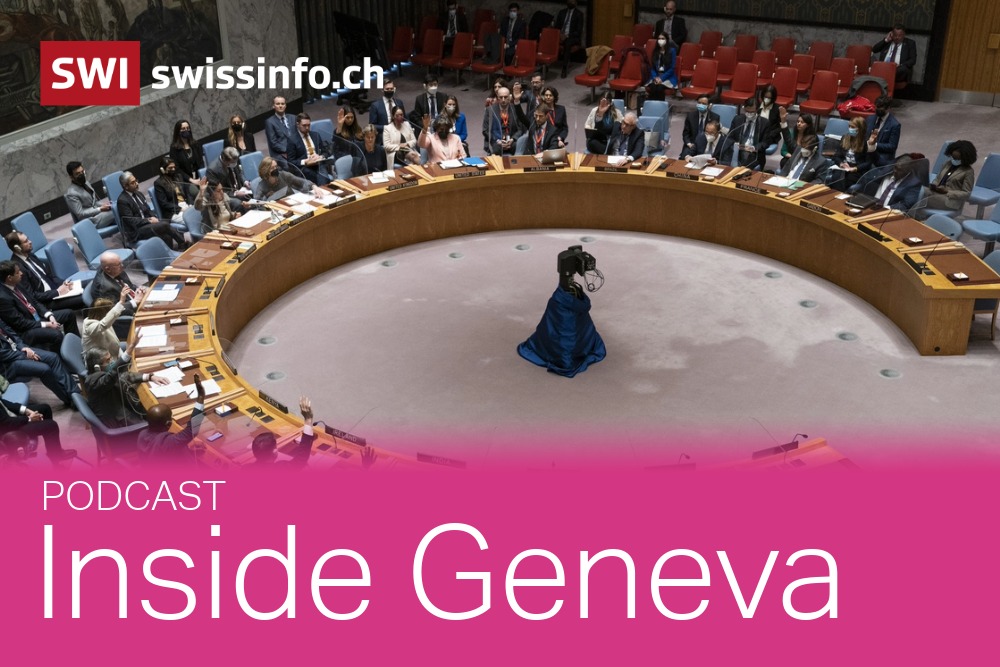
Inside Geneva: taking the pulse of the UN at 80
More alarmingly, he dismissed climate change, something the vast majority of scientists agree is a real threat to us and our planet, as “a massive con job.” That was surely a particular blow to UN Secretary General Antonio Guterres, who had hoped to prioritise tackling climate change during his time in office.
So on this week’s Inside Geneva we are returning to take the pulse of the United Nations as it turns 80. We talk to a variety of experts, from different regions, different backgrounds, and different generations, to hear their views on the UN’s strengths and weaknesses.
Corinne Momal-Vanian, who has decades of experience working for the UN, and is now executive director of the Kofi Annan Foundation, told me it’s over optimistic to expect perfection at 80 years old. “Someone who celebrates their 80th birthday cannot be expected to be in tip top shape. The UN is an old lady.”
But implicit in that comment is the suggestion that new, younger thinking may be needed. Momal-Vanian points out that just three per cent of UN staff are under 30, while half the world’s population are. “It’s just not the right answer anymore to have all these men in dark suits in conference rooms deciding on the future of humanity.”
Inclusion is key
The suggestion that the UN can actually decide on the future of humanity is perhaps an exaggeration, but all our guests on Inside Geneva agree that it needs to change its “men in suits” image.
Prathit Singh, who is both young and from the Global South, urges a “reimagining” of the UN which must come “from the point of confidence. And this confidence only comes once we account for the lived realities of people from the Global South.”
Our analyst Daniel Warner agrees that the current UN is too focussed on member states, with all the inherent geopolitical disagreements that implies. But professor of international law Fuad Zarbiyev warns that changing the epicentre of weakness in the UN – the five veto wielding permanent members of the UN Security Council – will be difficult, if not impossible.
Before we give up in frustration though, Momal-Vanian urges us not to throw the baby out with the bath water. The UN can point to some very big achievements over the last 80 years: the eradication of small pox being one. The disease claimed a staggering 300 million lives in the 20th century, far more than both world wars combined. The proposal to aim for eradication actually came from the then Soviet Union at the height of the cold war, but despite those tensions, UN member states, key among them the United States and the Soviet Union, worked together to defeat the deadly virus.
Zarbiyev highlights another cold war success; the UN’s support for new countries emerging from colonial rule. With a department dedicated to de-colonisation, the UN promoted self-determination, sustainable development, and human rights.
More
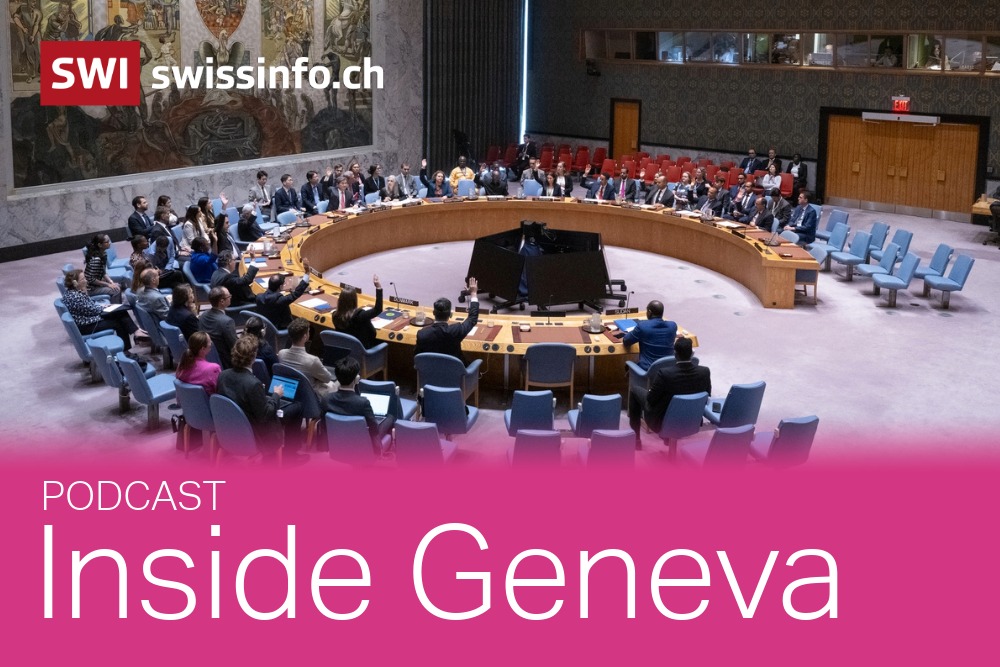
Is the UN still relevant at 80?
As a consequence of that work, Warner reminds us, awareness of human rights and international law is globally far greater now than it was in 1945. “It’s important to keep our optimism” adds Zarbiyev, ‘and maybe realise that the UN is what we make of it.”
Change through cash cuts?
But real change of the kind our interview partners hope for requires time, creativity, attention, and possibly also cash. And the UN is perhaps short on all four right now. The financial cuts are already causing some humanitarian operations to be shut down, meanwhile the UN’s shrinking staff are required to cope with ever more crises.
Momal-Vanian worries the UN secretary general’s UN80 reform proposals may end up simply being a cost cutting exercise, rather than the bold and imaginative re-think the UN needs.
And analyst Warner fears we may be forgetting the lessons learned from that historic defeat of smallpox. ‘What would happen if we don’t cooperate?’ he asks. ‘If we look at Covid, if we look at a potential climate disaster? People are going to be forced to cooperate and I think that’s something we should never forget.’
How do you think the UN can stay relevant for the next 80 years? Listen to Inside Geneva and let us know your thoughts at insidegeneva@swissinfo.ch.
vm
More
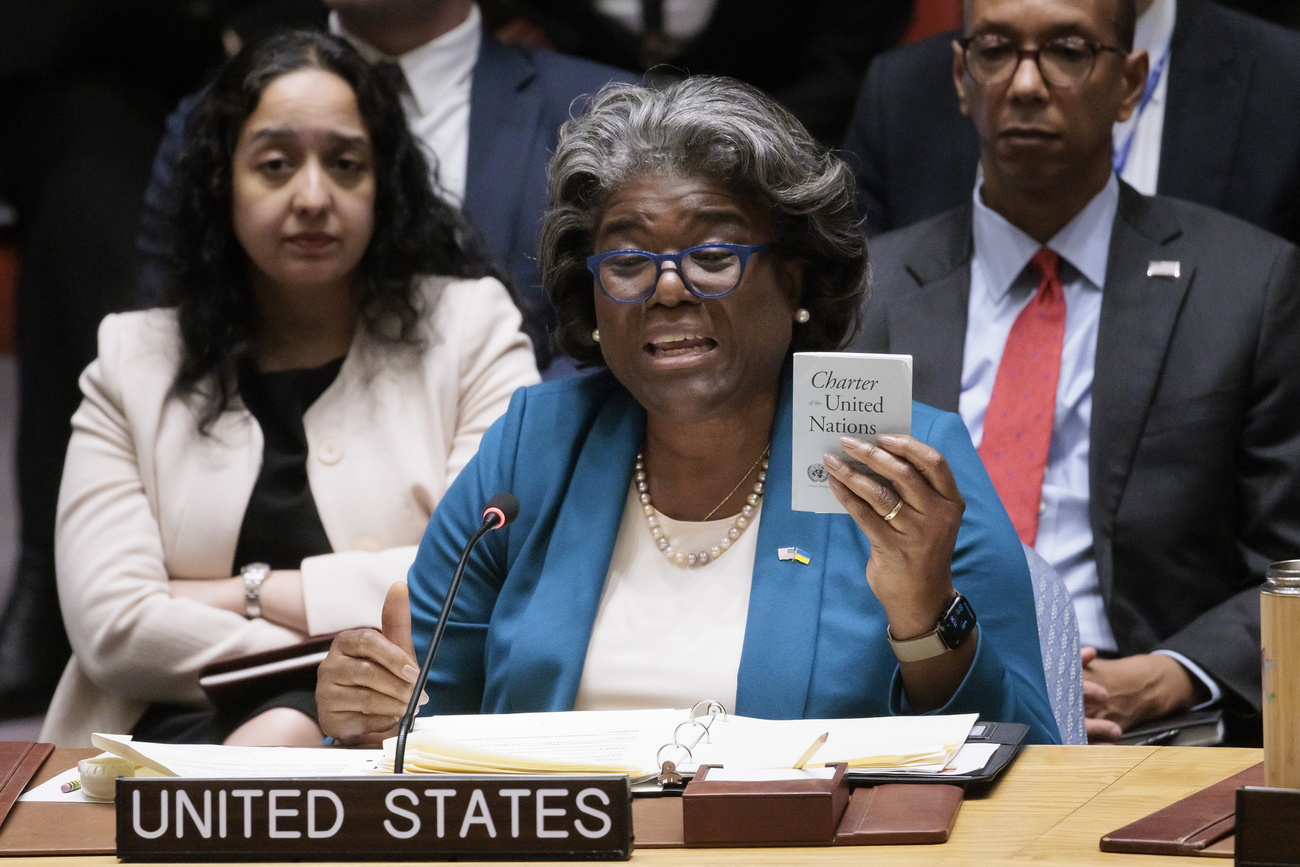
UN Charter turns 80 – but does it still matter?

In compliance with the JTI standards
More: SWI swissinfo.ch certified by the Journalism Trust Initiative

You can find an overview of ongoing debates with our journalists here . Please join us!
If you want to start a conversation about a topic raised in this article or want to report factual errors, email us at english@swissinfo.ch.