








WHO says Ebola outbreak likely began months ago
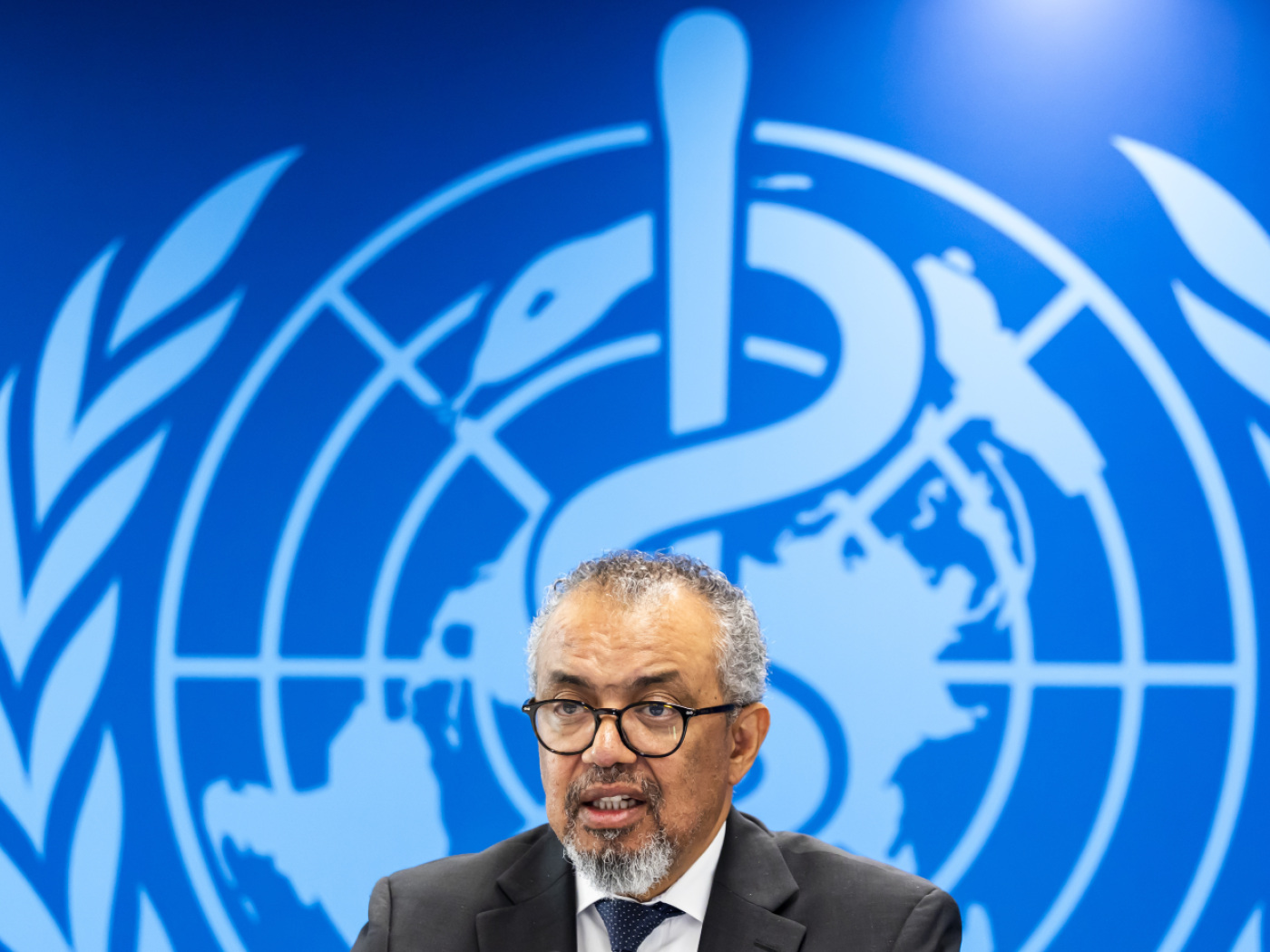
The current Ebola outbreak “probably” began “several months ago”, according to the Geneva-based World Health Organization (WHO). The threat is assessed as “high” at both national and regional levels, but “low” globally.
Select your language
Generated with artificial intelligence.
Listening:
WHO says Ebola outbreak likely began months ago
+ Get the most important news from Switzerland in your inbox
“Investigations are under way” into how the virus first emerged, Anaïs Legand, the WHO’s head of health emergencies, told reporters on Wednesday. But given how widely it has spread, the organisation believes the outbreak probably began “several months ago”.
More
WHO at strategic crossroads ahead of leadership contest
Several of her colleagues have highlighted the complexity of such situations. On Wednesday, Director-General Tedros Adhanom Ghebreyesus also brushed off criticism from the US Secretary of State a day earlier. Marco Rubio had accused the WHO – which the United States now says it has left – of being slow to identify the new outbreak.
Legand said in response that “as soon as the WHO was informed”, it had provided support to the Congolese authorities. Tedros went further, accusing Rubio of a “lack of understanding” of how the International Health Regulations (IHR) work. The WHO “does not replace” member states but supports them, he said.
Unlike the US, the WHO is not recommending a travel ban for people in the Democratic Republic of Congo (DRC) and Uganda. It says restrictions should apply only to those who have had contact with infected patients.
No vaccine for months
According to the latest figures reported by the Director-General, 139 deaths are suspected to be linked to Ebola, with nearly 600 suspected cases recorded. “We expect this number to continue to rise,” Tedros said.

More
Ebola – the view from inside a camp
In the DRC, 51 cases have been confirmed. “We know the true scale of the outbreak is much larger.” Two cases have also been reported in Uganda, and an American healthcare worker has been infected.
The WHO’s head of emergencies, Chikwe Ihekweazu, said the immediate priority is to identify all chains of transmission. That work will then allow a clearer assessment of the true scale of the outbreak, which is expected to last for several months at least.
On Tuesday evening, an emergency committee backed Tedros’ decision to classify the outbreak as a public health emergency of international concern – the second-highest level after a pandemic. With no vaccine available for the Bundibugyo strain, the immediate priority is to run clinical trials of the leading candidates.
This is expected to take several months. The WHO also says the “right platforms” need to be put in place for PCR testing to quickly identify the strain in communities, according to Legand.
No access problems at the epicentre
Tedros said he was very concerned about how quickly it is spreading, cases in urban areas, and the recent rise in violence in eastern DRC. More than 100,000 people have been displaced over the past two months due to clashes between the M23 rebel group and the Congolese army.
Congolese Nobel Peace Prize laureate Denis Mukwege has called on the rebels to reopen the airport in Goma, the main city in North Kivu, which they control.
Responding to the highly political question, the WHO chief said the epicentre was in Ituri and that there were “no problems with access” to Bunia at present.
Another official said the WHO has maintained a presence in Goma since the M23 seized the city in early 2025. The organisation is already operating in the affected areas and, for now, has no plans to deploy international rapid response teams.
“We will be increasing our presence in the coming days,” Chikwe said. He added: “We will work with local communities to identify their needs before flying in reinforcements to save them.”
Translated from French by AI/sp
We select the most relevant news for an international audience and use automatic translation tools to translate them into English. A journalist then reviews the translation for clarity and accuracy before publication.
Providing you with automatically translated news gives us the time to write more in-depth articles. The news stories we select have been written and carefully fact-checked by an external editorial team from news agencies such as Bloomberg or Keystone.
If you have any questions about how we work, write to us at english@swissinfo.ch
External Content

In compliance with the JTI standards
More: SWI swissinfo.ch certified by the Journalism Trust Initiative

You can find an overview of ongoing debates with our journalists here . Please join us!
If you want to start a conversation about a topic raised in this article or want to report factual errors, email us at english@swissinfo.ch.