








A new generation of robots is taking shape in Switzerland

Swiss start-ups are developing cutting-edge robots that combine novel hardware with artificial intelligence (AI).
Select your language
Generated with artificial intelligence.
Listening:
A new generation of robots is taking shape in Switzerland

The companies now face the challenge of converting innovative research into viable businesses in the face of intense global competition from the United States and China.
From humanoids, drones and self-driving vehicles to machines that operate in dangerous environments, robots are pushing the frontiers of mobility, flexibility and self-learning.
Equipped with enhanced sensory capabilities and decision-making faculties, robots can now adapt to new challenges in unpredictable environments. This practical application of artificial intelligence in the real world has been dubbed ‘physical AI’.
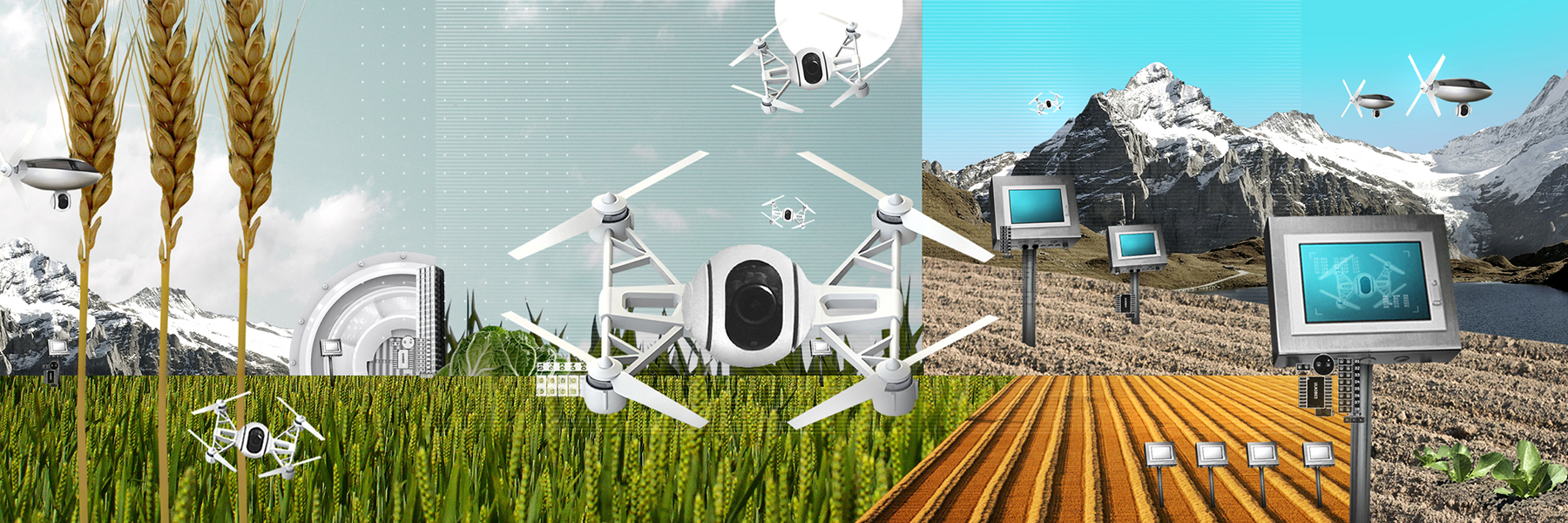
A growing number of Swiss firms are developing a new generation of robots for production lines, aerial reconnaissance, oil rig inspection, construction sites, office cleaning, data centre maintenance and other utilities. Some have caught the eye of global investors, manufacturers and tech companies.
More
Switzerland – where the robots of tomorrow are born
For example, Gravis Robotics has secured $200 million in funding from Japanese investment house Softbank. Gravis has made a name for itself by designing automated earth excavators and loaders for the construction industry.
Not for sale
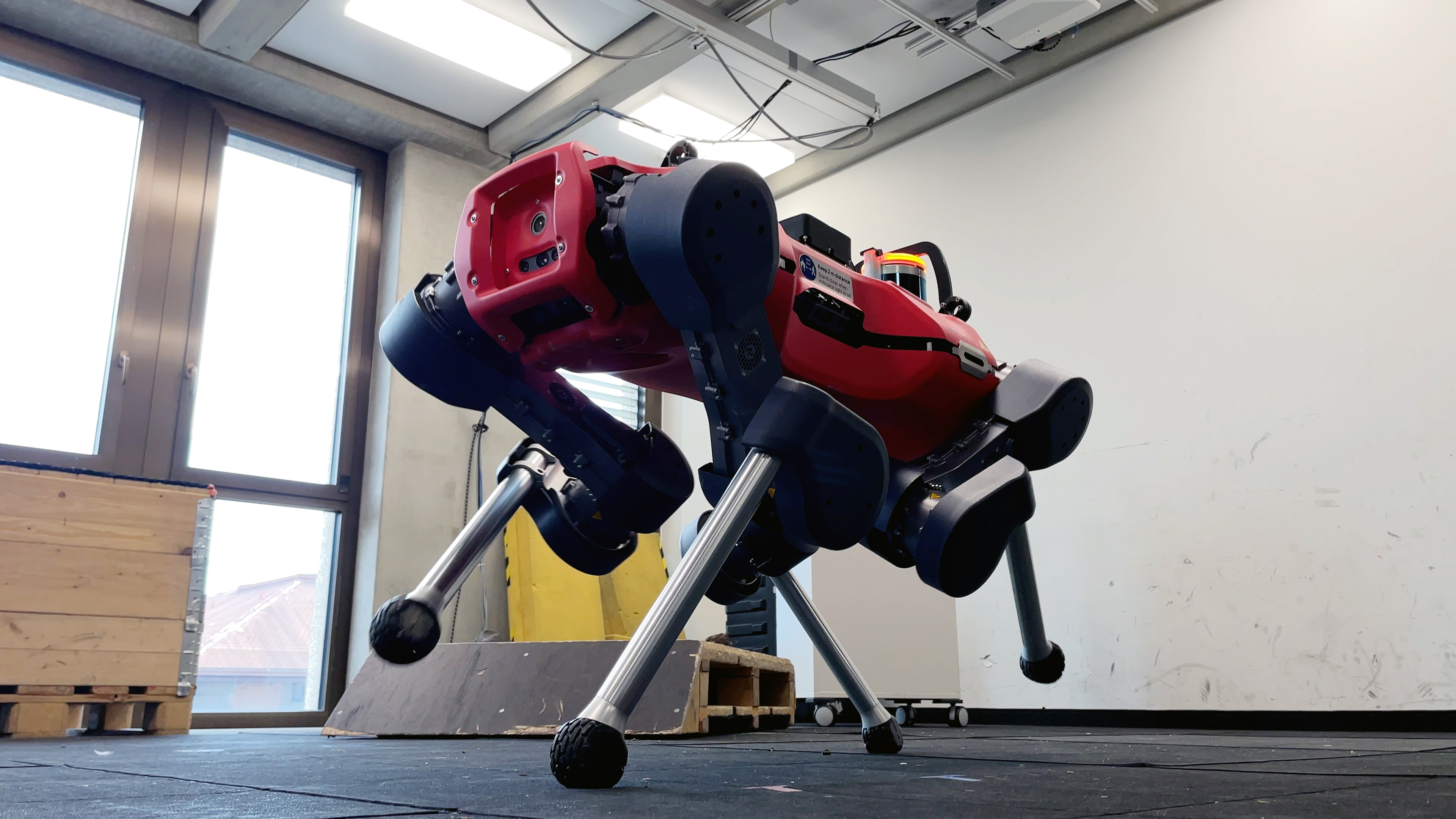
The Gravis investment is the second major robotics spending spree for Softbank in Switzerland after sealing a $5.4 billion deal to buy the robotics division of manufacturing heavyweight ABB in 2025. Earlier this year, US tech giant Amazon bought Swiss start-up Rivr, which makes autonomous quadrupedal robots for the logistics sector. But rather than relying solely on takeovers and mergers with larger foreign firms, The Swiss industry aims to carve out its own path as a European robotics powerhouse.
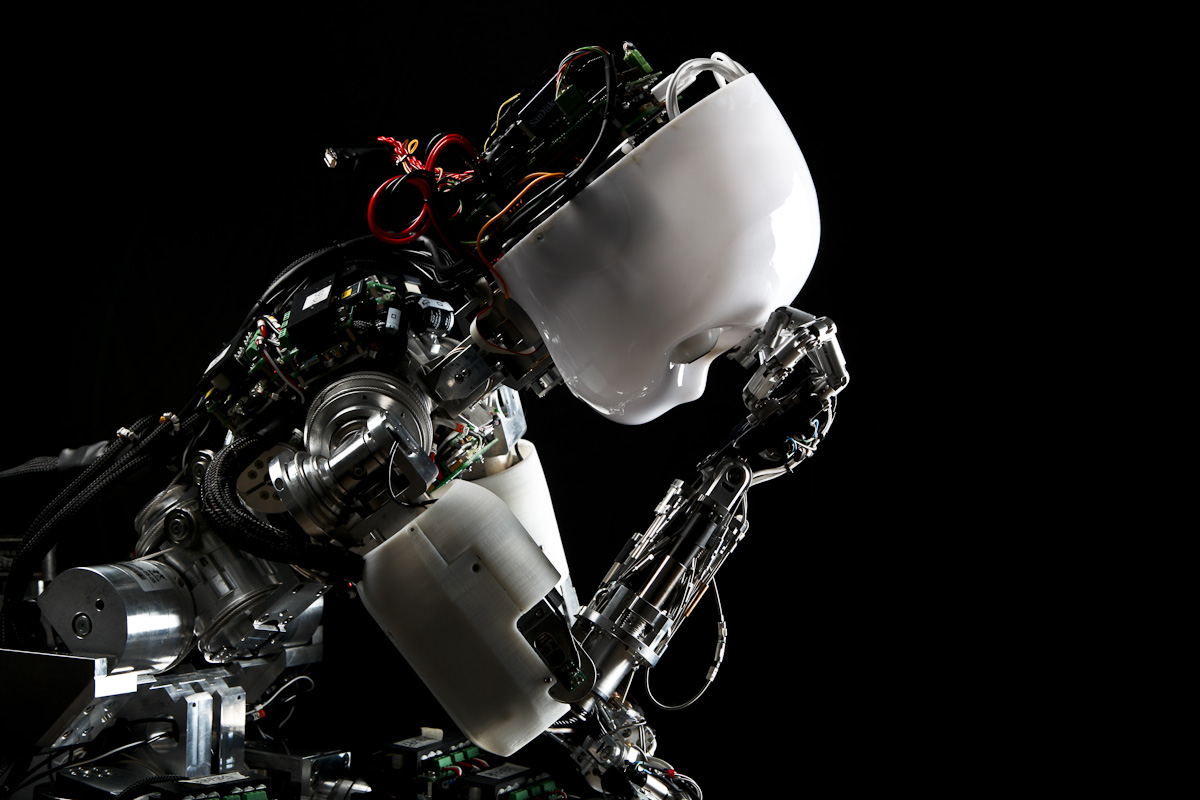
This includes the young Zurich-based company Mimic Robotics, which is building a physical AI platform for general-purpose robotics. Mimic pairs its human-like robotic hands with foundation models that train robots with new skills from human demonstrations. The robotics systems can perform repetitive manufacturing and logistics work without the re-coding that traditional machines need to switch tasks.
The company has no interest in being swallowed up by a larger rival. “”We have a real opportunity to become a hyper-scaler frontier AI company from Europe,” Mimic CEO, Elvis Nava, told Swissinfo “We are well positioned to play a much bigger role than just being absorbed by a bigger US company.”
More
Swiss robotics moves from research to delivering products
The Swiss Robotics Association has identified 182 small and medium sized enterprisesExternal link operating in the sector. Many are spin-off companies from the federal technology institutes of Zurich (ETH) and Lausanne (EPFL), which boast world-class robotics and AI research.
Optimistic yet realistic
Robert MacKenzie, a venture partner at the Zurich-based Ellipsis Venture, says Swiss start-ups should focus on innovations that solve specific problems in the supply chain rather than competing with larger rivals that mass produce complete robotics systems.
“A few Swiss companies are very well positioned right now and if they play their cards right strategically, they could become indispensable in the robotics market,” he told Swissinfo. He gave the example of Dutch company ASML cornering the market in extreme ultraviolet lithography machines that transformed the way computer chips are made.
The chances of becoming a so-called ‘unicorn’ company, valued at more than CHF1 billion, also hinge on start-ups building collaborations with the industries they intend to service and bringing experienced business leaders into their teams. MacKenzie describes himself as an optimist on the future of robotics, particularly in Switzerland, but realistic enough to see through some of the hype.
“Many recently established firms are led by PhD students with zero experience of building an organisation as complex as a robotics company,” said MacKenzie. “In Europe the margin for error is thinner. They must build their product efficiently to survive. Otherwise, they will learn by life punching them in the face as they burn through millions of dollars in the process.”
More
Swarm of Swiss robots could take part in future space missions
Switzerland has many advantages for robotics start-ups, which rub shoulders with cutting-edge research institutions and large tech companies that have set up offices in the country.
The start-ups also have access to a large European manufacturing base, which is eager to restructure production lines in the face of the growing threat from China and other more agile economies.
Venture capital magnet
Mimic, for instance, is collaborating with Audi to test its robots on real production tasks that conventional robotics cannot handle.
“We want to help Europe regain competitiveness as a manufacturing hub,” Mimic business development lead Mattia Arduini told Swissinfo. “We enable companies to counter labour shortages with intelligent and flexible automation.”
Venture capital money is currently flowing into robotics at a rapid pace. According to market research company Crunchbase, robotics firms attracted $18.8 billion in funding in the first six months of this year compared to $15 billion in the whole of 2025. Other estimates put the figures even higher.
The corresponding funding for Switzerland is a much smaller $1.1 billion since 2020, according to the Swiss Deeptech Report 2026 from Deeptech Nation, a non-profit foundation that supports frontier technology start-ups in Switzerland.

More
Japanese SoftBank acquires robotics arm of ABB to create super AI
The relative paucity of Swiss funding can be explained by a lack of large scale later stage investments as most Swiss start-ups are relatively young. The recent $200 million investment in Gravis Robotics was not captured by the Deeptech Nation report.
Wait for full potential
But the absolute number of start-ups is growing. Switzerland produces more robotics start-ups per capita than the UK, Germany and the US, according to the study.
However, the days of expansive robotics funding may soon be over, according to MacKenzie. This is because the promise of robotics might take longer to deliver than the rosiest optimists expect.
“Investors will start realising that robotics is much harder than they thought, that company founders underestimated the complexity of their task and that physical AI is further away than predicted,” he said. “I believe that investments might plateau, shift towards deployment, or even diminish in 2027.”
“Speed depends on complexity: we could see next-generation robotic arms doing new jobs reliably in production and logistics in the next two years,” he added. “But we will not see robots in the home doing all the household tasks.”
Despite some promising early models, physical AI still has a long way to go before it realises market expectations.
Join the debate:
External Content
Edited by Gabe Bullard/ac


See more Swissinfo articles in your Google results. Learn more

In compliance with the JTI standards
More: SWI swissinfo.ch certified by the Journalism Trust Initiative

You can find an overview of ongoing debates with our journalists here . Please join us!
If you want to start a conversation about a topic raised in this article or want to report factual errors, email us at english@swissinfo.ch.