








Researchers find rubber-related chemicals in Swiss milk
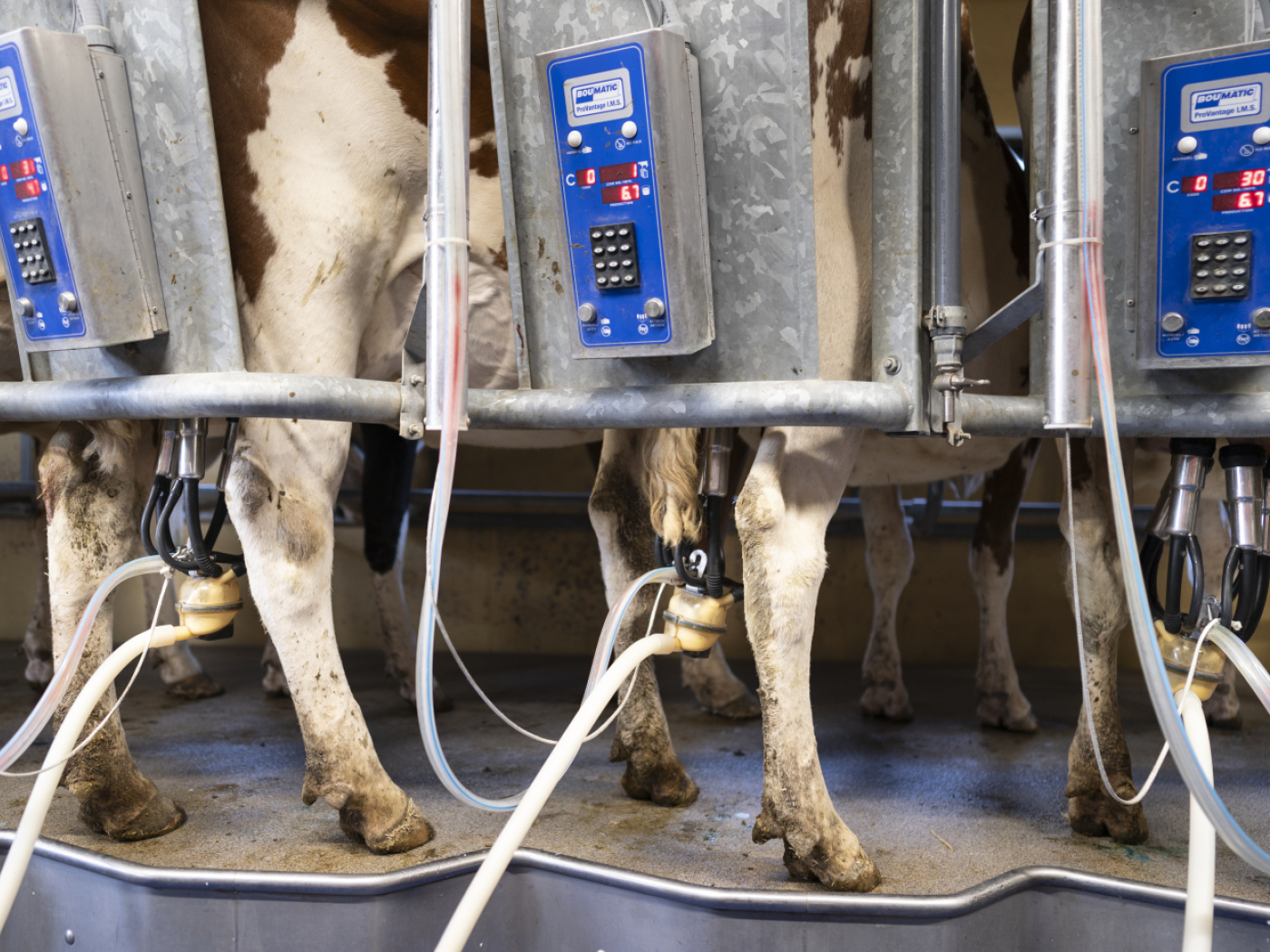
Swiss scientists have detected several rubber-related chemicals in Swiss raw milk. Their study suggests that dairy equipment may be an overlooked source of contamination.
Select your language
Generated with artificial intelligence.
Listening:
Researchers find rubber-related chemicals in Swiss milk
For the study, a research team analysed milk samples from 17 Swiss farms, the Swiss Federal Institute of Technology Lausanne (EPFL) said on Monday. At least one of the four rubber chemicals being tested for was detected in seven of the 17 samples. In three samples from Alpine farms located far away from busy roads, the researchers found none of the substances.
The effects of the substances found on human health are as yet unknown. Follow-up studies are planned. However, the concentrations measured in the raw milk were generally low. The results of the study were published in the journal Food Chemistry X.
Milking systems or tyres
The researchers considered one possible source of contamination to be particularly surprising: the milking systems themselves.
While examining hoses, seals and other rubber components used in milk production, they identified 14 different chemicals. According to study leader Florian Breider, it is astonishing that these compounds originated from materials that are legally approved for contact with food.
Among the materials from the milking systems examined, the researchers found, among other things, the compound 6PPD-quinone, which is known to be harmful to certain fish species. This substance is not intentionally added to rubber but is produced by oxidation as the material ages.
More
Polluting particles from car tyres – how worried should we be?
Another possible source of the contaminants is the abrasion of tyres and road surfaces. Worldwide, an estimated six million tonnes of rubber particles are released into the environment every year as a result. These particles can reach agricultural land and enter the food chain via the air, runoff water or fertilisers.
Further studies are now set to investigate how concentrations fluctuate across the seasons. In addition, the exact pathways by which the chemicals enter milk are to be investigated, in order to support the development of safer materials for contact with food.
The Federal Office for Food Safety and Veterinary Affairs and the Agroscope research institute also collaborated on the study.
More
Toxic chemicals from car tyres found in fruit and vegetables in Switzerland
+ How we produce news in English
Translated from German, reviewed by an English Department journalist.

In compliance with the JTI standards
More: SWI swissinfo.ch certified by the Journalism Trust Initiative

You can find an overview of ongoing debates with our journalists here . Please join us!
If you want to start a conversation about a topic raised in this article or want to report factual errors, email us at english@swissinfo.ch.