








Smart glasses ban in swimming pools debated in Switzerland

Privacy concerns are growing in Switzerland about smart glasses that can film and take photos, particularly around public swimming pools.
Select your language
Generated with artificial intelligence.
Listening:
Smart glasses ban in swimming pools debated in Switzerland
At first glance, they look like ordinary sunglasses, but they have several built-in technical features. So-called smart glasses can take photos, record videos, and in some cases even record conversations. Depending on the model, the data can be transferred directly to a smartphone or to a cloud.
These very possibilities are now sparking political debate in several Swiss cities, for example in Wil, in the eastern canton of St Gallen. A motion is pending in the city parliament to ban smart glasses in the city’s public swimming pools. Parliamentarians from all parties have co-signed the motion. Similar efforts are underway in the cities of Lucerne and Basel.

More
The future is coming to your face soon
The trigger for objections is concern for the safety of swimmers. Especially in outdoor swimming pools, it is often difficult to tell whether someone is filming or taking photos with smart glasses. This can be particularly problematic for women, teenagers, and children.
Among the initial signatories is Meret Grob, a Green Party member of parliament from Wil. She fears that technological development is progressing faster than awareness of potential risks. “I don’t think people have really grasped yet that smart glasses can also be used for malicious purposes,” she told Swiss public broadcaster SRF.
While smart glasses could be used for covert recording, said Grob. And the latest models are becoming increasingly inconspicuous.
Federal debate
So far, no cases are known in Switzerland of swimmers being secretly filmed using smart glasses. But several cases have already made headlines in Germany, involving photos of women in swimwear posted on social media. Cities like Cologne have responded by banning smart glasses in public swimming pools.
“We need to consider in general whether we want such glasses in our society,” said Lucerne cantonal parliamentarian Rahel Estermann. The discussion is gaining momentum in other regions of Switzerland, which are also considering possible restrictions.
More
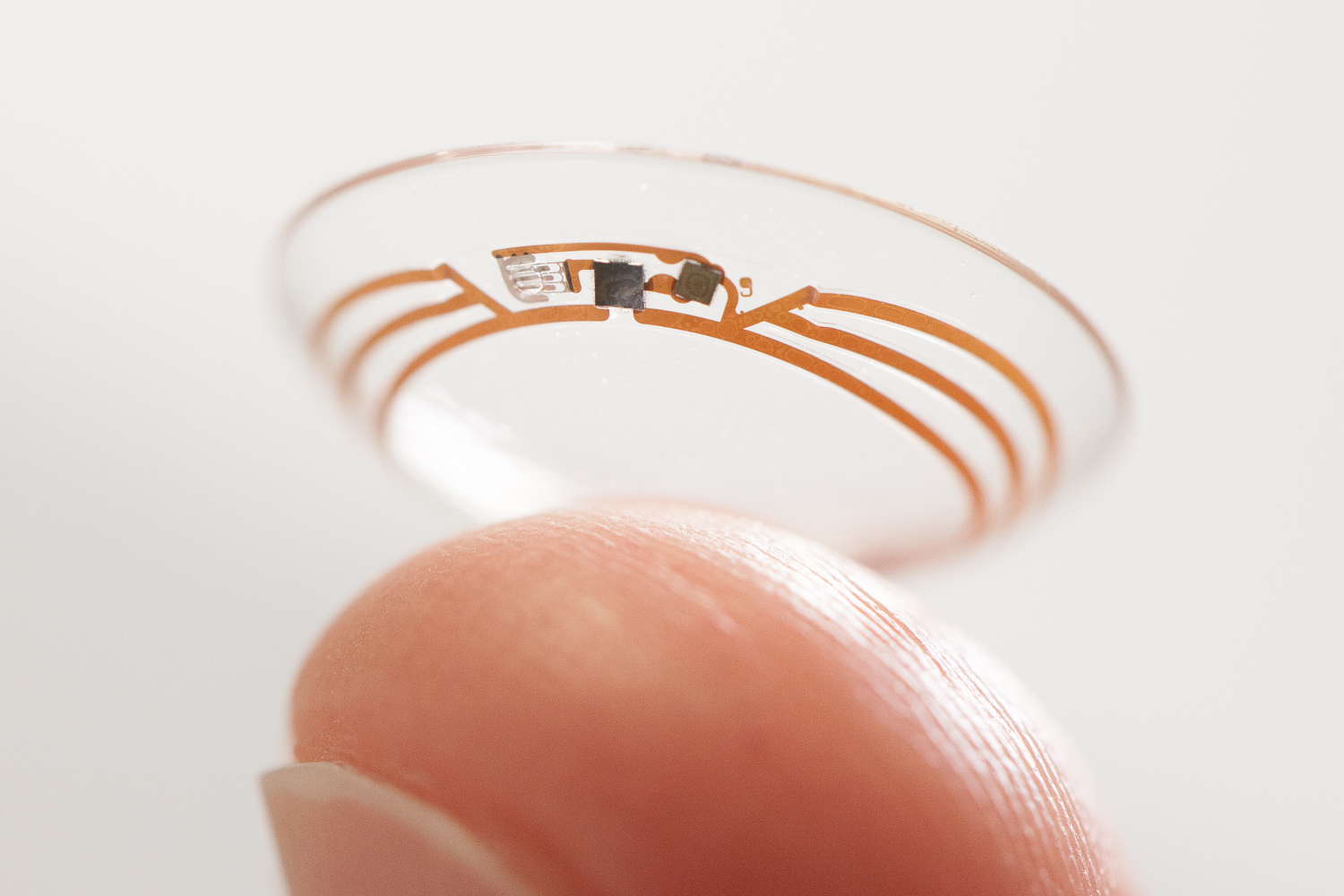
Reaction to the Google-Novartis contact lens deal
The Swiss Association of Lifeguards is very receptive to the idea of a ban. “The best solution would be a nationwide ban,” said president Michel Kunz. While such a ban would be difficult to enforce completely, it would provide a basis for taking action in cases of violations.
The use of these devices is likely to increase further in the coming years. This is precisely why proponents of a ban cite privacy concerns. It is often impossible for bystanders to tell whether a recording is being made, unlike with a smartphone, which must be visibly held-up and pointed.
The issue has now reached the federal level of politics. There are calls to examine the impact on data protection and privacy more closely.
Whether Wil will introduce a ban is still undecided. However, one thing is clear: with the increasing prevalence of smart glasses, the discussion about privacy in public spaces is likely to gain further importance.
Join the debate:
External Content
+ How we produce English news
Translated from German, reviewed by an English Department journalist.

In compliance with the JTI standards
More: SWI swissinfo.ch certified by the Journalism Trust Initiative

You can find an overview of ongoing debates with our journalists here . Please join us!
If you want to start a conversation about a topic raised in this article or want to report factual errors, email us at english@swissinfo.ch.