








University in Switzerland receives large donation of diamonds for research

The University of Bern will house one of the world’s largest diamond collections for research and teaching purposes. The collection, donated to the university, is intended to aid in the discovery of new minerals and provide insights into the formation of the Earth’s interior.
Select your language
Generated with artificial intelligence.
Listening:
University in Switzerland receives large donation of diamonds for research
“Diamonds are more than just jewelry; they are true natural archives and hold unique knowledge about the history of our planet,” the University of Bern explained on Tuesday. The collection was donated by Jeffrey W. Harris and his wife, Francesca Harris.
The Harris Diamond Collection is the world’s largest collection of diamonds dedicated to research and education. It comprises more than 29,000 rough diamonds, with an average value of $10 (CHF8.20) per diamond. The material value of the collection is therefore limited.

More
Deep-sea mining: has Trump unleashed a scramble for the seabed?
The rough diamonds come from Africa, South America, North America, Asia, and Oceania. They were donated by the Diamond Trading Company (DTC) in London to Harris for scientific research purposes. Each donation is documented by the original deed of gift. The collection is housed off-campus.
Time Capsules
Extremely durable and virtually chemically stable, diamonds are like time capsules that preserve valuable information about the conditions of their formation.
The oldest diamonds date back 3.5 billion years, while the youngest are about 55 million years old.
Some diamonds contain tiny inclusions of high-density liquid, molten material, or minerals inside them. By studying these inclusions, scientists can better understand the Earth’s evolution.
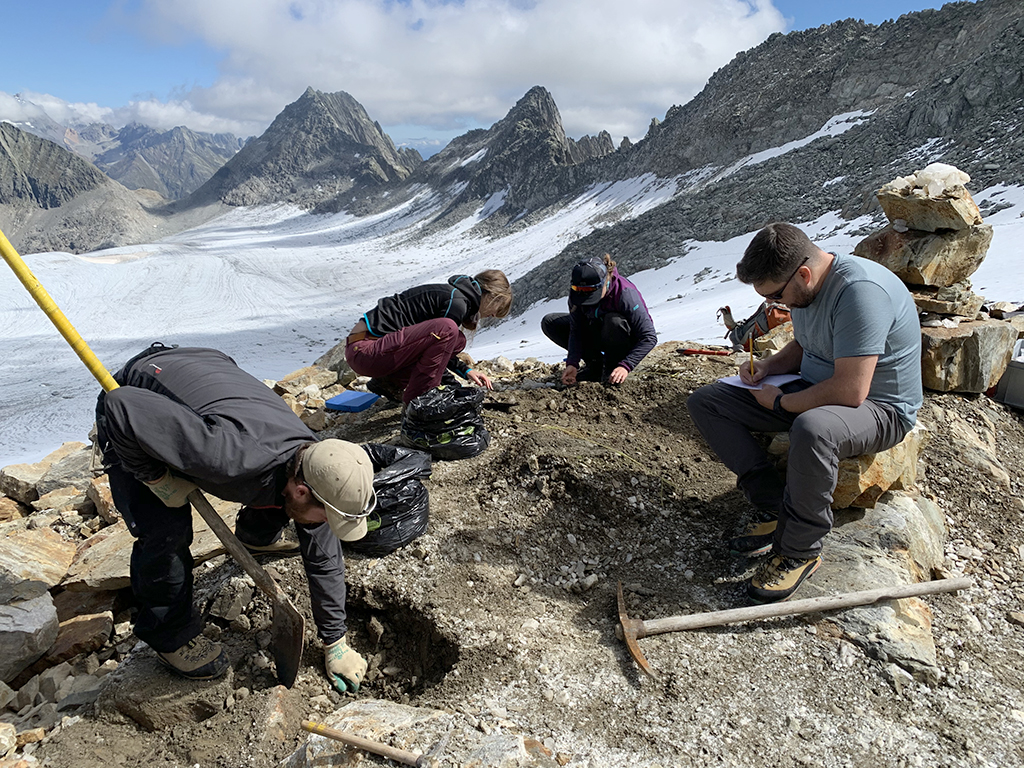
More
In pursuit of the crystal hunters
The University of Bern is one of the few universities in the world to have its own diamond grinding wheel, a diamond crushing facility, a state-of-the-art mass spectrometer for high-precision isotopic analyses, as well as other highly specialised equipment and methods for visualising the chemical composition of materials in space.
+ How we produce news in English
Translated from French, reviewed by an English Department journalist.

In compliance with the JTI standards
More: SWI swissinfo.ch certified by the Journalism Trust Initiative

You can find an overview of ongoing debates with our journalists here . Please join us!
If you want to start a conversation about a topic raised in this article or want to report factual errors, email us at english@swissinfo.ch.