








OSCE urged to adopt common approach to new technologies

OSCE Chairperson-in-Office Ignazio Cassis has called on the member states to anticipate scientific and technological developments at an early stage.
Select your language
Generated with artificial intelligence.
Listening:
OSCE urged to adopt common approach to new technologies
+Get the most important news from Switzerland in your inbox
At a two-day conference of the Organisation for Economic Cooperation and Development, the Swiss foreign minister called for “pragmatic” cooperation.
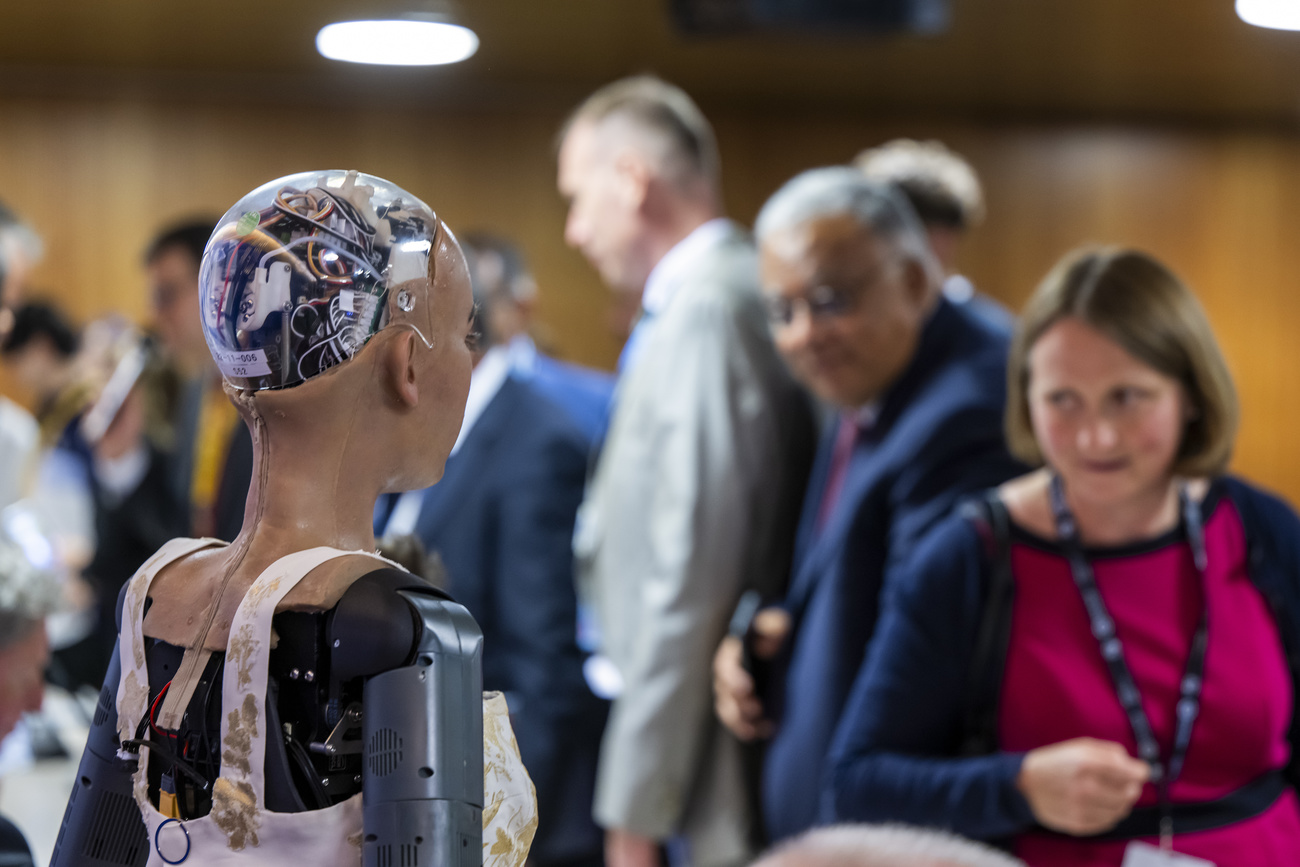
“If no one controls them, they will control us,” said Cassis at the OSCE conference in Geneva, referring to new technologies. Following corresponding initiatives in the UN Security Council under a Swiss chair in 2024, the Cassis now wants to anchor the topic more firmly in the OSCE.
+ Inside Geneva: How to cope with killer robots
The greatest danger today is no longer technological surprise, but political delay, said Cassis. If regulation lags behind innovation, mistrust, misjudgements and tensions arise.
Wide impact
Technological developments influence all three dimensions of the OSCE: the politico-military sphere with new forms of warfare and deterrence, the economic sphere with digital competition and the human dimension with effects on civil liberties and social cohesion.
Technologies must be recognised before they cause social problems, said Cassis. A Geneva-based foundation has been working on this task for years. The aim is to utilise technologies for the benefit of society and to avoid negative consequences such as inequalities or security risks.
+ How should we regulate the magic of technology in the 2020s?
For this reason, the foundation should now support the OSCE members in this area and promote cooperation.
It is not about “regulating everything”, said Cassis. Rather, the most important challenges must be tackled in a targeted manner.
Among other things, the conference participants discussed the impact of artificial intelligence and quantum computers on security and cooperation in Europe. They also discussed how new technologies can help to jointly manage scarce resources.
More
Can Switzerland steer a safe course to AI innovation?
Adapted from German by AI/mga
We select the most relevant news for an international audience and use automatic translation tools to translate them into English. A journalist then reviews the translation for clarity and accuracy before publication.
Providing you with automatically translated news gives us the time to write more in-depth articles. The news stories we select have been written and carefully fact-checked by an external editorial team from news agencies such as Bloomberg or Keystone.
If you have any questions about how we work, write to us at english@swissinfo.ch.
External Content

In compliance with the JTI standards
More: SWI swissinfo.ch certified by the Journalism Trust Initiative

You can find an overview of ongoing debates with our journalists here . Please join us!
If you want to start a conversation about a topic raised in this article or want to report factual errors, email us at english@swissinfo.ch.