








Why voter turnout is so low in Switzerland
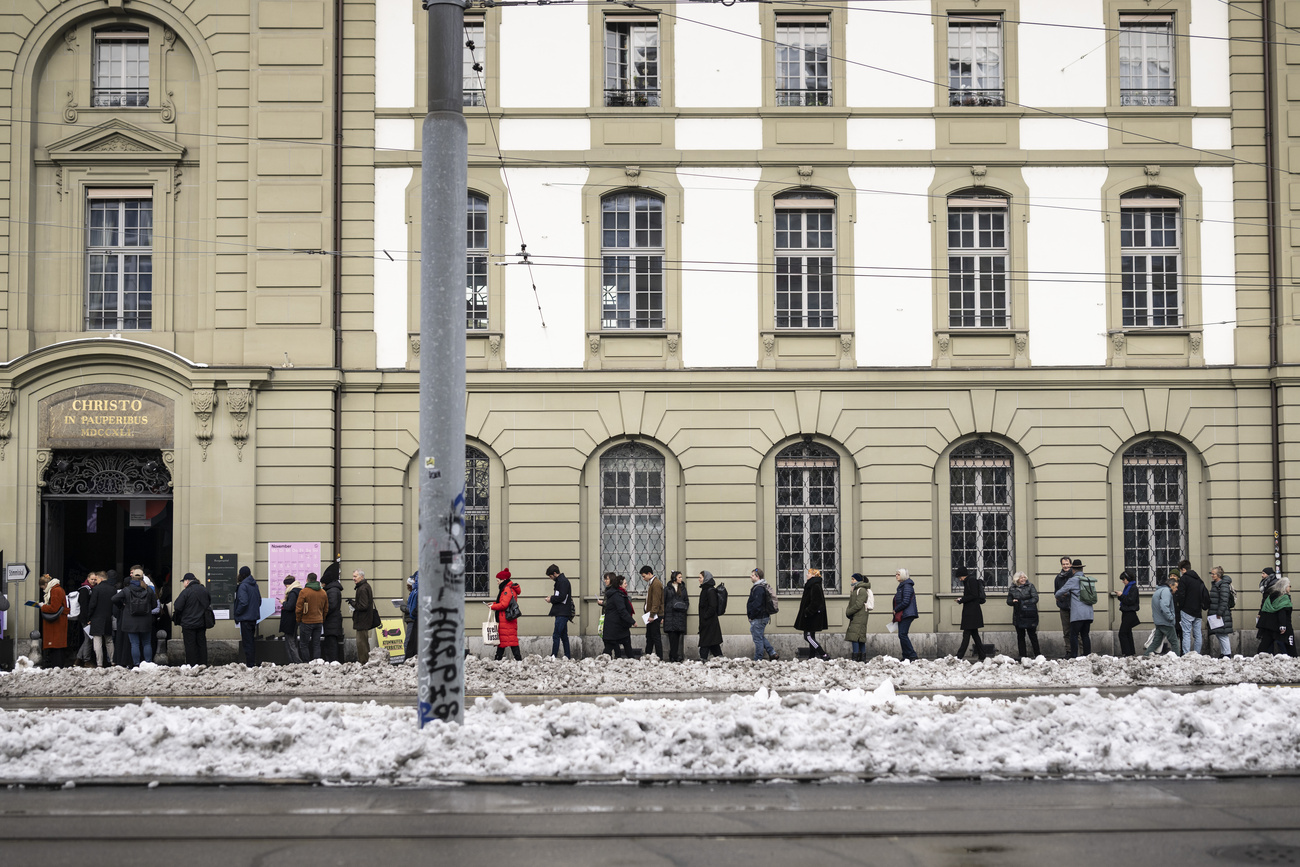
Switzerland’s system of direct democracy is often seen as an example for the rest of the world. Yet only a minority of eligible Swiss voters go to the polls.
Select your language
Generated with artificial intelligence.
Listening:
Why voter turnout is so low in Switzerland


In countries like Australia, almost everyone goes to the polls. Nine in ten Australians cast their ballot in the last general election. In Uruguay, often referred to as “the Switzerland of South America”, more than 89% of voters turned out for the most recent election.
Such numbers are hard to imagine in Switzerland. Compared internationally, the Alpine country posts a relatively low turnout. Fewer than half of eligible citizens exercise their right to vote. In the 2023 federal elections, for instance, just 46.7% cast a ballot.
Why don’t more people vote in Switzerland?
“As an outsider, I can partly understand this,” says German political analyst Andreas Goldberg, a professor at the Norwegian University of Science and Technology (NTNU) in Trondheim. Goldberg previously worked in Switzerland and conducted extensive research on the country.
He sees several reasons behind Switzerland’s low turnout.
“Elections in Switzerland only lead to minor shifts between the parties,” he says. The composition of the government rarely changes after parliamentary elections. Because the Federal Council (executive body) is not directly elected by the people and the balance of power in parliament is relatively stable compared with other countries, some voters may feel there is little reason to cast a ballot, Goldberg argues.
He also points to the United States, where fewer than two-thirds of voters take part in presidential elections. “Yet US presidential elections have far greater consequences for the country than parliamentary elections have for Switzerland,” he says.
>> Read more about how the Swiss government is made up, and how it reaches decisions:

More
‘One for all, all for one’ – how the Swiss government makes decisions
Has turnout always been this low?
Only in 1971 and 1975 – the first two general elections following the granting of the right to vote to women – did more than half of all Swiss voters go to the polls. Since then, turnout has hovered between 42.2% in 1995 and 48.9% in 1983.
Since 2003, however, turnout has remained above 45% in every federal election.
External Content
A democracy is considered strong when its decisions enjoy broad public support. The Federal Statistical Office notes on its website: “Voter turnout is a key indicator of a well-functioning democracy.”
Low voter turnout is also regularly debated in the country, both before and after elections. The same arguments and concerns tend to resurface each time: that democracy is weakened when a minority decides for the majority, and that those who stay away from voting have become disillusioned with politics.
All Swiss citizens aged 18 and over are eligible to vote in federal elections and referendums. Swiss citizens living abroad must register in their country of residence to exercise their political rights. Some people with disabilities are not eligible to vote.
Around 5.6 million people are eligible to vote at the national level. Approximately 27% of the Swiss population are foreign nationals, who are not allowed to participate in federal elections or referendums. In a few cantons, some foreign nationals have voting rights at the local or cantonal level. Switzerland’s total population stands at 9.1 million.
Why do some referendums attract more voters?
By contrast, turnout in some referendums can reach 60% or more. In June 2026, for example, 58.9% of voters cast a ballot on the “No to the ten million” initiative to limit immigration. Are popular votes and referendums seen as more important than elections? Goldberg believes many Swiss tend to underestimate the importance of parliament while overestimating the significance of referendums, citing an analysis by expert Reto MittereggerExternal link.
Research by Goldberg and Pascal Sciarini found that the more people perceive a referendum to be important, the more likely they are to vote. At the same time, the more complex the issue, the less likely Swiss voters are to cast a ballot. These two factors help explain turnout on the three to four referendum Sundays held in Switzerland each year.
“It’s difficult to achieve high voter turnout on every referendum Sunday and inform and motivate voters every single time,” Goldberg says. “It’s much easier to do this for elections that happen once every four years.” The wide range of issues on the ballot can also be overwhelming and daunting. Ballot papers often include initiatives and referendums on local, cantonal and national issues.
Because Switzerland’s political system is unlike any other, Goldberg believes it is “a little unfair” to compare it with other countries that hold elections only every few years. Even so, he says, it remains desirable for as many people as possible to participate in the democratic process.
>> All you need to know about how Swiss referendums and popular initiatives:

More
How Swiss direct democracy works
How many people never cast a ballot?
Over the long run, however, almost everyone in Switzerland votes at least once. Only around 10% of eligible voters never cast a ballot.
Goldberg and his former Geneva colleagues reached this conclusion by analysing voter behaviour over time using electoral register data from canton Geneva that has been available since 1996. Each voter is allocated an anonymous code, allowing researchers to track voting behaviour without knowing the person’s identity. These records, Goldberg stresses, are far more reliable than surveys, as many people tend to overestimate how regularly they vote in elections and referendums.
“The data showed who always voted and who never did. In both cases, the numbers were relatively small. Across more than 30 referendum days, only around 10% never took part,” says Goldberg. Likewise, only around one in ten voters cast a ballot every single time.
Approximately four in five citizens participated in at least one of the 30 referendum days, but not in all of them. Most eligible voters therefore participate “selectively”: they decide for each referendum whether or not to take part.

More
Our democracy newsletter
Should voting be compulsory in Switzerland?
Goldberg’s research also showed that younger people are less likely to vote. By contrast, those who never miss a referendum are predominantly middle-aged.
When it comes to compulsory voting, Goldberg takes a nuanced view. While it would certainly increase turnout, he questions the democratic value of a political decision without voters’ own motivation to participate. In his view, it is therefore perfectly legitimate to “allow those who are interested to vote rather than forcing everyone to do so”. In Switzerland, only the canton of Schaffhausen has traditionally had compulsory voting.
Generally, he believes that low voter turnout is only problematic when certain groups in society never participate. A democracy, he says, “is in good shape as long as those who do not vote are not completely disillusioned with politics”, meaning that most of them still vote occasionally.
External Content
Others are more critical. In a recent article, legal scholar Léonie C. Marti argued that selective participation undermines the promise of direct democracyExternal link. Looking at society as a whole, she said, it leads to distortion.
“The problem is not that too few people take part, but that, for structural reasons, it is always the same social groups that remain absent,” Marti tells Swissinfo. “This turns the promise of direct democracy – that citizens themselves make decisions – into a privilege for those who are already heard.”
Those who consciously abstain from voting “out of protest or because they do not consider a proposal important enough are exercising a legitimate act of self-determination,” Marti explains. It becomes problematic when abstention is not a conscious choice but the result of “cognitive overload and structural barriers”. In her article, however, Marti rejected the option of compulsory voting. While it would increase participation, she argues, it would not address the underlying causes.
In Uruguay and Australia, voting is compulsory, which helps to explain why around nine in ten citizens take part in elections and referendums. Unlike in Switzerland, however, voters there do not have the opportunity to directly shape political decisions every few months.
Edited by Balz Rigendinger. Adapted from German by Billi Bierling/gw
More
High Swiss trust in government sparks little interest abroad

In compliance with the JTI standards
More: SWI swissinfo.ch certified by the Journalism Trust Initiative

You can find an overview of ongoing debates with our journalists here . Please join us!
If you want to start a conversation about a topic raised in this article or want to report factual errors, email us at english@swissinfo.ch.