








Crans-Montana blaze exposes cracks in Switzerland’s image
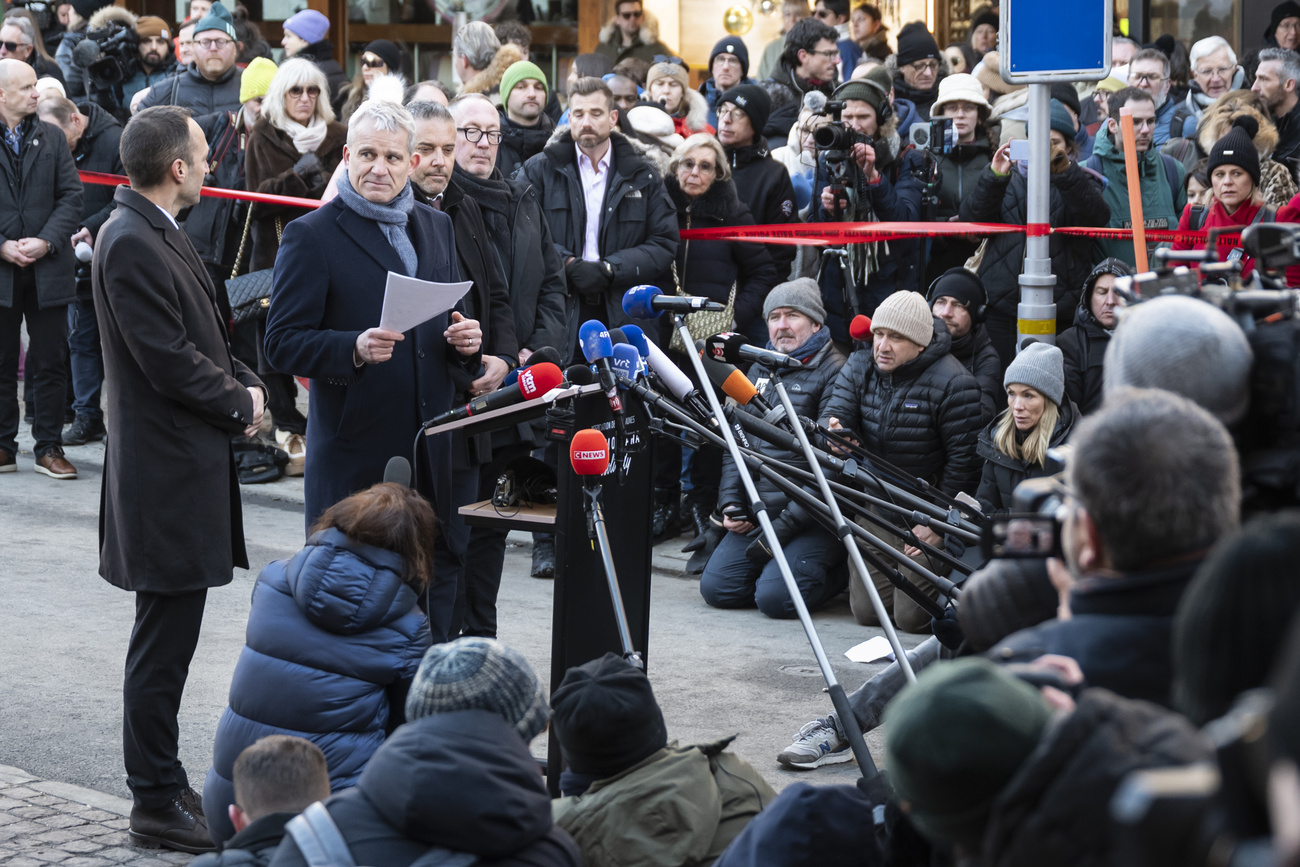
The deadly New Year’s Eve fire in Crans-Montana has triggered unprecedented international media scrutiny, focusing both on the disaster itself and on Switzerland’s response. As further details emerge about the tragedy and the actions of authorities and owners, confusion and criticism in the foreign press appear to be growing. Swissinfo talked to international journalists covering the story.
Select your language
Generated with artificial intelligence.
Listening:
Crans-Montana blaze exposes cracks in Switzerland’s image


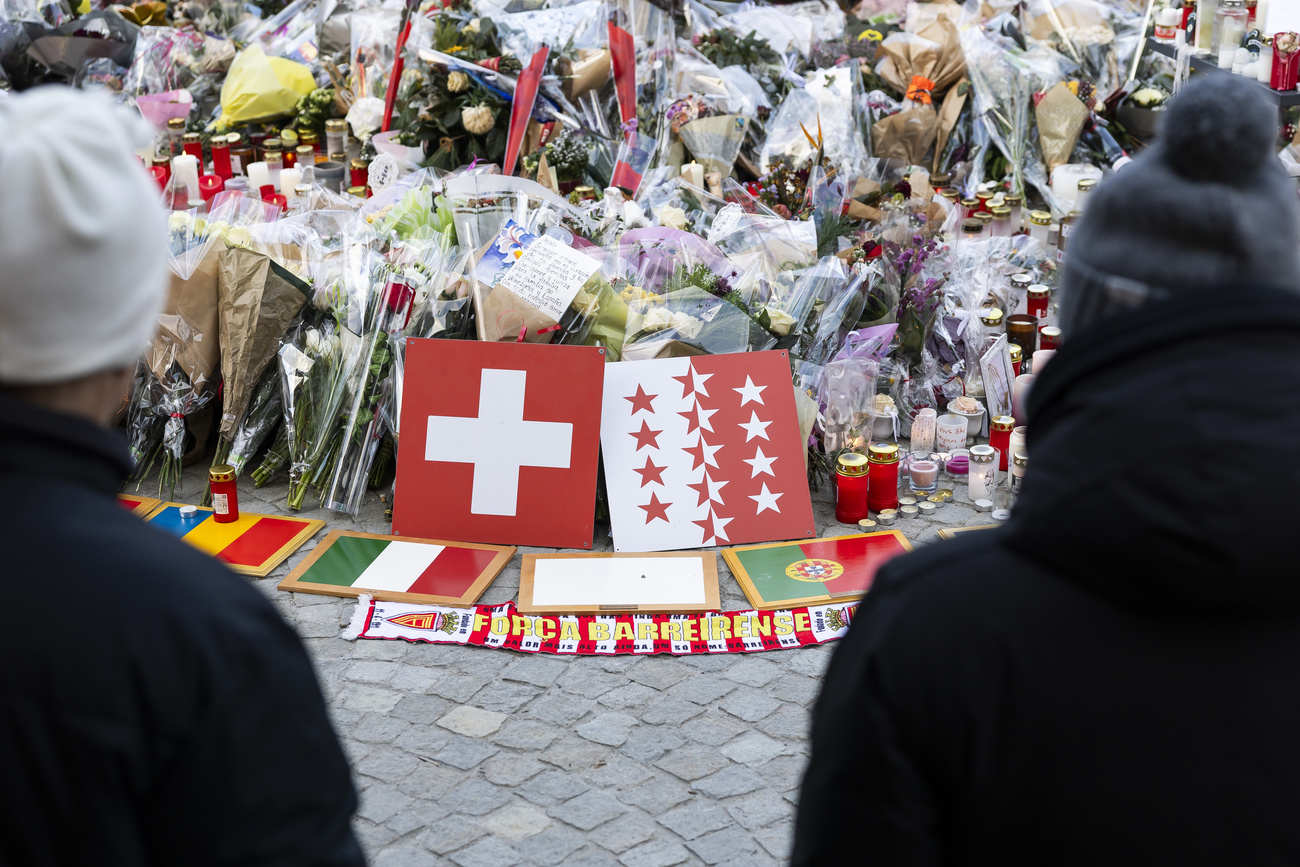
If no minors had died, the Italian media may have reacted differently and reported less intensively. But Switzerland now appears to be firmly in their crosshairs. A total of six Italians died among the 40 who lost their lives in the Le Constellation bar fire in the Swiss resort; another ten Italians are among the 116 seriously injured.
“In Italy, there is a great cultural sensitivity towards young people; they are considered particularly worthy of protection,” says Giuseppe Guastella, who reported as a special correspondent for Italy’s Corriere della Sera newspaper from Crans-Montana.
Carmelo Abbate, a journalist and commentator for Mediaset, also sees this as a key reason behind Italy’s harsh criticism of Switzerland since the tragedy.
“The Italian attitude is that adults protect young people,” says Abbate. “But here adults led many young people into a trap due to greed and carelessness.”
‘A death from the Middle Ages’
Abbate is convinced that Switzerland’s image will “suffer considerably”. The Italian public do not appreciate the way the Swiss justice system is handling the case. “The Italian population reacts to such tragedies with strong emotions,” he explains.

There have been two shocks, he says. First the blaze itself, which is engraved in the minds of many people like a “death from the Middle Ages”. Second, many Italians have been disturbed by what happened after the tragic bar fire, the reporter adds. Across Italy, people are astonished at the Valais authorities, whose failure to cope with the situation seemed more dramatic with each passing day.
A series of failures
In the aftermath, the story initially focused on the Crans-Montana municipal authorities, who had allegedly neglected fire controls and portrayed themselves publicly as victims.
At the same time, criticism grew surrounding the Office of the Attorney General of canton Valais, which initially did not remand the two bar owners in custody. It later reacted, probably under pressure from Italy, but only against one of the owners, Jacques Moretti, not his wife, Jessica Moretti. According to news reports, she allegedly organised the fatal fireworks display.

The Valais investigators also reportedly did not conduct autopsies on some victims and allegedly failed to carry out several other measures to secure evidence, which many criminal law experts deem essential. These include confiscating mobile phones, preventing collusion, expanding the circle of suspects to include other possible perpetrators and conducting thorough house searches. Many of the investigations appeared to be too little, too late and badly coordinated.
A cover up?
Serge Enderlin, Swiss correspondent for the French daily Le Monde, also questions the crisis communication of the Valais authorities. The most vital information was not published by the institutions, but by the press, he points out. “The dysfunctional attitude of the authorities became apparent quite quickly, so you assume that some things were covered up,” he told Swissinfo.
However, he feels the harsh criticism by foreign journalists, particularly the Italian press, should be put in a wider context. It is a sign that Switzerland is perceived as arrogant, he says. Italian journalist Giuseppe Guastella concurs: “Some Swiss people are critical and arrogant. They accuse Italians of not always acting in accordance with the rules.” For his part, Carmelo Abbate believes many Italians have a “strong inferiority complex towards Switzerland”.
Clichés about Switzerland
Enderlin adds that much of the criticism seems to be based on well-known clichés: “In France and Italy, there is definitely resentment towards Switzerland,” says the Le Monde journalist. “That doesn’t stop us from admiring Switzerland. But when there’s a mistake – and it’s a huge one – we pounce on it.”
Richard Werly, Paris correspondent for the Swiss newspaper Blick, agrees. The “disastrous communication” by the Valais authorities has put doubts in people’s minds. Then this is mixed up with “long-standing French resentment towards Switzerland which didn’t tell the truth for a long time, particularly on banking issues”, he says.

More
Swiss bar fire likely started by sparklers on champagne bottles, says prosecutor
Werly compares Switzerland’s behaviour to that of an oyster: “As soon as Switzerland is attacked, it closes up.” And this is precisely where he sees the greatest risk to the country’s reputation. Switzerland must now fully investigate the case with determination, he says.
How corruptible is Switzerland?
Since the fire disaster, part the two French journalists’ job has been to explain how Switzerland is actually much more complex than simple clichés. “I say to people that Switzerland is a normal country in which, like everywhere else, there are negligence, mistakes and perhaps even misconduct,” says Werly, who has been interviewed by French media about Switzerland several times since January 1.
More

Henry Samuel, the Paris correspondent for The Daily Telegraph, a British newspaper, has also ran up against familiar stereotypes about Switzerland – stereotypes that now appear to have been borne out. “Many of our readers are questioning whether money and connections can buy silence in the resort, and more widely, in Switzerland, long seen as an opaque tax haven for rich people who don’t want too many questions asked,” he says.
Nicolas Freund, who has reported from Crans-Montana for the Süddeutsche Zeitung, also refers to a cliché – one that does not fully hold up. “In Switzerland, many things follow clear rules and are done very thoroughly. Ultimately, however, this is also a cliché,” says the German reporter. “Of course, mistakes and omissions such as those in the case of Crans-Montana can also happen in Switzerland when it comes to fire safety.”
Can Switzerland improve its image?
For the Crans-Montana case, the strict sharing of political responsibilities among Switzerland’s federal system has generated surprise in Germany, says Freund. Swiss government ministers also travelled to Crans-Montana but in Switzerland the “federal level was very reserved given the scale of the disaster”, he says. “Many people find it strange that Switzerland is leaving such a major event to a lower level [of authority].” In a commentary, the German reporter called for an independent commission of enquiry, “like you would expect from Switzerland”.

Freund also reckons Switzerland’s “own national image is probably suffering”. In recent times some Swiss media have taken a tough stance towards Valais authorities. Canton Valais caused further irritation last week when it promised each Crans-Montana fire victim emergency compensation of CHF10,000. This “discount solution” will hardly repair the damage to Switzerland’s image, wrote the SonntagsZeitung under the headline “Switzerland is letting the victims down”.

More
Crans-Montana tragedy is putting Swiss reputation to the test
So how much damage has been done to Switzerland’s image abroad? Most of the journalists surveyed do not believe Switzerland’s image will be permanently damaged, assuming that the authorities and judiciary still do their jobs.
Enderlin even sees the tragedy as an opportunity for Switzerland to correct certain aspects: “At last the varnish is off and the country can show itself as it really is: not as exceptional as it seems. It’s just a bit richer and rather hypocritical when it comes to pretending that this wealth was earned through hard work,” he adds.
Edited by Samuel Jaberg/adapted from German by AI/sb/ac
More
Crans-Montana tragedy highlights limits of Swiss federal system

In compliance with the JTI standards
More: SWI swissinfo.ch certified by the Journalism Trust Initiative

You can find an overview of ongoing debates with our journalists here . Please join us!
If you want to start a conversation about a topic raised in this article or want to report factual errors, email us at english@swissinfo.ch.