








Swiss minister highlights plight of ‘slave children’

Around 800 people who, as children, were forcibly placed in institutions in Switzerland, gathered in Langenthal, near Bern, on Saturday. Addressing the gathering, Interior Minister Elisabeth Baume-Schneider described the deep scars left on society by compulsory social measures and foster placements.
Select your language
Generated with artificial intelligence.
Listening:
Swiss minister highlights plight of ‘slave children’
+Get the most important news from Switzerland in your inbox
Baume-Schneider said that those affected “deserve historical clarity and an honest examination of what happened”. What had befallen them was an injustice, she added.
Switzerland has started to come to terms with this issue, which requires patience and courage, said the Swiss minister. “We must ask all the questions, including – and especially – the uncomfortable ones,” said Baume-Schneider. There are still too many grey areas, particularly regarding the persecution of the Yenish and Sinti children. This process of coming to terms with the past must be taught in museums, universities, history books and schools, she said.
According to the Guido Fluri Foundation, which hosted the national meeting and initiated a reparations initiative, Saturday’s guests are among the last surviving eyewitnesses of a dark chapter in Swiss social history.
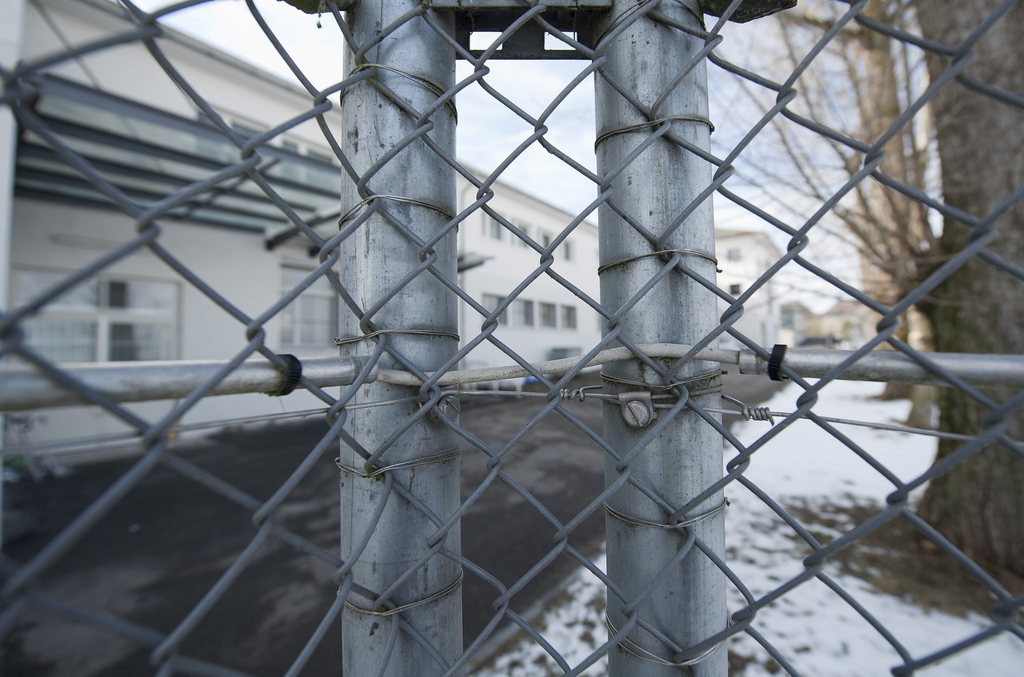
More
Recognising Switzerland’s “slave children”
“They experienced severe mistreatment and abuse in homes and on farms, in foster care or in a church context. Their biographies and memories are now part of Swiss history,” the foundation said in a statement.
The Guido Fluri Foundation gained prominence in 2014 with the launch of the Reparations Initiative. Its aim was to secure financial reparations for “slave children” and victims of compulsory welfare measures, as well as to facilitate a reappraisal of the past. In 2015, parliament adopted a counter-proposal that incorporated the key points of the initiative.
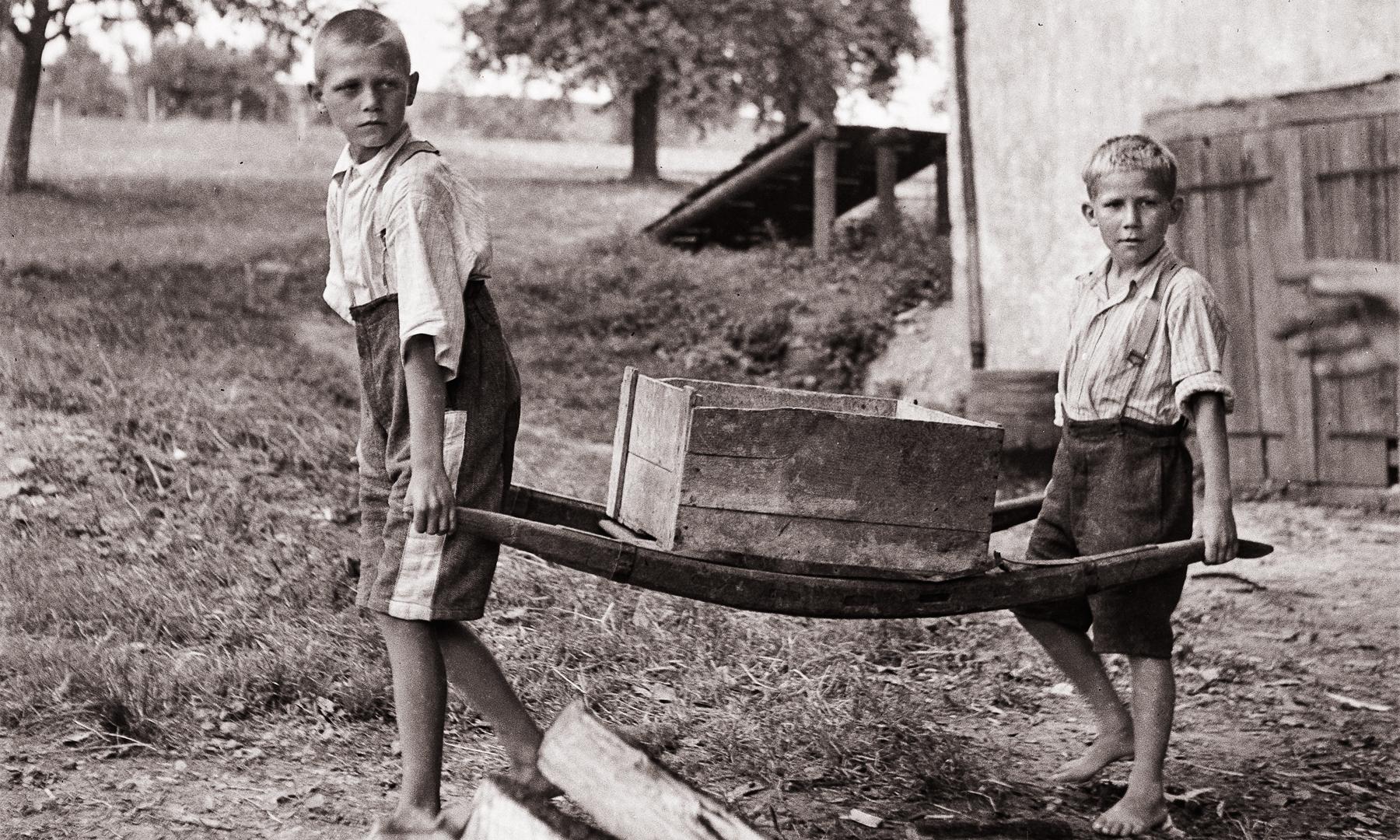
More
Harsh judgment for a harsh care system
Psychological violence and abuse
Until 1981, tens of thousands of children and adults in Switzerland were affected by compulsory care measures or out-of-home placements. “Slave children” were exploited as cheap labour on farms, suffered severe physical and psychological violence, and were often sexually abused.
Victims included “slave” and institutionalised children, children from traveller communities, Yenish communities and forcibly adopted children, as well as individuals who were committed to secure institutions – so-called “administratively cared for” persons.

More
Who were Switzerland’s ‘slave children’?
Adapted from French by AI/sb
We select the most relevant news for an international audience and use automatic translation tools to translate them into English. A journalist then reviews the translation for clarity and accuracy before publication.
Providing you with automatically translated news gives us the time to write more in-depth articles. The news stories we select have been written and carefully fact-checked by an external editorial team from news agencies such as Bloomberg or Keystone.
If you have any questions about how we work, write to us at english@swissinfo.ch
External Content

In compliance with the JTI standards
More: SWI swissinfo.ch certified by the Journalism Trust Initiative

You can find an overview of ongoing debates with our journalists here . Please join us!
If you want to start a conversation about a topic raised in this article or want to report factual errors, email us at english@swissinfo.ch.